Hartford, Vermont features numerous Appalachian Trail backcountry campsites located within Vermont's Green Mountain National Forest. Most sites sit between 1,200 and 1,800 feet elevation, with camping conditions varying dramatically between seasons. Winter brings heavy snowfall accumulation while summer temperatures typically range from 50°F overnight to 80°F during daytime hours.
What to do
Explore swimming holes: During summer months, Stony Brook Backcountry Shelter offers access to natural swimming areas. "I only explored a bit offtrail down the brook but found a decent swimming hole (could just barely submerge myself) to clean off a bit," notes one AT thru-hiker at Stony Brook Backcountry Shelter.
Climb Mount Cardigan: The 3,155-foot summit provides exceptional panoramic views from its fire tower. "The climb is challenging but shouldn't take too long. Great fire tower views at the top too!" reports a visitor to Cardigan Campsites.
Winter camping preparation: During snow season, access changes significantly. "The main road to the parking lot is plowed and sanded. However if you would like to continue down the service road during winter months I would highly recommend snowshoes or a snowmobile," advises a winter camper at Michigan Brook Road.
What campers like
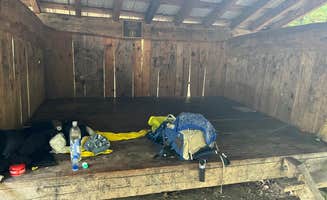
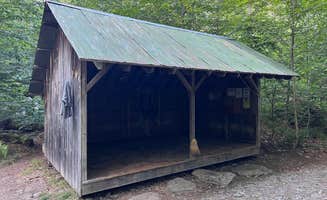
Multi-level shelter options: The double-decker design at Happy Hill Backcountry Shelter provides flexibility for group arrangements. "The loft was nice since folks could decide to sleep up there while others were down below, either cooking, arriving, or departing."
Viewpoint seating: Moose Mountain shelter features outdoor seating with scenic views. "The shelter did stand out with a bench overlooking a clearing in the brush with a view which was a great place to enjoy my freeze dried dinner," notes a section hiker at Moose Mountain Backcountry Shelter.
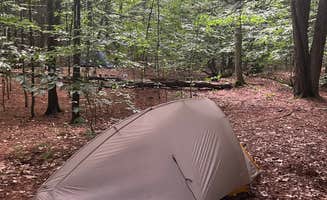
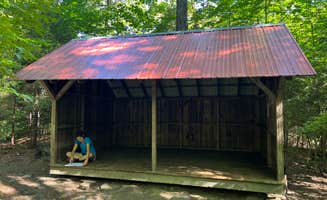
Spacious tent sites: Many shelters offer numerous flat spaces for pitching tents. "The shelter is on the larger side and could fit maybe 6-8 folks. There were lots of tent camping spots as you worked up the hill perpendicular to the shelter," reports a camper about Winturri Backcountry Shelter.
What you should know
Bear box availability: Limited bear boxes exist on the AT through Vermont. "There was also a bear box here, which I hadn't seen at other shelters along the AT in Vermont (heading southbound)," notes a hiker at Stony Brook Backcountry Shelter.
Road conditions: Access roads to drive-in camping can be challenging. "Road goes in pretty far. Some parts are muddy and very rough. Higher clearance would be advised!!!" warns a camper at Michigan Brook Road Camping.
Privy conditions vary: Bathroom facilities range from new to basic. "The privvy was also new and very spacious," reports a hiker at Moose Mountain, while conditions at other shelters may be more primitive.
Winter isolation: Cell service becomes particularly important during cold months. "PLEASE NOTE: THIS LOCATION DOES NOT PROVIDE CELL PHONE SERVICE OR WIFI CONNECTION," cautions a winter visitor to Michigan Brook Road.
Tips for camping with families
Supply outposts: For families needing additional supplies, know where to restock. "If you walk to the end of upper Michigan Brook road you will have cell phone service and a gas station along with a United States Post Office as well as a general store which also serves as a restaurant. There you can find just about anything."
Shelter size considerations: For family groups, larger shelters provide more options. "There were a bunch of level tent camp sites around the shelter," notes a visitor to Trapper John Backcountry Campground, which offers a standard shelter that "was on the medium side with plenty of space for maybe 6-8 folks."
Water reliability planning: Teach children about water conservation when hiking to tent camping sites around Hartford, Vermont. "There is a water source in the area but it did not have water when I visited (probably on account of the drought)," reports a camper at Trapper John, highlighting the importance of carrying additional water.
Tips from RVers
Length restrictions: Most forest roads near tent camping sites in Hartford are unsuitable for larger RVs. "I attempted to bring my car and was stuck overnight but was able to dig myself out the next morning," cautions a winter visitor, underscoring the challenging road conditions even for standard vehicles.
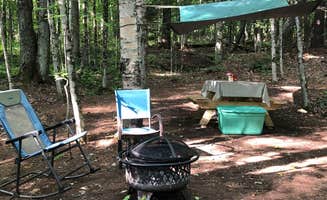
Dispersed parking: Michigan Brook Road offers multiple pull-off spots for smaller RVs and campervans. "I found most of the spots to be on the road before the GPS marker. Few nice ones near the creek," notes a camper who found an elevated site with "lots of space."









 Legend


