Tent camping near Bradford, Vermont offers primitive backcountry experiences on wooded platforms alongside access to the Baker River and nearby hiking trails. Campsites range from remote Appalachian Trail shelters to established campgrounds with tent platforms and basic amenities. Campers should note that many backcountry shelters have unreliable seasonal water sources, particularly during summer drought conditions.
What to do
Fishing access points: Baker Rocks campground features a small beach along the Baker River where campers can try their luck fishing. As one visitor noted, "There is a little beach along the Baker river. I only caught a few minnows when fishing but that may have been more to do with the angler."
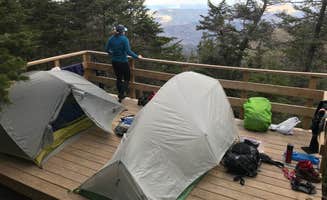
Summit hiking: Guyot Shelter serves as an excellent basecamp for nearby peak bagging. A camper shared, "We got to the site, claimed our platform and hiked over to West Bond to catch a beautiful sunset." Most summit trails require moderate to strenuous hiking ability and proper equipment.
Rock climbing: AAC Rattlesnake Campground provides convenient access to the Rumney climbing area. According to one climber, "I started climbing at Rumney about a decade before this campground was developed, and man, were we overdue for one! Maintained by the American Alpine Club, pretty much all the campers here are rock climbers."
What campers like
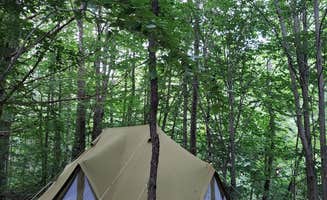
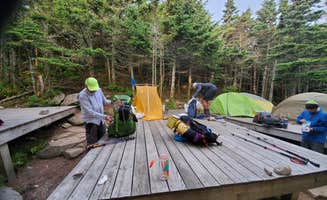
Secluded tent platforms: Baker Rocks offers well-designed tent sites that provide privacy. A camper mentioned, "The tent sites are within the wooded area around the property and felt very secluded. There was a bit of road noise overnight."
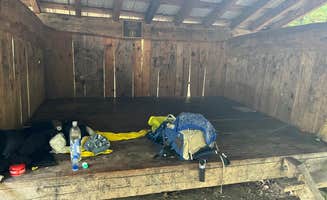
Multi-level shelters: Happy Hill Backcountry Shelter features a unique two-story design. According to a hiker, "The shelter had a ground floor and a loft but each floor could maybe fit 4-5 people comfortably... The loft was nice since folks could decide to sleep up there while others were down below, either cooking, arriving, or departing."
Wilderness immersion: Remote backcountry sites provide complete disconnection from urban environments. A camper at Kinsman Pond Shelter reported, "Amazing stay, no signs of society (airplanes/cars/phone service). Stayed in the new shelter on the edge of the pond."
What you should know
Water availability: Many Appalachian Trail shelters have seasonal water sources that may dry up during summer. A hiker at Trapper John Backcountry Campground reported, "There is a water source in the area but it did not have water when I visited (probably on account of the drought)."
Fire regulations: Fire policies vary significantly between sites. Backcountry AT shelters typically prohibit fires, while established campgrounds like Baker Rocks provide fire rings and even complimentary firewood: "The site had a large tent platform they could fit multiple tents, a brand new picnic table, a fire ring (with a free bundle of firewood)."
Bear precautions: Many sites provide bear boxes for food storage. At Guyot Shelter, a camper noted, "Bear box located at a communal 'cooking area' and cold spring water located at the site." Some backcountry locations lack bear boxes entirely.
Tips for camping with families
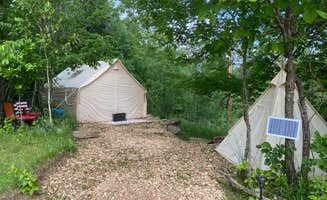
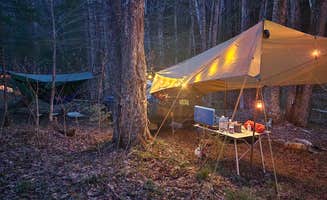
Yurt and glamping options: For families not ready for primitive tent camping, Baker Rocks offers alternatives. A family camper shared, "We stayed 2 nights in the double bell tent with two clean full size beds and a 3rd night in the yurt both were spacious and wonderful, among tall trees and pines."
Insect protection: Summer camping requires preparation for insects. One family noted, "Do bring bug spray, the mosquitoes at certain times of day were aggressive, as to be expected."
Kid-friendly amenities: Some campgrounds offer bonus attractions for children. At Moose Mountain Backcountry Shelter, a camper appreciated, "The shelter did stand out with a bench overlooking a clearing in the brush with a view (see photos) which was a great place to enjoy my freeze dried dinner."
Tips from RVers
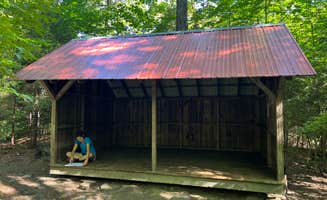
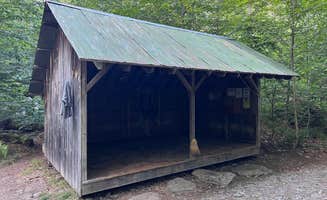
Tent-only restrictions: Most camping options near Bradford are designed exclusively for tent camping with limited vehicle access. At Velvet Rocks Shelter, a camper explained, "Note this is a back country shelter along the Appalachian Trail, so it is 100% long hike in with no guaranteed water and a basic privvy."
Elevation challenges: Many backcountry sites require significant elevation gain. A camper at Guyot Shelter reported, "Quite a hike dropping down from the main trail to the campsite, 15-20 min straight up to hike out in the morning."









 Legend


