The San Gabriel River Trail provides dispersed camping options near Georgetown, Texas, approximately 200 miles from Buffalo Gap. This 26.2-mile trail circuit surrounds Lake Georgetown with terrain varying between grasslands and forested areas. Primitive camping spots require self-sufficiency as they lack developed facilities. Water access points exist along parts of the trail, though hikers should carry sufficient water during warmer months when temperatures commonly exceed 90°F.
What to do
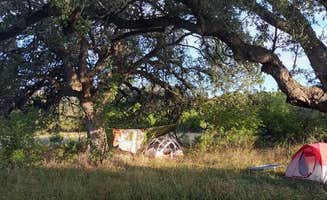
Lake activities: At Walnut Springs Primitive Campground, campers can enjoy direct water access. "There was a backpacking group, a group of people who canoed in, and ourselves. Large open area; for fire pits for lamp hangers for picnic tables trees closer the trail and grass sea areas closer to the water," notes Guillermo L.
Hiking circuits: The complete trail system offers opportunities for multi-day backpacking trips with overnight camping at designated primitive sites. This trail passes through diverse landscapes with approximately 40% tree coverage for shade during hikes.
Wildlife observation: Early morning and evening hours provide opportunities to spot local wildlife. The varied ecosystems around Lake Georgetown support diverse bird species, making this area popular with casual birdwatchers seeking free camping near Buffalo Gap, Texas alternatives.
What campers like
Accessibility options: Sawyer Park Primitive Campsites offer multiple access points. According to Alexandra, "We ended up not following our AllTrails after a fork in the road heading towards the campsite, and were pretty pooped so decided to camp there off Sawyer Campsite Rd. People had clearly used the shore as a campsite before as there was a makeshift fire pit and some cleared areas for tents."
Solitude potential: Weekday visitors often experience greater seclusion. Troy W. notes, "The trail is getting more and more popular with backpackers, so it is likely that you may see others on the trail. On weekends you may encounter scout troops practicing backpacking. During the weekdays you may not see a single person."
Flexibility in site selection: Beyond designated camping areas, the trail offers dispersed options. Campers appreciate the ability to set up where convenient after hiking several miles, especially when fatigue sets in before reaching official sites.
What you should know
Water considerations: Carry minimum 2 liters per person when hiking between camping areas. Despite proximity to Lake Georgetown, access points aren't always convenient. All drinking water requires filtration and purification.
Navigation awareness: Trail markings can be inconsistent. Some campers report unintentionally camping in unofficial areas after missing trail forks, which still provided satisfactory experiences.
Weather preparedness: San Gabriel River Trail campsites experience rapid weather changes. "Rain started pretty heavily (and being close to the water probably didn't help with humidity inside the tent) and our rain fly was unwilling to cooperate so we got a bit wet. The home back in the rain was fine. A couple slippery spots but very doable," reports Alexandra.
Tips for camping with families
Distance planning: For families with children, consider Walnut Springs as it offers shorter access routes. "Can be biked in from camp Tejas four miles away or can hiking from Russell Park 2 mi away," advises Guillermo L.
Safety precautions: No ranger patrols occur regularly at primitive sites. Families should establish clear boundaries for children, particularly near water edges.
Amenity alternatives: When no-cost camping near Buffalo Gap, Texas isn't practical with younger children, consider nearby developed campgrounds with facilities as day trip bases while exploring primitive areas.
Tips from RVers
Parking limitations: RV parking at trailheads requires advance planning. Troy W. suggests, "Upon entering one of the access points, park your car for free near the trailhead. It is good to advise one of the park administers that you will be hiking or place a note inside your car that you are hiking."
Base camp strategy: Since these are hike-in sites not suitable for RVs, experienced RVers recommend using developed campgrounds as base camps while day-hiking portions of the San Gabriel River Trail.
Documentation practices: Leave vehicle information and expected return time visible in parked vehicles when backcountry camping, especially for multi-day stays when vehicles remain at trailhead lots overnight.




 Legend

