RV sites near Mount Vernon, Oregon provide access to the Malheur National Forest and nearby John Day Fossil Beds National Monument. Most campgrounds in this high desert region feature gravel pads at elevations between 3,000-5,000 feet. Summer temperatures can reach 90°F during day while dropping to 50°F at night, creating significant temperature swings campers should prepare for.
What to do
Wildlife viewing opportunities: Multiple campgrounds offer good bases for spotting local wildlife. Staying at Murderers Creek Guard Station provides access to diverse species. "We ended up hiking to Horse Mountain (about 3.5 miles from the cabin), and saw wild horses early in the morning. We also saw mule deer and turkeys," notes Kristen B. The surrounding Malheur National Forest contains several wildlife viewing areas accessible via unpaved forest roads.
Fossil exploration: The John Day Fossil Beds National Monument lies within 30 minutes of several RV parks. Fish House Inn and RV Campground serves as a convenient base. "We stayed here as we had plans to visit John Day Fossil Beds National Monument the next day," explains Kim G. The monument consists of three separate units with hiking trails through colorful badlands formations containing visible fossils.
Fishing access: Several campgrounds provide direct creek or river access for fishing. "In the spring, I imagine you can fish the creek behind the cabin," mentions a Murderers Creek Guard Station visitor. For better fishing prospects, "Fishing is good if you go over to the John Day river," advises Juice B., noting many campers use this area as a base for regional angling.
What campers like
Clean, well-maintained facilities: Campers consistently mention the cleanliness of facilities at certain locations. "The bathrooms and showers are exceptionally clean and nice...they even include cloth hand and bath towels for you to use!" writes Gerard M. about South Fork RV Park. Another camper notes, "Bathrooms & showers were Fabulous!" emphasizing the importance of quality facilities in this remote region.
Helpful campground hosts: Many reviews highlight exceptional service from campground hosts. At Grant County RV Park, "The people we dealt with were very friendly and helpful. I think the host realized how tired we were and made a special effort to invite us to stay," shares Bill B. Similarly, at Fish House Inn, "The park is operated by a friendly and helpful couple. The proprietors clearly value hospitality and are very welcoming."
Quietness and privacy: Campers value the peaceful nature of these campgrounds. "It was also super quiet all night," mentions Jill R. about Hitching Post RV Park. Another camper describes their experience as "I was the only person in the campground which was so nice," highlighting the solitude available in this less-traveled region of Oregon.
What you should know
Limited services: Many campgrounds in the area have minimal amenities. At Cottonwood Campground, "It is pretty rustic with no water but does have 1 pit toilet that was clean but not stocked. There is no trash so it's pack in pack out." Bring supplies as the nearest full grocery stores may be 30+ miles away in John Day.
Seasonal considerations: Accessibility varies widely by season. Most campgrounds remain open year-round but winter access depends on road conditions. Early spring brings wildflowers but also unpredictable weather. Summer temperatures frequently exceed 85°F during midday.
Reservation policies: Booking options differ between campgrounds. Most private RV parks accept advance reservations while forest service sites often operate on first-come basis. "It is a first come, first serve and is free," notes Ashley B. about Cottonwood Campground. Plan ahead during summer months when occupancy rates increase.
Tips for camping with families
Wildlife education opportunities: The diverse ecology provides natural learning experiences. "We saw Pronghorn in the Silvies Valley heading to the Malheur National Wildlife Refuge," mentions Juice B., providing opportunities for wildlife education. Many campgrounds have informational boards about local plant and animal species.
Creek exploration: Several campgrounds feature small creeks suitable for children to explore. "We camped next to the lovely lil creek," writes Charyl B. about Timbers Inn and RV Park. Another visitor notes, "the creek the runs alongside the road has lots of crawdads and is refreshing," offering natural play opportunities for children.
Historical attractions: The area contains numerous historical sites relating to Oregon's mining and ranching history. "Dayville is a very cute little town, with cute lil shops! Great location to stay to explore the area!" suggests one camper. Several campgrounds serve as convenient bases for day trips to regional historic sites and museums.
Tips from RVers
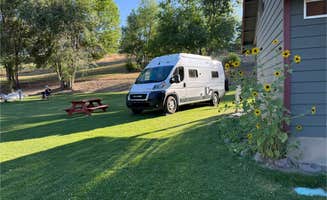
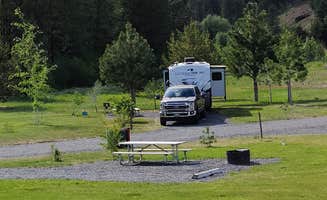
Site selection considerations: RV sites vary considerably in size and layout. "Large, level pull thru sites. Nice grass areas to relax in. Full hookup....water, electricity, sewer," notes Rich J. about Timbers Inn and RV Park. For smaller vehicles, "We pulled our class B onto a lovely grassy FHU site," shares Kim G., indicating diverse options for different RV sizes.
Electric service variations: Electrical connections differ between parks. Some offer 50-amp service while others provide only 30-amp. "Sites had what we needed and was very quiet," reports one camper, but checking specific amperage before arrival prevents compatibility issues.
Water conservation: Many RV parks in the area have limited water resources. Bring extra water containers when staying at locations with restricted services. "NO running water for drinking or cooking, so bring plenty of water," advises a visitor to Murderers Creek Guard Station, highlighting the importance of water planning when camping in this semi-arid region.











 Ranger


