Silver Falls State Park and L.L. Stub Stewart State Park anchor equestrian camping near Happy Valley, Oregon, positioned at the base of the Cascade foothills approximately 20 miles southeast of Portland. The region features a temperate climate with summer temperatures averaging 75-85°F, making it ideal for horse camping from May through October. Winter conditions often limit trail access at higher elevations, with many horse camps closing seasonally during wet months.
What to do
Trail riding circuits: At Willamette Mission State Park Horse Camp, riders discover extensive loops through riverside terrain. "The trails are absolutely gorgeous- it felt like being out in the wild," notes camper Sprunki R., highlighting the park's natural setting just 40 miles south of Happy Valley.
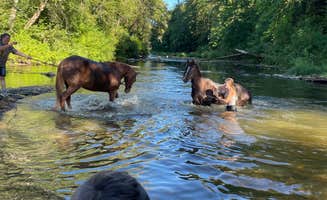
Swimming with horses: Battle Ground Lake State Park offers access to a small volcanic lake where horses can cool off after trail rides. The park features "a swim area roped off, and a small sand area for the kids to play," according to Wendy C., making it ideal for families with both children and horses during summer months.
Fall foraging adventures: Mushroom hunting becomes popular in autumn around equestrian camps. At Panther Creek Campground, riders can "take off to the PCT for a hike, or foraging for mushrooms in the fall," as Candace mentions. The campground connects directly to the Pacific Crest Trail with multiple access points.
What campers like
Extra-wide riding paths: The area's trail systems accommodate horse-and-rider combinations safely. At Willamette Mission, reviewers note "LOTS of nice, wide horse trails for horse riding enthusiasts" according to Melissa L., allowing riders to navigate comfortably without tight squeezes.
Natural water features: Milo McIver State Park provides river access that benefits both riders and horses. "Great river access" mentions WE B., with the Clackamas River offering natural watering points along several trail sections.
Proximity to emergency services: Most equestrian campgrounds maintain 20-35 minute driving distances to veterinary services. "The small town of Battle Ground within 5 miles" for supplies, notes Lawrence F. about Panther Creek Campground, providing peace of mind for horse owners concerned about emergency access.
What you should know
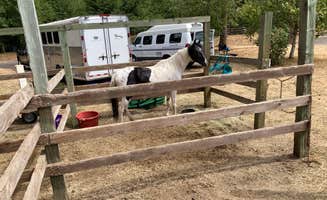
Manure management regulations: Different campgrounds enforce varying manure cleanup protocols. At Riley Horse Campground, "the horse pens were huge" according to Gretch H., but campers must remove all manure from corrals before departure.
Seasonal limitations: Many equestrian camps operate only during warmer months. Willamette Mission State Park Horse Camp operates "May 15 to September 30" according to their official season, with limited exceptions for special events.
Space between campsites: Most equestrian campgrounds provide significantly larger sites than standard camping. At Riley Horse Campground, "the spots are large, far apart from the other sites, and very quiet," reports Ashley B., with some sites measuring "like a quarter of an acre" to accommodate horses, trailers, and camping gear.
Tips for camping with families
Playground access: Several equestrian campgrounds include family-friendly amenities. "Kids playground was great for the grandkids" mentions Richard B. about Battle Ground Lake, which maintains a dedicated children's area separate from horse areas.
Mixed-use activities: Campgrounds with both equestrian and family facilities offer diverse recreation. At L.L. Stub Stewart State Park, families find "a lot of hiking trails" plus "an on-site disc golf course," according to multiple reviewers, creating activities for non-riders.
Safety boundaries: Establish clear rules about approaching horses. At Riley Horse Campground, the natural layout creates safer separation as "The campground is close to many trails in the area," according to Ashley B., allowing families to maintain distance between children and unfamiliar horses.
Tips from RVers
Hookup logistics: Some equestrian camps require longer-than-standard utility connections. Milo McIver State Park has "large sites with great river access" that accommodate RVs, reports Gryphon D., though RVers should bring extension cords for power connections.
Trailer turning radius: Plan for wider turning paths when hauling horse trailers. At L.L. Stub Stewart, "We were able to get in/out" easily according to Debra L., as the park features "easy onsite reservation/payment" and more generous space for maneuvering large rigs.
Leveling challenges: Prepare for uneven terrain at forest campgrounds. "The pad starts with asphalt and then goes to gravel, where you actually park the rig" reports MickandKarla W. about L.L. Stub Stewart, highlighting the need for proper leveling equipment when traveling with horses and RVs together.






 Traveler


