The Oklahoma Wildlife Management Area near Tom Steed Reservoir offers dispersed camping near Medicine Park, Oklahoma with challenging access conditions. Located approximately 15 miles southwest of Medicine Park, this primitive camping area requires travelers to navigate unpaved roads that deteriorate significantly after rainfall. The area experiences hot summers with temperatures regularly exceeding 95°F and mild winters, making spring and fall the optimal seasons for camping.
What to do
Fishing opportunities: The primitive camping area provides access to Tom Steed Reservoir where campers can fish for bass, catfish, and crappie. A visitor at Great Plains State Park Dispersed Campsite noted, "If you like fishing this is a five star for you; fish jumping all night."
Photography: The combination of water and mountain views creates excellent photography conditions, particularly during sunrise and sunset. According to a camper, "Beautiful view of the mountain and lake. Very quiet and peaceful, and no other visitors."
Stargazing: The remote location away from urban light pollution provides excellent night sky viewing. The secluded nature of these sites allows for uninterrupted stargazing experiences with minimal ambient light interference.
What campers like
Seclusion and quiet: The difficult access road serves as a natural filter, limiting visitor traffic and ensuring privacy. One visitor mentioned, "Quiet and secluded," highlighting the peaceful atmosphere that results from the remote location.
Water access: Sites near the shoreline offer direct lake access for swimming and fishing. As one camper at Great Plains State Park Dispersed Campsite described, "Water side location. No fire ring but wasn't needed. Area was clean and flat."
Cost effectiveness: The free camping allows extended stays without permit fees. A visitor simply stated, "The roads a little rough but it's free with great views," emphasizing the value proposition of these primitive sites.
What you should know
Navigation challenges: Finding the correct turnoff requires attention to signage rather than relying solely on GPS coordinates. One visitor explains, "I would recommend using AppleMaps if possible; takes you right to the spot. If you are using Waze it will tell you to turn at what looks like a private driveway/road. If you have to use Waze, pass that road and take a right at stop sign, then a right at the wildlife sign."
Seasonal conditions: Summer camping brings mosquitoes and overgrown vegetation. A camper noted, "We gave it 4 stars due to the over grown grass and mosquitoes. View and sounds were amazing."
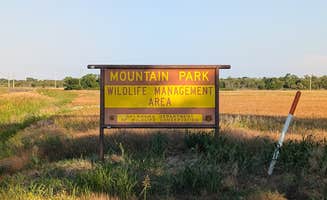
Jurisdictional clarity: The area is officially an Oklahoma Wildlife Management Area adjacent to Great Plains State Park. According to a visitor, "This location is an Oklahoma Wildlife Management Area, not Great Plains State Park. These coordinates get you close to the road where the WMA begins. Look for the OK WMA sign and turn."
Tips for camping with families
Prepare for no facilities: Families should bring portable toilets, ample drinking water, and waste disposal bags as no facilities exist on site. Bringing a pop-up privacy tent can significantly improve the camping experience when staying multiple days.
Activity planning: The lack of designated recreation areas means parents should bring games and activities. The lakeside location provides natural exploration opportunities, but structured activities require advance planning.
Wildlife awareness: The management area status means wildlife encounters are possible. Keep food secured and teach children appropriate wildlife observation distances. Morning hours offer the best wildlife viewing opportunities around the reservoir edges.
Tips from RVers
Access assessment: The rough roads with deep ruts require high-clearance vehicles for safe passage. One RVer at Great Plains State Park Dispersed Campsite shared, "We were able to handle it in our Ram 3500 with tow (42 feet) but we had to take it very slow."
Pre-arrival reconnaissance: Consider scouting the route without your trailer if possible. The low-hanging branches may require trimming or careful navigation to avoid damage to taller RVs and campers.
Leveling requirements: Bring additional leveling blocks as sites, while generally flat, may have slight grades. Most campsites can accommodate larger rigs but require careful positioning to maximize both levelness and views.




 Guide
Guide


