Primitive camping near W. Kerr Scott Dam & Reservoir offers sites across Pisgah National Forest at elevations between 2,500-3,000 feet. Summer temperatures average 70-85°F during the day, while spring and fall bring cooler temperatures with occasional rain. Access roads to most dispersed campsites require crossing streams that can rise significantly after rainfall.
What to do
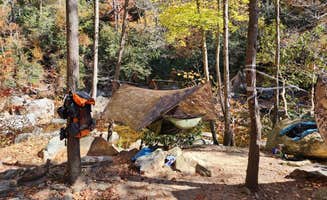
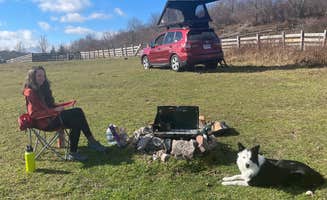
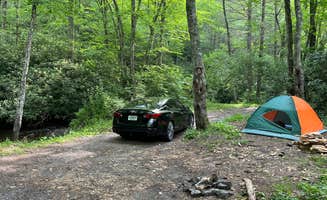
Hiking near waterfalls: Upper Creek provides access to waterfall hiking trails within walking distance from campsites. One camper notes, "There's a nice big spot at the end of the trail where you could rooftop tent/car camp, but the actual site is about 100' away."
Creek swimming: Steele Creek features multiple swimming spots along its course. According to a review, "It has a couple small waterfalls to add to the ambience. The site is very clean other than some glass that I've been picking up."
Mountain ridge driving: Travel the 13-mile dirt road at Old NC 105 Dispersed for scenic views. "The dirt road goes for about 13 miles. Would recommend a 4x4, but I've seen all kinds of vehicles travel the entire road from minivans to Honda accords," reports one camper.
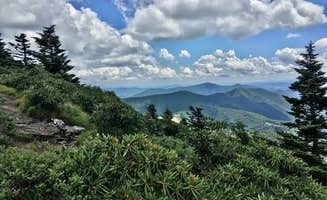
Wildlife viewing: Set up camp at higher elevations for chances to spot local wildlife. "We were very lucky to obtain a perfect spot on the top of Mount Roger's during our section hike of the AT. It provided amazing views for both sun up and sun down and was a great place for pictures."
What campers like
Secluded creek spots: Many campers prefer National Forest Road/Steele Creek for its privacy. "This place is spectacular, a lovely creek/river with swimming pools. Campfire rock rings. There's probably about 10 spots."
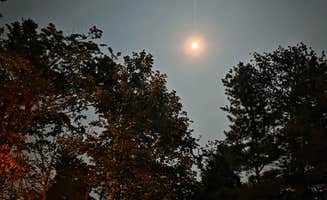
Star gazing opportunities: Clear mountain nights provide excellent star viewing. "The night sky was one of the most memorable moments from our trip. I've never seen so many stars! Also has quick access to running spring water for drinking and a quick wash up."
Winter camping: Upper Creek, Pisgah National Forest remains accessible year-round with fewer crowds in colder months. "I really enjoyed this place. I got the best spot in all the dispersed sites here. Big space, right next to the creek. All I heard was the water and some faint crickets hanging on in November."
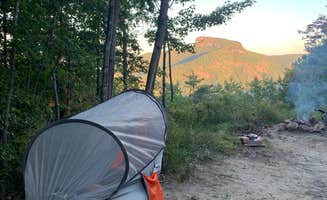
Various site options: Campers appreciate the range of locations from creek-side to ridge tops. "There are plenty of spots to choose from. Some have great views of the valley and table top mountain and others are just nooks in the woods. The sites are pretty spread out but there are a few within shouting distance."
What you should know
Road conditions vary: Access to most sites requires prepared driving. "The road in was a bit bumpy but nothing too serious. My car made it in fine," one camper reported, while another warned, "In the middle it gets really rough would not recommend driving all the way through without an SUV or better clearance and 4 wheel drive."
Weekend popularity: Sites fill quickly Thursday through Saturday. "Worst case scenario you'll have to choose a spot without a view but there are so many pull off spots that I wouldn't be too worried about not finding one, you just may be not as secluded."
Water supply planning: Washington & Jefferson National Forest Dispersed Sites and similar areas require water planning. "Biggest con for me is I use a pump filter to fill up water no camp sight that I could find had access to the river that runs along this road so make sure to bring plenty of bottled water."
Traffic noise varies: Some sites experience more vehicle traffic than others. "The car traffic is horrible, even in the middle of the night. Even until 4am we could hear and see car driving up and down this terribly bumpy gravel road."
Tips for camping with families
Swimming hole access: Choose sites near safe water features. "The end of the road about 100 feet from our site, had the best swimming hole at the end of it, where you can jump in."
Privacy considerations: Select sites set back from main roads. "There are spots tucked away a bit off of the road where you really don't notice trucks and cars driving by."
Trash management: Many sites show evidence of previous campers. "The camp sites were good size but had trash and glass. Our site was fairly close to the road. Traffic wasn't bad through the week but weekend it was busy."
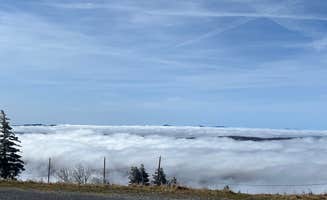
Weather preparation: Whitetop and higher elevations experience significant weather changes. "When we got here, it was a pretty drizzly day through the forest raining off and on. Making our way up the mountain the fog was thick and it was incredibly difficult to see much."
Tips from RVers
Site selection for larger vehicles: Most dispersed sites accommodate small to medium RVs only. "Maybe I missed this in the reviews, but all but 1 site were best for tents. I drove in to camp in my car and there was only 1 spot, which is by the creek crossing, and it was already taken."
Level ground challenges: Finding flat parking for trailers requires advance planning. "We ended up arriving in the evening, so driving up to the location we could see random open spots but they were just off the road in the woods with a place for a vehicle and trailer and had a fire pit but that was about it."
Road width limitations: Many forest roads have tight turns. "The road wasn't too bad in spots on the switchback that were probably best for a 4 wheel drive vehicle, but I'm sure most cars would be fine."
Seasonal accessibility: Some sites close after weather events. "Currently closed as of January 25, 2021," noted one camper about a particular area, showing the importance of checking current status before travel.










 Legend


