Equestrian camping near Hayesville, North Carolina puts riders at the gateway to over 500,000 acres of the Nantahala National Forest. This mountainous terrain ranges from 1,200 to 5,800 feet in elevation, creating varied microclimates throughout the year. Fall temperatures typically range from 40-70°F with minimal rainfall, making it an ideal season for trail riding and camping.
What to do
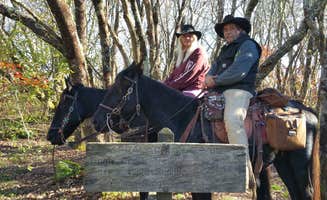
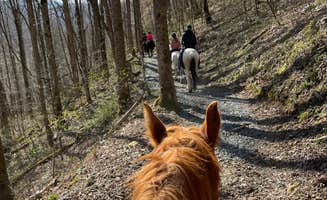
Trail riding access points: Bristol Fields provides direct connections to numerous forest service trails with significant elevation gains. As one camper noted at Tsali Campground: "Has one of the best views of the lake and GSMNP that I know of..." The trails offer challenging terrain for experienced riders.
Fishing opportunities: Multiple cold-water streams flow through camping areas, offering trout fishing with proper licensing. A visitor at Standing Indian Campground reported: "Branch of Nantahala river offers trout fishing with NC fishing license."
Hiking excursions: When not riding, numerous hiking trails provide additional recreation options. At Hurricane Creek Camp, a visitor shared: "This spot is so perfect, it has a nice little river that runs near by the camp that you can wash dishes and bathe in with the perfect noise not to loud not to silent to hear the highway near this camp."
What campers like
Natural water features: Streams and creeks throughout the region provide both recreation and practical benefits. A camper at Hurricane Creek mentioned: "This spot is so perfect, it has a nice little river that runs near by the camp that you can wash dishes and bathe in."
Star viewing conditions: The minimal light pollution creates exceptional night sky viewing opportunities. At Track Rock Campground, a visitor observed: "Nice and quiet site with bathrooms and showers nearby." The remote location contributes to dark skies ideal for astronomy.
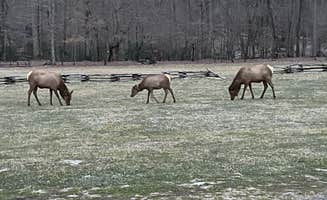
Wildlife encounters: The forests surrounding Hayesville support diverse wildlife populations. As one camper at Cades Cove Campground noted: "This is a very unique spot in the smokies. I have never seen more black bear. It was a very safe distance we watched them about a football field away across a field pretty amazing experience."
What you should know
Road conditions: Forest service roads leading to equestrian camping sites often present driving challenges. A visitor to Hurricane Creek Camp cautioned: "Definitely high clearance 4x4 or bikes. Sketchy but that's our style."
Cell service limitations: Most primitive camping areas have limited or no cellular connectivity. Plan communication needs accordingly.
Seasonal considerations: Most forest service campgrounds operate seasonally. A camper at Standing Indian noted: "Standing Indian is located at 4000+ feet, 20 minutes from Franklin,NC. It's a hikers dream with the Appalachian Trail skirting the campground and several other trails crossing through the campground."
Tips for camping with families
Water play spots: Children enjoy stream access points at many campgrounds. At Standing Indian Campground, a visitor reported: "We could hear the stream from our site at night. Exactly what we were looking for... Trails all around the site and longer ones further down the road."
Kid-friendly amenities: Some nearby established campgrounds offer facilities more suitable for younger children. A visitor at Cherokee Campground mentioned: "Very nice people. Very clean campground. Sites were tight. Could not fit truck on pull thru with 40' toy hauler. Everything worked and it was fine."
Safety precautions: Take standard wildlife safety measures when camping with children in bear country. Store food properly and teach children appropriate outdoor behavior.
Tips from RVers
Site selection: For equestrian camping with larger RVs and horse trailers, flat parking areas are limited. A camper at Track Rock noted: "Very steep and unlevel roads; especially when leaving. Our camper came in contact with the side of our bed and tailgate multiple times."
Water and waste management: Most primitive equestrian sites lack hookups or dump stations. Bring adequate water supplies and plan for waste management.
Power considerations: For RVers requiring electricity, options are limited at primitive sites. Consider solar solutions or generator restrictions at various campgrounds.






 Guide
Guide


