



 Legend
Smokemont Campground — Great Smoky Mountains National Park
Large National Park Campground Close to Historic Structures
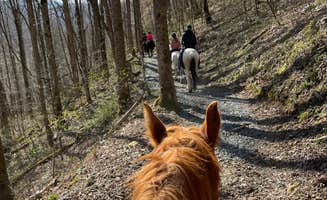
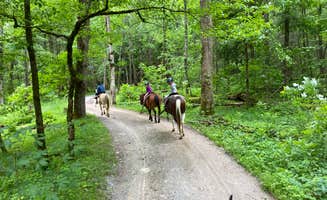
Despite having rained for a week, staying at this campground wasn’t half bad. Building a fire was next to impossible. I think there might have been thirty minutes without rain, so pictures are limited. Being in the Great Smoky Mountains National Park, you need to be prepared for rain since it is a temperate rain forest. I had brought Boy Scouts to this campground years ago and wanted to go back. This time, we did not stay in the group camping area. Since it was at the beginning of the week, it wasn’t too crowded, although there were two Boy Scout groups in the group camping area. There are several camping areas, and the one we were in allowed generators during the day. I think I heard one, but it was not so bad. Unfortunately, there are gravel tent pads, which is bad news for campers with tents you have to stake down. I’ve said it once, and I’ll say it again. As a tent camper, I hate gravel tent pads. Being in the national park, the amenities are about the same as the other national park campgrounds. However, I was surprised that the bath house had an electrical outlet to be used for blow dryers and shavers. I don’t remember any other Great Smoky Mountains National Park campgrounds having that luxury. But like the other ones in this national park, the bath house does not have showers or campsite hookups for water, sewer, and electricity. There are several trails in the area, but the ones that originate from the campground is the¾ mile nature trail and the Bradley Fork Smokemont Loop. When my son and I hiked this trail, we had to watch out for and step around horse poop. Since this trail is also used by horses, there was lots of it. Fortunately, the nature trail didn’t allow horses. My granddaughter loved walking over the log bridges and skipping rocks at the campground while it wasn’t raining. I think that was her favorite part. As with most of my camping trips, I want to explore, and there is plenty to explore around this campground. Being in the national park, there is a wide variety.
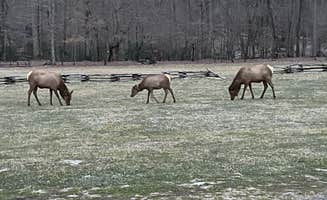
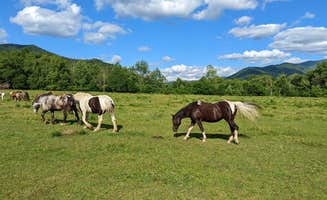
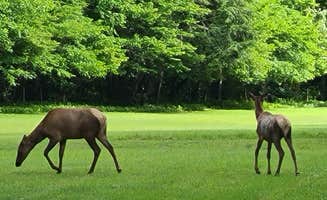
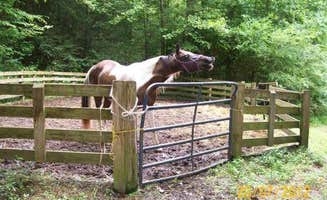
Fewer than three miles down the road, there is an old mill (Mingus Mill), the Oconaluftee Visitors Center (which has the Mountain Farm Museum), elk, wild turkeys, etc. Within the boundary of the campground I discovered something at the campground that I never knew existed. There was an old church at the campground that was built before Great Smoky Mountains National Park was established. We were able to go into the church for me to take a few pictures. It was first constructed in 1836 and rebuilt in 1912. Not too far from the campground is the Appalachian Trail, the Benton MacKaye Trail, and the Kephart Prong Trail. This campground is also one of the largest campgrounds in the national park that I have been to. Although it is not an equestrian campground, Tow String camping area is“next door,” and it is an equestrian campground. The horseback riders pass beside the campground on route to the Bradley Fork Trail. Overall, this was one of my better experiences with national park campgrounds except for the rain.


