Cullowhee sits in the southern Appalachians at 2,036 feet elevation, surrounded by dense national forests and the Tuckasegee River watershed. The region experiences mild summer nights with temperatures typically dropping into the 60s, creating favorable camping conditions from April through October. Fall camping coincides with peak leaf color in mid-October, when campground availability becomes limited.
What to do
Waterfall hiking: 3 miles from Deep Creek Tube Center & Campground you'll find multiple waterfall trails. "If you take the short drive into the national park, you will come to a parking lot, and from there, you can hike to three waterfalls close by. The closest one from the parking lot in the national park is two-tenths of a mile, and it is an easy hike," notes Myron C.
Fly fishing: North Mills River offers excellent trout waters. The river is regularly stocked and has impressive native populations. "The river is stocked and also has native rainbow trout exceeding 20 inches. Some fly-fishermen showcased their trophy catches while we stayed here," explains Randal C. Catch-and-release regulations apply on many sections.
Tubing: Float down mountain streams. In summer months, tubing is a popular cooling activity. "You can put in your tube at one side of campground and float to end of tent sites to get out (15-20 minutes total float) or drive up the road a bit to Smoky Mountain Deep Creek entrance for a longer run of about 2-3 hours and end up back in camp," describes Christy C.
What campers like
Privacy between campsites: Standing Indian Campground offers secluded spots. "Loop 4 is wooded, offering lots of privacy but is more suitable to tents or small campers," shares Phil L. The distance between sites allows for quieter camping experiences without conversations carrying between neighbors.
Creek sounds for sleeping: Riverside sites enhance the experience. Many campers specifically seek water-adjacent sites for natural white noise. "We could hear the stream from our site at night. Exactly what we were looking for," notes Chrissy R. These water-adjacent sites typically book faster than others.
Mountain elevation: Higher camps offer cooler temperatures. The elevation provides relief from summer heat. "This is my favorite campground for escaping the heat in August," says Nancy R. about Standing Indian. The higher elevation camps typically run 8-10 degrees cooler than valley locations.
What you should know
Bear activity requires proper precautions: Panthertown Valley Backcountry Area has significant bear presence. "Be aware that the bears here are extremely bad. I actually had an encounter with a very large bear who charged my group and destroyed at tent, and heard similar stories from other campers," warns Phoebe A. Bear vaults are strongly recommended for food storage.
Navigation challenges: Unmarked trails cause confusion. Many areas have unofficial side paths that aren't marked on basic maps. "Bring a good map and stick to the trails that your map covers. It's an easy place to get lost because of all the unofficial trails," advises Tony E. The Friends of Panthertown organization sells detailed topographic maps.
Seasonal accessibility: Winter limits options. Many campgrounds close seasonally. "Only one side of campground is open in winter," notes Julie T. about North Mills River. Road access to higher elevation sites can become difficult after snowfall, particularly those on gravel access roads.
Tips for camping with families
Playgrounds and activities: Cherokee Great Smokies KOA offers extensive family amenities. "All kinds of stuff for the kids. Two pools, jump pillow and pad, banana bikes, play ground and three ponds for fishing," shares Robbie T. These features provide entertainment during downtime between hiking or other excursions.
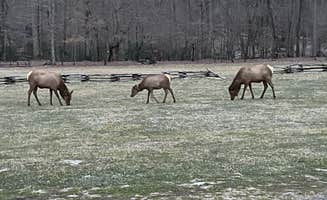
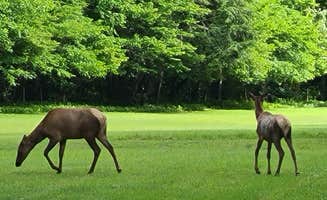
Wildlife viewing opportunities: Plan early morning outings. Dawn wildlife watching increases success rates. "If you want to see the elk, you're going to have to be up early. I use to be in the park at 5 AM with night vision gear, I saw some very nice elk," recommends Patrick K. about Cataloochee Campground.
Educational experiences: Historical structures provide learning. Many campgrounds feature preserved buildings. "There are historical homesteads, a school, churches and cemetery to take you back in time," notes Jodie K. These sites offer opportunities to discuss local history with children through tangible examples.
Tips from RVers
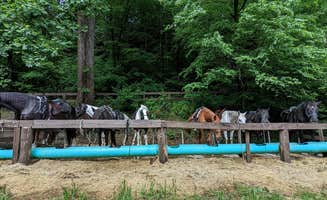
Access road limitations: Some horse campgrounds near Cullowhee, North Carolina have challenging approaches. Narrow mountain roads restrict larger vehicles. "The road is quite the trip just in a car, and I can't imagine driving a large RV on it," warns Kristina about Cataloochee. Roads with tight switchbacks often have length restrictions posted on campground websites.
Site terrain: Request level spots when booking. Mountainous terrain creates uneven camping pads. "Campsite spacing varies. Some sites have more privacy than others," notes D & Jess W. about Tsali Campground. Many sites require leveling blocks even for modest-sized RVs.
Generator restrictions: Many forests limit generator use. National forest campgrounds often have noise ordinances. "Good camping without hookups. There are water spigots, but not at camping sites," explains Mark C. This limitation requires battery power management or solar solutions for extended stays.








 Guide
Guide


