



Tom P. Traveler
TravelerWhites City Road Dispersed Camp
Desert camping
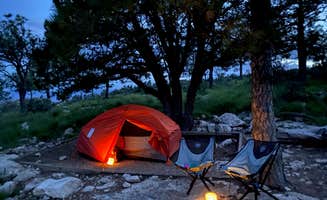
4 miles from Carlsbad Caverns NP. Not traffic. No noise. We had area to our self. Level Dirt/gravel area. Bring water and toilet. Would stay here again.
9 campgrounds · Check availability for any dates.
Primitive tent camping near Carlsbad Caverns includes both backcountry and developed tent campsites for those seeking solitude in the desert. Rattlesnake Canyon offers backcountry tent camping within Carlsbad Caverns National Park boundaries, while several wilderness campgrounds in nearby Guadalupe Mountains National Park provide additional tent-only options, including Guadalupe Peak, Tejas, and McKittrick Ridge Wilderness Campgrounds.
Backcountry camping at Rattlesnake Canyon requires a free permit obtained at the visitor center. Campers must hike at least half a mile from the trailhead along Walnut Canyon Desert Drive and camp at least 100 feet off the trail. The terrain is generally rocky and sandy with minimal cleared areas. Based on reviews from The Dyrt, campers should bring a heavy-duty tarp or ground cloth as many suitable tent spots are quite rocky. No fires are permitted in these backcountry tent sites, and campers must pack in all water needed for their stay.
In early fall, many backcountry tent sites offer cooler temperatures and fewer crowds. The wilderness tent sites are particularly appealing for hikers looking to summit Guadalupe Peak or explore the park's extensive trail system. A review noted that Rattlesnake Canyon backcountry camping provides "a more natural camping setting than other options in the area" with virtually guaranteed solitude. Tent campers typically enjoy unobstructed views of the surrounding desert landscape, with opportunities to experience the park after day visitors have departed. Weather conditions can change rapidly, with February temperatures dropping significantly at night and summer months bringing intense heat. Most wilderness tent sites lack basic amenities, with no water sources, restrooms, or shelters available, requiring backcountry campers to be entirely self-sufficient. Early fall remains the most popular season for tent camping near Carlsbad Caverns, when moderate temperatures and thinner crowds make backcountry tent campsites most accessible.
"Permits are required for camping along the Rattlesnake Canyon Trail, but those are easily acquired at the visitor center."
"Rattlesnake canyon- backcountry camping close to Carlsbad caverns- wayyy cooler than the KOA in town or the other camping options I've explored."
"There are no facilities or amenities at this campsite - no water, no restrooms, no shelters, no firewood, no wifi. Just views that stretch on for miles and miles."
"There are clean bathrooms, but no showers available. There are no hookups, but campers can run generators before quiet hours begin at 8pm. A very scenic, friendly place to camp."
"My buddies and I camped up here in the summer (dumb of us) but the view up to the campsite was worth it even though it was the steepest trail in all of Texas but when we got to camp there were some knocked"
from $6 - $12 / night
Check Availability"Two ways to approach with different difficulty levels, both 8 miles of backpacking and both are lovely. There’s a little cave along the trail!"
from $6 - $48 / night
Check AvailabilityTraveler4 miles from Carlsbad Caverns NP. Not traffic. No noise. We had area to our self. Level Dirt/gravel area. Bring water and toilet. Would stay here again.
 Legend
Only 20 minutes from Carlsbad Caverns NP and about 30 minutes from Carlsbad NM! Slaughter canyon trail is 20 minutes down the same road the campsite is on. This is a great spot off the highway. You can hear some noise throughout the night. Also, it can be noisy if neighbors are loud.
The area is a fenced-in level gravel lot with pit toilets, trash, picnic table sites, and tent sites. Each site has a grill and campfire area with a covered picnic table. Sites fill up quickly, but there are plenty of spots to park next to the fence. Easy to get here with any kind of camper (RV, trailer, ect). Views are great, and the area is maintained well.
The campground allows five consecutive nights of camping. Verizon service was good!
LegendOnly 20 minutes from Carlsbad Caverns NP and about 35 minutes from Guadeloupe Mountains NP!
The area is a large gravel lot with some brush and scubs scattered about. Very cool campground with cave systems to explore. Bring helmets, headlamps, and some sturdy boots! As you drive up to the camping area, there are a lot of pull off sites if you don't want to camp in the larger area near the cave systems. Lots of fire rings!
Dispersed area, pack in pack out. Verizon service was good!
 Guide
GuideNice camping spot only about 5 miles from Carlsbad Caverns. The sites are nice and the vault toilet was very clean. I camped here in February and there was plenty of room. I got here around 5:30 PM.
 Legend
Excellent full service RV park. The hook ups are in excellent repair. This particular KOA offers hot food delivered to the sites in Lou of eating inside the facility. Despite the name, it is quite a hike from Carlsbad Caverns if that is your destination. It is very close to Beantly Lake and a very quiet setting. The pads are gravel but level. Excellent staff. Would stay again!
GuideThis free site is only 7 minutes from the entrance to Carlsbad Caverns. We showed up around 6:30 and all the sites were taken so we set up along the edge of the campsite. There are shaded picnic tables, trash cans, and a clean enough vault toilet. The sun set and sunrise were amazing!
LegendOnly 30 minutes from Carlsbad Caverns NP and about 20 minutes from Carlsbad NM! This is a great spot off the highway with basically no noise from cars.
The area is a level gravel lot with some brush and scubs scattered about. Seems like a place that isn't well known. I'd recommend high clearance to get up to the main area. There are other sites as you follow the road up the hill, but the road gets more rocky the further you go up. One fire ring in the main area and some fire rings in other sites. If you want a site that you can't see the highway from, this is the spot.
Dispersed area, pack in pack out. Verizon service was good!
 Scout
ScoutRestrooms were clean and showers were hot! Super windy while we were there, but made for a nice, quiet place to sleep. About an hour from Carlsbad Caverns, which was awesome! Dump station, if you care, was closed while we were there.
 Guide
GuideCrowded, charming, typical KOA. Located about 30 minutes from Carlsbad Caverns National Park. Quaint store, great play room (super nice staff- left the playroom open for us an additional hour due to downpour!) Accommodated our family as our reservation was deleted and we had nowhere else to go! :) Great clean restrooms and showers.
Tent camping near Carlsbad Caverns, New Mexico typically requires thorough preparation due to the extreme desert conditions where summer temperatures can exceed 100°F while winter nights drop below freezing. The Guadalupe Mountains region surrounding the caverns sits at elevations ranging from 4,000 to 8,749 feet, creating significant temperature variations throughout the day. Most wilderness camping options in this area lack water sources, requiring campers to carry all necessary water for their stay.
Hike Devil's Hall Trail: Located near Guadalupe Peak Wilderness Campground, this moderate 4.2-mile round trip takes you along a wash and into a canyon. "I did two hikes, the first was the Devil's Hall Trail, which is along a wash and into a canyon. 4.2 miles round trip and moderate," notes Brian V., who recommends good shoes and plenty of water.
Summit Guadalupe Peak: The highest point in Texas offers a challenging but rewarding hike. "We started around 7:30am, got to the summit around 12:30pm and then got back down around 4pm. We were chased down by some thunderstorms that were common that time of year," shares a visitor who recommends starting before sunrise to avoid afternoon storms.
Experience the caverns after hours: While most visitors leave after daytime tours, backcountry campers at Rattlesnake Canyon Backcountry Camping get to experience the park's unique atmosphere after closing. "We emerged from the caverns to see a sea of flames coming from the oil fields in what I guess is just south of the park. Gorgeous sunset- seemingly nobody else around," reports Kelly M.
Genuine wilderness experience: Many campers value the solitude found in primitive sites. "Definitely more of a nature experience than the other camping options I'm aware of in the area. Permits are free and can be obtained at the visitor center," writes a camper about Rattlesnake Canyon.
Pre-cleared tent spots: Despite the rocky terrain at McKittrick Ridge Wilderness Campground, hikers note there are established areas for setting up camp. "There are several cleared out spots already for use, so keep an eye out! Strenuous hike out," advises Katie P., indicating the importance of spotting these areas amid the wilderness.
Protective tree cover: Tent camping at Tejas Wilderness Campground offers shelter from elements. "The hike up has great views, then you drop down in a valley for the camp sites. They supply tent pads only... This would be a great site for the summer due to the tree coverage or on windy nights since you're protected," notes Barbara G., highlighting the practical benefits of this location.
Rocky terrain requires special gear: The desert landscape presents challenges for tent setup. "You'll want to bring a heavy duty tarp/ground cloth as many of the otherwise decent tent spots are pretty rocky," advises a Rattlesnake Canyon camper who recommends reinforced ground protection.
High winds common: Mountain camping sites experience extreme weather conditions. "The campsite is on a nook of the mountain and marginally protected from high winds. There are a few trees and a few rock windbreaks near the tent pads. The winds often exceed 80 miles per hour, so even if it is not windy when you arrive, secure your tent with additional guy lines," warns Troy W. about Bush Mountain Wilderness Campground.
Permit system basics: All backcountry camping requires permits. "When I first saw this one I was a bit hesitant because of the name itself... This one is one that you will be required to get a permit. That permit is FREE, basically they just want to know you are out there just in case," explains Crystal C. about the straightforward permit process.
Weight distribution for kids: When backpacking to remote sites, consider how much children can realistically carry. "Full disclosure: this was our first backpacking trip. And it was amazing. Yes, our packs were too heavy... We were packing nearly 50lbs each," shares Peter about their learning experience at Guadalupe Peak.
Time management with children: Allow extra time when hiking with young hikers. "The 3.1 miles hike to the campground was very tough... Eventually we made it to the Guadalupe Peak campground about 4 hours after leaving the Pine Springs campground. We were not rushing," notes a family who took their time on the trail.
Wildlife awareness training: Before visiting Shumard Canyon Wilderness Campground or other backcountry areas, prepare children for potential snake encounters. "I, a person petrified of snakes and also familiar that names are often given for a reason, was skeptical to say the least," mentions one camper, highlighting the importance of wildlife awareness when visiting Rattlesnake Canyon.
RV access limitations: Most wilderness camping near Carlsbad Caverns is accessible only by foot. "This is a backpacking campsite just over 3 miles away. The peak is about a 7 hour hike... I wouldn't call this camping, it is backpacking. So there are no amenities at all and you can't get here by car," clarifies Lynn G., emphasizing the importance of understanding access limitations.
Generator restrictions: RV campers at developed campgrounds face strict noise regulations. "There are no hookups, but campers can run generators before quiet hours begin at 8pm," notes Carlyne F., providing important information about power management at Pine Springs campground near Guadalupe Peak.
Frequently Asked Questions
Which is the most popular tent campsite near Carlsbad Caverns, NM?
According to TheDyrt.com, the most popular tent campground near Carlsbad Caverns, NM is Rattlesnake Canyon - Backcountry Camping — Carlsbad Caverns National Park with a 4.6-star rating from 5 reviews.
What is the best site to find tent camping near Carlsbad Caverns, NM?
TheDyrt.com has all 9 tent camping locations near Carlsbad Caverns, NM, with real photos and reviews from campers.
Keep Exploring