Camping options near Norfolk, Massachusetts include both developed and primitive sites within a 45-mile radius. The region features a mix of pine forests, wetlands, and kettle ponds formed by glacial activity. Fall temperatures typically range from 40-65°F, making it ideal for equestrian camping between September and November when fewer bugs are present and trails aren't as crowded.
What to do
Equestrian trail riding: At Frog Hollow Horse Camp at Pachaug State Forest, riders can access three horseback riding loops directly from the campground. "Three horseback riding loops leave from the campground. There's also fishing and hiking available in the forest," notes Jean C.
Pond swimming: Kettle ponds at Charge Pond Campground — Myles Standish State Forest provide clear water swimming. "The pond water was very clear, seeing as they are fed from natural springs under the ponds," reports Kyle C. Families appreciate the sandy beach areas with bathhouses.
Biking: The paved and unpaved trails throughout Myles Standish State Forest accommodate cyclists of various skill levels. "There are several miles of bile trails that were very enjoyable," shares Kyle C., while another camper adds, "Great camping spot to road ride from. Nice park. Good access to surrounding new England towns."
What campers like
Private, wooded sites: Ponkapoag Camp offers rustic accommodations with natural separation between sites. "Our site was wooded and pretty private for a state campground. We had plenty of room and the site had a fire pit and picnic table," writes a visitor. The camp features both cabins and tent sites dispersed throughout the wooded property.
Resort amenities: For campers wanting extensive facilities, Normandy Farms Campground provides exceptional conveniences. "There is a really long list of amenities for this campground...four pools (include an indoor heated one), fitness room (with elliptical, treadmills, bikes, machine and free weights), creative arts center, camp store," explains Nancy W. The campground also features dedicated spaces for dogs, with one camper noting, "Some of the really good features are the huge dog park which has a dog washing station, water fountains for dogs and humans, agility-type obstacles."
Close proximity to Boston: Campers appreciate locations that allow day trips into the city while maintaining a natural setting. "Ponkapoag Camp is run by the AMC. The camp is on a beautiful piece of wooded land surrounding a large pond/lake. Getting there: The driveway to the camp is totally unmarked. It is a gate studded with two american flags," explains Rita M. Despite being "minutes from Boston," the campground "feels miles away."
What you should know
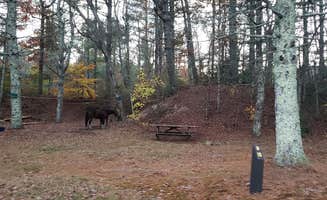
First-come, first-served equestrian sites: Wolf Den Campground — Mashamoquet Brook State Park and other horse camps in the area operate without reservations. "The parking pads are paved and a few have overhanging branches, but the trees provide separation and some shade on largely open sites that tend to open up toward the back with open areas for pitching tents," reports Jean C.
Limited amenities at state forests: Many equestrian camping areas provide only basic facilities. "This is rustic camping, no water or electricity and the bathroom is an outhouse and no showers," notes Stacy about Ponkapoag Camp. Similarly, at Frog Hollow Horse Camp, "Campsites are located around a loop with a couple of composting toilets near the entrance. Water is available."
Seasonal operations: Most state park campgrounds operate on limited schedules. Myles Standish State Forest operates "mid May-late Sep" while Wolf Den Campground runs "May 26 to September 4." However, some trails remain accessible for day riding throughout the year.
Tips for camping with families
Look for structured activities: Normandy Farms Campground offers dedicated children's programming. "We stayed here for a few nights when they celebrated Halloween 🎃. It is super easy to get around. They had tons of festive activities," shares Liz W., adding that bathrooms are clean and both indoor and outdoor pools are available.
Consider cabin options: Several horse campgrounds near Norfolk offer cabin alternatives for families not wanting to tent camp. "The cabins have assorted dressers and shelves for storage, and a table for dining on those bad weather days. The floors are wooden. Many cabins have wood stoves, which is great for the cooler parts of the year," explains Rita M. about Ponkapoag Camp.
Find campgrounds with play areas: Kids need spaces to burn energy between trail rides. "The campground doesn't have hook ups, but there is a dump station with water and water available around the loops," notes Kim R. about Myles Standish, adding, "There's a small playground in the middle of the loop, a number of hiking trails throughout the park along with a few geocaches."
Tips from RVers
Book premium sites for larger rigs: At Normandy Farms, different site types accommodate various vehicle sizes. "There are plenty of sites to choose from the 'premium' full hook-up (50 amp) to basic with just water and electric and many others in between. Both back-in and pull thrus are available," explains Nancy W. "Our site was easy to navigate in and out of and was definitely big rig-friendly with ample space for our motorhome and tow car."
Expect varying pad styles: Surface types differ between campgrounds. "Premium sites have paved patios while other sites are gravel. Roads are paved and plenty wide enough for big RV's to navigate," notes a Normandy Farms visitor. At state parks like Myles Standish, "Some sites are on slight inclines and have a lot of roots so it makes having more than one tent hard."
Check seasonal water availability: When camping with horses, water access is crucial. At LeGrand Reynolds Horsemen's Camping Area in Rhode Island's Arcadia Management Area, full hookups including water are available, while at more primitive sites, water sources may be limited to central spigots or natural sources that require filtering.




 Legend


