Dispersed camping near Taswell, Indiana concentrates primarily within the Hoosier National Forest, where undeveloped sites offer an authentic backcountry experience. The region sits at approximately 800 feet elevation with rolling terrain characterized by limestone outcroppings, dense hardwood forests, and seasonal creeks that may run dry in summer months. Road conditions vary significantly depending on recent weather patterns, with many forest service routes becoming rutted after heavy rainfall.
What to do
Hike the Knobstone Trail: The challenging terrain on this trail system includes significant elevation changes that test even experienced hikers. A camper noted, "The KT is rugged and has lots of elevation gains over short distances. Everywhere you hike there are lovely vistas and lots of fossils on the trail and creek beds." Bring water filtration equipment as "water can become scarce in the summer/fall months."
Fossil hunting: Explore creek beds throughout the Hoosier National Forest where limestone outcroppings contain abundant marine fossils. "Big spot for almost any type of camper. Deep woods," reports one visitor who appreciated the geological features.
Observe wildlife: Morning and evening hours provide opportunities for wildlife viewing from your campsite. One camper at Mitchell Creek Road Dispersed reported hearing "a large band of coyotes in the distance" and encountering numerous turtles on roads. Pack binoculars and maintain appropriate food storage to avoid unwanted animal visitors.
What campers like
Genuine solitude: The minimal traffic on forest roads creates exceptionally quiet camping environments. A camper at Horse Camp Rd Dispersed simply stated, "Cool place" when describing the isolation of these sites. Most dispersed areas see few visitors even during peak seasons.
Disconnection opportunities: Lack of cell service forces digital detox. One visitor at Hickory Ridge appreciated the area as a "Good spot to get some quiet time to learn/hone skills or for some good quality time with the family while being plugged into nature and unplugged from their electronics."
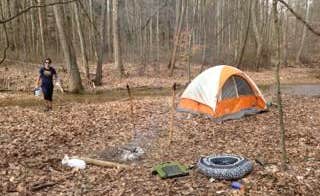
Creek-side camping: Several pullouts along Mitchell Creek offer streamside camping opportunities when water levels permit. A recent visitor described the area as having "a creek and is flat enough for a tent mostly just a single person spot no toilets." These spots provide natural white noise and cooling effects during summer months.
What you should know
Navigation challenges: GPS reliability varies throughout the forest. Paper maps are essential backup tools. A camper at Jackson Trailhead advised, "there's parking after a decrepit gravel road and suitable for camping. there are campsites along the trail just have to find them."
Road conditions: Many access roads deteriorate quickly after rain. Several forest routes require high-clearance vehicles. One camper reported, "Road south coming in was destroyed some time ago have to w yer from east or west road." Recent storm damage may alter accessibility without warning.
Limited amenities: No established facilities exist at any dispersed sites. A visitor described Mitchell Creek Road as "a bare bones location. There was evidence of a homemade fire pit and a small cleared area." Pack adequate water, waste disposal bags, and all necessary supplies before arrival.
Tips for camping with families
Size limitations: Most sites accommodate only small camping setups. A recent visitor noted, "This is NOT a campground, but just roadside pull-offs on public land. There are no restrooms, fire rings, picnic tables, or other amenities."
Safety preparations: Limited cell service means emergency assistance could be delayed. Bring a complete first aid kit and know evacuation routes. A camper warned about navigation: "Have a paper map handy, as there is no cell signal and GPS was spotty."
Alternative options: For families wanting more established facilities, the Knobstone Trail area has more structured options. A visitor described it as "very family friendly and quiet. The sites are spacious, and there are a lot of nature things to do."
Tips from RVers
Vehicle limitations: Most dispersed sites near Taswell cannot accommodate larger vehicles. Site pullouts typically allow for small vehicles only with minimal turning radius. Some pulloffs were described as "nearly too small to turn around my small pick up truck."
Access reconnaissance: Scout potential sites before attempting to navigate with larger vehicles. One frustrated camper reported, "I drove back and forth on the road several times looking for this place. The only thing I found was what I believe was the entrance with a cable across it."
Road width concerns: Forest service roads typically measure less than 10 feet wide with few passing areas. A camper described Mitchell Creek Road as "a very skinny gravel road" with minimal space for vehicle maneuvering or passing.




 Scout
Scout


