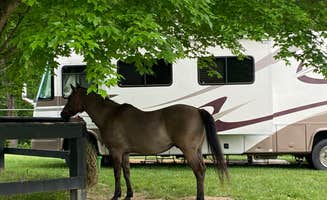
Blackwell Campground offers 14-day dispersed equestrian camping on mostly flat, grassy terrain within Hoosier National Forest near Solsberry, Indiana. The open-field design accommodates horse trailers with direct access to over 15 miles of trails. Unlike developed campgrounds with dedicated corrals, Blackwell requires riders to manage their horses at individual campsites while providing basic amenities like vault toilets and a pavilion area.
What to do
Trail riding connections: Blackwell Campground serves as a gateway to extensive horseback riding opportunities throughout Hoosier National Forest. "I found this place a few years ago and it has become my local go to. It is free camping and first come first serve," notes Joe B. in a recent review of Blackwell Campground.
Explore pioneer history: Just 7 miles from Nashville, Indiana, Yellowwood State Forest offers a break from equestrian adventures. "Yellowwood State Forest, named for the environmentally unique Yellowwood tree, is 23,326 acres located 7 miles West of the artist community of Nashville, Indiana," explains reviewer Stephen & Theresa B. of Yellowwood State Forest.
Seasonal stargazing: The open field layout at Blackwell creates excellent night sky viewing conditions. "No set camp spots but great to set up and have no light pollution! Close to town but also right off some amazing trails!" shares Emily H. The lack of tree cover that creates summer heat also provides unobstructed views of constellations during clear nights.
What campers like
Solar accessibility: The open field design that limits shade proves beneficial for campers with solar setups. "Great boondocking spot, plenty of flat land making leveling easy. Wide open so solar charging was easy," writes The Wandering Shores about Blackwell Campground. "If you're a solar person, this is your spot!" confirms Juniper L.
Wildlife encounters: The adjacent woodland areas provide opportunities for wildlife observation. "Screech owls and active birds made it an exciting evening," reports Josie W. about their camping experience. Morning and evening hours typically offer the best wildlife viewing around the campground edges.
Uncrowded weekday camping: Midweek stays offer significantly more privacy and space. "We were there for 7 days and while they have room for probably 50 or 60 rigs there was only 3 or 4 of us there most of the time," notes The Wandering Shores. Another camper adds, "It was nearly empty (although it was the end of November). The hiking was fantastic and the few people camping there were very well dispersed and all respectful."
What you should know
Weather preparedness: The open field layout means limited protection from elements. "If you're looking for shade or here in the summer months, you may try elsewhere as there is not much shade to be had," advises Juniper L. The lack of tree cover makes Blackwell particularly hot during summer months and offers little wind protection during storms.
Water management: No water hookups requires additional planning for horse owners. "No water hook ups had to drive to Hardin 3 miles over and pay $5 for their shower and water for our horses," explains Cj H. about their stay at Young's Creek Horse Camp. Campers should bring sufficient water for themselves and their animals or plan regular trips to nearby facilities.
Alternative locations: For those seeking more secluded options, dispersed sites exist throughout Hoosier National Forest. "If you come from the East you will pass horsecamp that only has paid for sites. Continue down the road you will see a sign for a second horse camp skip that as well! If you go to the end and take a right there will be spots at the beginning of the trail heads secluded with fire rings," suggests Ry M. about finding more private camping spots.
Tips for camping with families
Trail difficulty planning: When bringing children, evaluate trail difficulties in advance. "The trails are well paved and marked, not too strenuous. So many beautiful trees and plants to see, plus lots of creeks to walk through," notes Hannah F. about trails in Charles C. Deam Wilderness. Most connecting trails are moderately difficult but some easier sections exist.
Evening activities: Plan nature-focused evening activities since limited recreational amenities exist. "I walked the creek for hours just looking at all the rocks on the sandbars. I have never encountered so many geodes in my life," shares Sarah R. about creek exploration in Charles C. Deam Wilderness. Creek areas near camp provide natural play spaces when supervised.
Camping spot selection: For families not using horses, specific areas offer better experiences. "If you continue down the road you will see a sign for a second horse camp skip that as well! If you go to the end and take a right there will be spots at the beginning of the trail heads secluded with fire rings," advises Ry M. These spots often offer more privacy and typically have established clearings for tents.
Tips from RVers
Leveling considerations: The field's terrain requires attention to leveling. "Plenty of flat land making leveling easy. Wide open so solar charging was easy," notes The Wandering Shores about Berry Ridge Road Dispersed Camping. While generally flat, small variations require blocks or leveling systems for longer stays.
Site selection for larger rigs: Not all spots accommodate larger trailers or RVs. "Some sites, at least one, could fit a pretty good sized camper," observes Jeremy F. For horse trailers with living quarters, arrive early on weekdays to secure the most level, accommodating sites near trail access points.
Road condition awareness: Access roads may present challenges during wet conditions. "I have a promaster conversion and had no trouble making it to this site, however the road was gravel and steep at times," shares Amber R. Following heavy rains, some access points may become temporarily difficult for larger rigs to navigate safely.




 Legend


