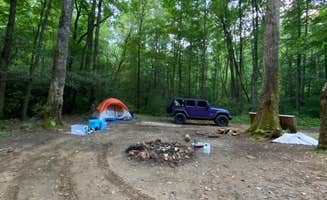
Dispersed camping near Tiger, Georgia offers primitive sites throughout Chattahoochee National Forest at elevations between 2,000-4,000 feet. Summer temperatures typically range from 60-85°F, while winter nights often drop below freezing. Most sites feature established fire rings with little other infrastructure, requiring campers to be self-sufficient with water and waste management.
What to do
Explore mountain streams: Multiple campsites along Tallulah River Rd Dispersed Camping provide access to fishing and wading spots. "Nice wide camping spot. Very primitive and if you desperately need toilet facilities, there are a couple of established campgrounds just down the road," notes Clayton S.
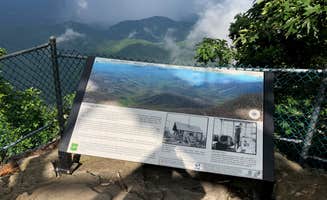
Hike to panoramic vistas: The Albert Mountain Firetower Dispersed Campsite offers challenging terrain with significant rewards. "Once you make it to the Fire Tower, however, all is forgiven. The site from the bottom is breathtaking, and you can see, well, forever," explains William S. who adds, "Heading up the tower, you get an almost full 360º panorama of the surrounding valleys and mountains."
Stargazing opportunities: The dark skies in this region make it ideal for astronomy enthusiasts. One camper at Corbin Creek Tray Mountain noted, "All of tray mountain sits within the few dark areas within north Georgia" and that it's "worth it if you're into astrophotography."
What campers like
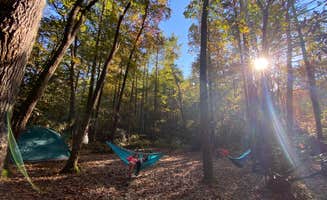
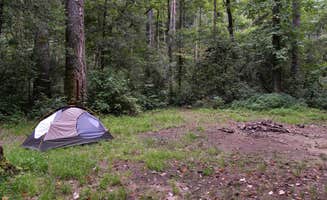
Privacy between sites: Blue Valley Dispersed Camping features well-separated campsites. "Beautiful, large, private sites. You couldn't see our site from the road, huge site, lots of woods surrounding for kids to play and explore, right beside a gorgeous large creek," reports Kristin S.
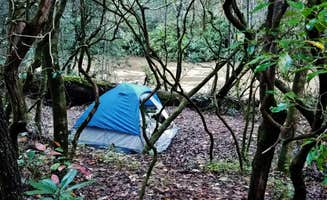
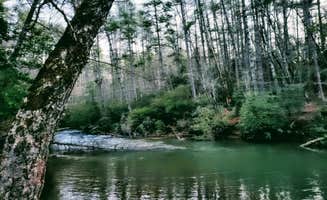
Multiple water features: Creeks and small waterfalls enhance many of the rustic camping areas near Tiger, Georgia. At Soggy Boot Campground, one camper mentioned, "You can also hike up or down the stream to get to other beautiful small falls that are perfect for swimming in during the hot summers."
Natural swimming spots: Several creek-side locations offer swimming opportunities during warm months. Cooper B. describes Soggy Boot as having "a very flat area, a fire pit, and creek surrounded by forest and mountains."
What you should know
Navigation challenges: Finding sites can be difficult, especially after dark. About Blue Valley, Alex T. reports, "8 very well kept campsites. Almost all near a creek of some sort. Hiking trails near by. No facilities. Room for larger groups ~40 people max for the biggest site ~6 for the smallest."
Vehicle requirements: Many sites require appropriate vehicles to access. "A 4wd with moderate clearance is helpful. Wonderful stream running through the campsite," advises one camper about Miller Branch Camp.
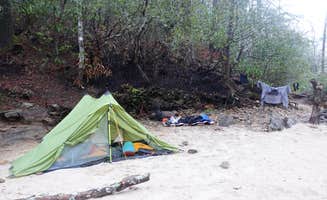
Water availability: While streams are common, potable water isn't guaranteed. At Albert Mountain Firetower, "The site itself is a small clearing with a little built up firepit. There is plenty of space for 1-2 tents and it is somewhat protected by shrubs."
Tips for camping with families
Group-friendly options: Some sites accommodate larger parties. At Blue Valley, Garnet B. advises: "From Highlands, follow NC 28 south about 5.5 miles and turn right onto Blue Valley Rd. (S.R. 1618) at the sign. The pavement will end in a half mile. Just stay on the main path for just little over 3 or so miles."
Stream-accessible sites: Children enjoy creek-side locations. One visitor to Soggy Boot Campground described it as "a large group site right by a small waterfall. If you have the place to yourself it is incredibly secluded and a wonderful spot."
Hiking difficulty considerations: Some sites require challenging hikes. At Mooney Gap Backcountry Group Campsite, Asher K. notes it's "perfect for heading up to the nearby Albert Firetower" but warns "if you stay here don't continue down the trail I went on since it doesn't actually connect back to the main trail."
Tips from RVers
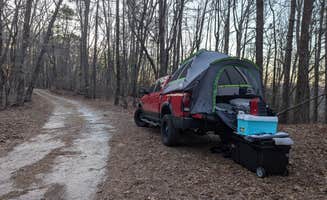
Size limitations: Most dispersed sites around Tiger can only accommodate smaller RVs. A camper at Corbin Creek Tray Mountain explains, "It's more Jeep friendly than full size vehicles, to get a spot down by the creek. But it is possible to get a full size 4*4 truck down the switch back."
Rough road conditions: Access roads to primitive camping areas are typically unpaved and challenging. At Soggy Boot Campground, a visitor warns that "road is very bumpy" and that reaching campsites requires careful navigation.
Limited turnaround space: Many forest roads have few places to turn around larger vehicles. When visiting Blue Valley, Crystal C. found "a very primitive gravel road. Pretty rough in some places and very narrow, let's just say I wouldn't want to end up encountering another car."














 Legend


