Dispersed camping areas near Rydal, Georgia cluster primarily within the Chattahoochee National Forest and local Wildlife Management Areas (WMAs). The region sits at elevations between 700-4,000 feet with temperature variations of 20°F possible between valley and mountain campsites. Primitive camping options typically require navigation of unmaintained forest service roads with washouts and ruts common after rainfall.
What to do
Swimming and wading: Jones Creek Dispersed Campground provides direct access to calm waters suitable for novice swimmers. "This river is amazing, low current makes its easy to walk in and there are a few little water falls," according to a camper.
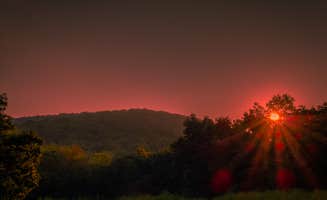
Stargazing: Access unobstructed night sky views at Ball Field Dispersed Camping Area during summer months. One camper noted it has "remote, little light pollution, and deep in the mountains." Plan visits during new moon phases for optimal star visibility.
Trail hiking: Access multiple trail networks from primitive campsites, including Emery Creek Trail and Tearbritches Trail. A camper at Ball Field notes, "One can hike up to the top of nearby Bald Mountain and then hike down to the Conasauga River."
Group camping: Several sites accommodate larger parties with minimal vehicle requirements. A visitor to Ball Field mentioned, "We headed to the primitive group camping site. Gravel road, lots of rocks included, and dust but if your not worried about your car do it!"
What campers like
Natural water features: Conasauga River Camp receives high marks for water quality and swimming conditions. A recent visitor described it as "a very swimmable and warm crystal clear river - very popular with locals."
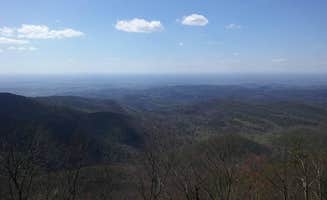
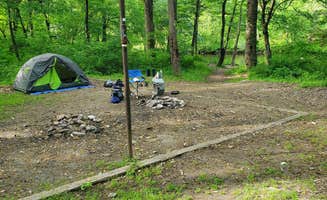
Solitude at certain sites: Some campers value the isolation available at Mountain Side Overlook. A reviewer noted, "Nice firepit, hiking across the way. 4x4 is not required, but ground clearance makes it non-accessible to some."
Wildlife viewing: The region supports diverse animal populations, though bear activity requires proper food storage. Campers regularly report sightings in reviews, with one Ball Field visitor warning to "Watch out for bears."
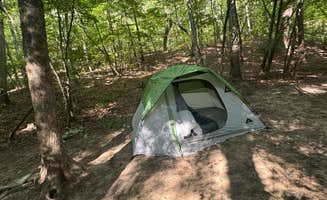
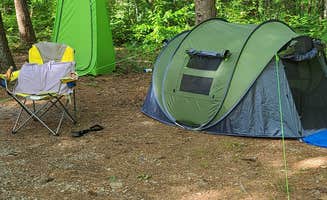
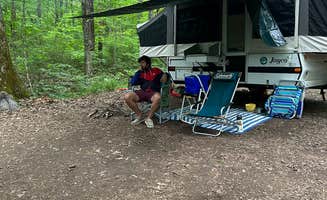
Multiple camping configurations: Most areas allow both tent and small vehicle camping. "We stayed 3 days 2 nights here in our 21' pop up camper with our generator," noted a camper at Blue Hole, demonstrating flexibility for different setups.
What you should know
Vehicle requirements: Most access roads demand high-clearance vehicles. A Hidden Creek Campground visitor explained, "We went right which goes up, passed an open gate followed the road LOTS OF DEEP POTHOLES. The road then opens up to a four way, we kept going straight, followed the road down and then came to three sites all empty."
Navigation challenges: GPS directions frequently fail in this region. A Hidden Creek camper warned, "Look for the big wooden sign that indicates that it is for public use" since GPS "will take u to someone's private property next door."
Land passes: Some Wildlife Management Areas require permits. At Blue Hole Dispersed, "Land pass required. No alcohol is permitted. This is a wildlife management area."
Seasonal crowds: Summer weekends see significant traffic at popular water-adjacent sites. A Conasauga River Camp visitor noted it would "be packed on weekends" despite being "lovely" during weekday visits.
Site availability: First-come, first-served basis applies to all dispersed sites. Arrive early, especially for water-adjacent locations. "First location was Hickey Gap, we got there around 1 on a Friday and it was full," reported one Ball Field visitor.
Tips for camping with families
Stream exploration: Select sites with shallow, accessible water features for younger children. "The river is amazing, low current makes its easy to walk in," notes one Jones Creek visitor, making it suitable for families with various swimming abilities.
Pack adequate supplies: No services exist near most primitive sites. Bring all food, water, first aid supplies and waste disposal bags for your entire stay.
Consider age-appropriate trails: Jack's River Falls Trail offers backcountry experiences that challenge older children. A camper observed, "This is a tough trail but good for teens looking to challenge themselves in the back country."
Prepare for temperature fluctuations: Mountain elevations experience significant day/night temperature changes. Pack additional layers even for summer camping.
Wildlife safety education: Teach children proper food storage and what to do if wildlife appears. A Ball Field camper advised, "There are bears in the area and they love food. A fed bear is a dead bear-please don't leave any food out."
Tips from RVers
Site reconnaissance: Scout potential campsites before attempting access with larger vehicles. "There are 2 drive in tent spots, with 2 more at the end of a trail," notes a visitor to Murrays Lake Primitive, highlighting the importance of knowing site configurations.
Leveling equipment: Bring substantial leveling blocks for uneven terrain. "The field is fairly sloped, so you want to have some shoring if you are in a trailer, roof top tent, or van," advised a Ball Field visitor.
Road condition assessment: Research recent weather impacts on access roads. "The road in can be handled by a sedan," noted a Murrays Lake camper, providing crucial information for RV planning.
Generator consideration: Verify generator policies before arrival. Some sites explicitly prohibit them while others allow limited use. One Blue Hole camper mentioned successful use of a generator with their pop-up camper.








 Traveler


