Dispersed camping near Carrabelle, Florida offers primitive sites throughout the Apalachicola National Forest, Florida's largest national forest at over 632,000 acres. The forest features extensive longleaf pine ecosystems and numerous freshwater streams accessible via forest service roads. Weather conditions vary dramatically between seasons, with summer temperatures regularly exceeding 90°F accompanied by high humidity, while winter nights can occasionally drop below freezing.
What to do
Kayaking and fishing: Porter Lake Dispersed Camp provides direct water access for small watercraft. A camper notes, "The river is beautiful to boat or kayak and fish," making it an ideal base for water-based exploration of the forest's waterways.
Wildlife observation: The remoteness of Buckhorn Hunt Camp creates excellent wildlife viewing opportunities. According to a visitor, "Not all that busy outside of hunting season," which means better chances to spot native species in their natural habitat.
Night sky viewing: The significant distance from urban areas creates minimal light pollution. Apalachicola National Forest sites typically offer unobstructed views of constellations and astronomical events, especially during new moon phases when skies are darkest.
What campers like
Escape from urban environments: Many visitors appreciate the isolation. As one Porter Lake Dispersed Camp camper stated, "Nice spot for a quick getaway from city life," highlighting the psychological benefits of forest immersion.
Basic facilities: Despite the primitive nature, some sites offer minimal amenities. A Porter Lake visitor mentioned, "There's toilets and a non potable spigot to clean off personal items," which can make rustic camping more comfortable for those unaccustomed to completely undeveloped sites.
Privacy between campsites: Spacing between designated camping areas provides solitude. A Buckhorn Hunt Camp review noted that "Spots are reasonably private," allowing campers to experience forest isolation even when other visitors are present.
What you should know
Supply preparation: The extreme remoteness requires thorough planning. According to one Twin Poles Hunt Camp visitor, sites are "at least 30 miles either way on F13 (dirt road) and other routes to any type of civilization," necessitating that campers bring all essential supplies.
Road conditions: Forest service roads can be challenging, particularly after rain events. Most access routes are unpaved, ranging from well-maintained gravel to rough dirt tracks requiring high-clearance vehicles.
Seasonal considerations: Summer brings intense heat, humidity, and biting insects. Winter offers more comfortable temperatures but requires warmer sleeping gear. Spring and fall generally provide the most pleasant camping weather with moderate temperatures and lower humidity.
Tips for camping with families
Wildlife education opportunities: Bring field guides specific to Florida's Panhandle region to identify plants, birds, and animal tracks found around camp. Children can create nature journals documenting discoveries.
Water safety precautions: Cliff Lake Hunt Camp in Apalachicola Forest and other waterside sites require constant supervision of children near water. Bring personal flotation devices for all water activities regardless of swimming ability.
Bug protection: The forest environment harbors numerous biting insects, particularly during warmer months. Pack child-safe insect repellent, long-sleeved clothing for evening hours, and consider screened shelters for meal preparation areas.
Tips from RVers
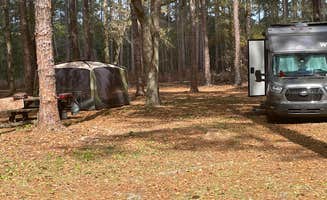
Size limitations: Most forest roads cannot accommodate large recreational vehicles. White Oak Landing and Hunt Camp and similar sites work best with smaller camper vans, truck campers, or compact trailers under 20 feet.
Ground conditions: Bring leveling blocks as most rustic camping areas near Carrabelle feature uneven terrain without designated pads. During rainy periods, softer ground can create challenges for heavier vehicles.
Water conservation: With no hookups available, RVers must carefully manage water usage. Bring extra containers for dish washing and personal hygiene to conserve onboard fresh water for essential needs.


 Traveler


