Primitive camping near Weston, Connecticut offers access to undeveloped woodland terrain within the western foothills of Connecticut. This region averages 49 inches of rainfall annually, creating lush forest conditions throughout its dispersed camping areas. Temperatures range from 20°F in winter to 80°F in summer, with fall being particularly popular among backcountry campers due to moderate temperatures and minimal insect activity.
What to do
Trail exploration: At Taconic Hereford Multiple Use Park, hikers can access several unmarked paths through 900 acres that connect to additional protected forest land. One camper noted, "There is plenty of trails to explore and wildlife to enjoy, especially since these over 900 acres also back up to another huge plot of protected forests."
Wildlife observation: Early mornings provide opportunities to spot white-tailed deer, wild turkeys, and various woodland birds. The dense forest canopy supports diverse wildlife populations, particularly during spring migration periods.
Night sky viewing: The relative isolation of dispersed camping areas permits better stargazing than nearby developed campgrounds. Limited light pollution, especially on moonless nights, provides opportunities to observe constellations and occasional meteor showers from April through November.
What campers like
Cell service reliability: Unlike many remote camping areas, Hemlock Ridge MUA Dispersed offers surprising connectivity despite its secluded feeling. As Tim M. explains about Taconic Hereford, "This spot is easy to find and access, and had decent ATT service."
Quick urban access: The proximity to towns while maintaining a wilderness experience appeals to weekend campers. One visitor described it as "Less then 10 min drive from town, but hiking in and finding a suitable place to make camp has the feeling of the wild, with the safety of having full cell service."
Cost effectiveness: Free dispersed camping provides budget-friendly alternatives to developed sites. Many campers appreciate avoiding reservation systems and fees while enjoying natural surroundings.
What you should know
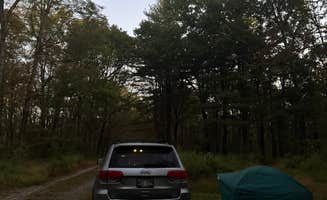
Limited parking: Arrive early to secure a parking spot, especially on weekends. Dawn M. warns about Hemlock Ridge MUA Dispersed, "The parking lot only holds about 4-5 cars, 6 if you park real tight."
Campsite distance requirements: Regulations require setting up at least 150 feet from main trails. Cory D. confirms, "Camping is allowed anywhere 150ft from the trail. Normal LNT rules apply."
Insect preparation: Ticks are common from April through October, requiring regular body checks. Mosquitoes can be problematic during summer months. One camper candidly mentioned, "Bugs are relentless."
Water sourcing: No potable water exists at any dispersed camping areas near Weston. Campers must bring all drinking water, calculating at least one gallon per person per day, with additional water for cooking and cleaning.
Tips for camping with families
Emergency planning: Despite cell service, have offline maps and emergency contacts prepared. One experienced camper advises, "Always let someone know where you are headed and when you plan to return."
Navigation markers: The unmarked trail systems can confuse younger hikers. Place temporary trail markers when hiking with children to ensure safe returns to your campsite.
Weather preparation: Connecticut's variable weather patterns require packing for temperature swings of up to 30 degrees between day and night, particularly in spring and fall. Multiple clothing layers and rain gear are essential regardless of forecast.
Site selection considerations: Look for natural features that block wind and provide natural boundaries for younger campers. Areas with minimal underbrush create safer play zones near camp.
Tips from RVers
Size limitations: Traditional RVs cannot access true dispersed camping areas near Weston. One reviewer specifically cautions, "There's only a few spots, and the road is narrow with not much turnaround room, I wouldn't recommend for trailers or RVs."
Alternative camping: RV campers should consider using Floyd Bennett Field as a base camp, then making day trips to hiking areas around Weston. Although further from Weston, it provides better vehicle access.
Access road conditions: Forest roads leading to dispersed camping areas deteriorate significantly after rainfall. Even high-clearance vehicles should avoid these routes for 24-48 hours following heavy precipitation to prevent rutting and potential stranding.




 Scout
Scout


