Dispersed camping areas near Plumas National Forest provide free overnight accommodations across northeastern California's Sierra Nevada foothills. The region sits at elevations between 2,000-7,000 feet, creating distinct camping conditions through seasonal temperature variations. Winter access becomes severely limited due to snow accumulation at higher elevations, with many forest roads closing entirely from November through May.
What to do
Mountain biking on OHV trails: Fort Sage Off Highway Vehicle Area offers extensive trail systems perfect for ATVs and mountain bikes. "Trail riding galore. Went on all the trails and out in the sand dune area we came upon wild horses, this was quite a sight to see," notes one visitor who recommends avoiding summer due to heat.
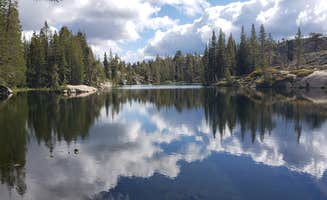
Fishing in alpine lakes: Loch Leven Lakes provides excellent fishing opportunities accessed via hiking trails. "The middle lake is very large and had many beautiful spots to camp. But we headed to the upper lake since a lot of day hikers go to the middle lake," writes a backpacker who recommends bringing mosquito repellent regardless of season.
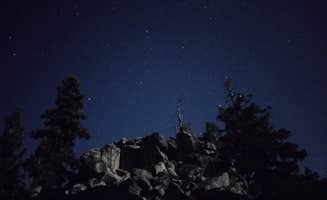
Stargazing from primitive sites: The minimal light pollution creates exceptional night sky viewing conditions. "Coyotes yipping in the distance while staring into a gorgeous night sky. Couldn't ask for a better free spot," reports one camper at Fort Sage, where many sites feature unobstructed horizon views.
What campers like
Strategic isolation: Kyburz Flats attracts campers seeking seclusion. "Open and beautiful. It has a few roads with a couple campsites. Pure dispersed camping," writes one visitor who appreciated the ability to let dogs roam off-leash. The roads require all-wheel drive vehicles but remain accessible with proper preparation.
Wildlife encounters: Grouse Ridge Campground provides opportunities to spot local fauna. "It was 25 degrees cooler up there than in Sacramento. We loved this campground. I can't wait to go back," reports one visitor who experienced early summer snow during their stay.
Temperature relief: Higher elevation sites provide escape from summer valley heat. "This is as isolated as it gets. Don't expect water or cell reception or toilets. In this area, you're on your own," writes a Grouse Ridge camper who experienced unexpected June snowfall, highlighting the dramatic temperature differences between valley and mountain sites.
What you should know
Seasonal accessibility: Big Dog Valley experiences complete winter closures. "The gate that is at the opening is open sometimes and closed and locked at other times," reports one regular visitor who noted inconsistent access patterns over multiple years.
Fire restrictions: Many sites implement complete fire bans during summer and fall. Check current restrictions before departure as regulations change weekly based on conditions. Several dispersed areas still allow cooking fires in established rings when restrictions permit.
Toilet facilities vary significantly: While most dispersed sites lack facilities, Fort Sage maintains exceptional vault toilets. "Pristine spot. Cleanest pit toilets ever and they are lit up (great for late arrival)," writes one camper who appreciated this unexpected amenity at an otherwise primitive site.
Tips for camping with families
Best lake access points: When backpacking with children, plan carefully for Loch Leven Lakes. "I'd start early in the day to make sure you get good parking as this is a very popular trail, and so that you can get a good campsite and enjoy the lakes for as much time as possible," advises one backpacker who noted virtually no insects during their visit.
Wildlife education opportunities: Lake Valley Rd Pullout offers accessible nature observation. "It's a beautiful area to come back to when the snow clears," notes a visitor who found unexpected cell reception with both Verizon and AT&T carriers, making emergency communication possible.
Road difficulty assessment: With children, carefully evaluate road conditions before attempting remote sites. Most free camping near Plumas National Forest requires navigating unpaved forest service roads of varying quality that can deteriorate rapidly after weather events.
Tips from RVers
Length limitations: Most dispersed camping near Plumas requires smaller rigs. For larger vehicles, Fort Sage provides more accommodating options. "Feel safe and can easily get a big rig in here," reports one RVer who found good Starlink connectivity despite limited cellular service.
Site selection for levelness: Finding level parking presents challenges in most forest dispersed areas. "Road is well maintained gravel, no potholes. Sites are nicely spaced, large and maintained," notes a Fort Sage visitor who found the access roads suitable for average RVs without specialized equipment.
Water access planning: No potable water exists at most dispersed sites. Plan to carry all necessary water or bring purification systems for lake and stream sources when available at higher elevation locations.





 Guide
Guide


