


Kristie  Scout
Scout
ScoutRoadside Camp on Parks Highway
Convenient state land
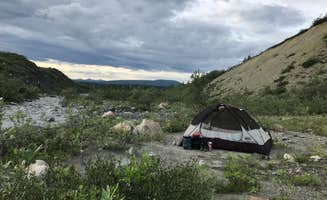
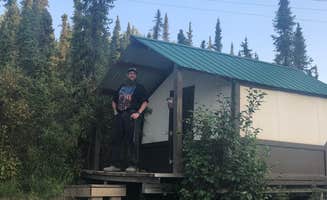
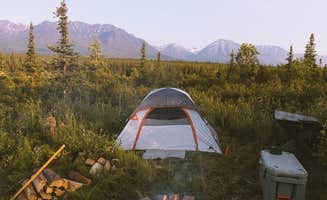
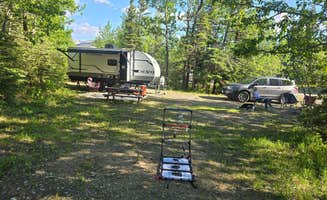
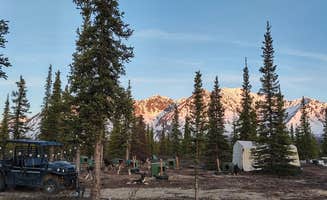
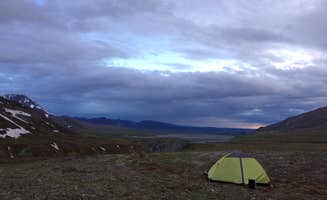
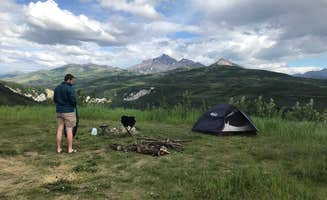
This gravel pit area is on state land. While it is just off the highway, there is a buffer of trees that kept traffic sounds to a minimum.
Campgrounds near Denali National Park & Preserve range from established frontcountry sites to remote backcountry units across Alaska's iconic wilderness. Riley Creek Campground provides year-round access with amenities including drinking water, firewood, and sanitary facilities suitable for tent camping, RVs, and glamping. Further into the park, Teklanika River Campground at mile 29 offers a more remote experience with access restrictions designed to minimize traffic on the park road. Primitive backcountry camping is available in designated units like Polychrome Mountain and Muldrow Glacier for hikers seeking solitude in the Alaskan wilderness.
Seasonal considerations heavily impact camping availability, with most campgrounds operating from May through mid-September. The road into Denali may close at varying points depending on weather and road conditions. "We were told mosquitoes were the national bird of Alaska haha. It is no joke at this campground. Be prepared," noted one camper about Igloo Creek Campground. Advance reservations are strongly recommended for developed campgrounds, especially Teklanika River which requires a minimum three-night stay and purchase of a special bus pass for transportation deeper into the park. Backcountry camping requires permits, bear-resistant food containers, and proper wilderness skills as river crossings can be dangerous when water levels rise.
Wildlife viewing opportunities remain a primary attraction at Denali's mixed-use campgrounds. Several visitors mentioned encountering moose, caribou, and bears near their campsites. A camper at Teklanika River Campground shared, "I was awakened by a moose and her calf in my camp site who were luckily non-aggressive and didn't seem to care about me at all." Campers particularly value the location of Savage River Campground for its balance of amenities and access to hiking trails. The campground provides a jumping-off point for exploration while maintaining some distance from the more crowded areas near the park entrance. Weather conditions can change rapidly, with temperatures remaining cool even in summer months, requiring appropriate clothing and gear regardless of season.
"This campground is located at mile 29 of the denali park road so if you're taking the bus that's where you need to get off!"
"Teklanika Campground is a phenomenal location for camping in Denali."
"This campsite was in the Savage River Campground in Denali National Park, just outside the bus station for the park transit and close to the bathrooms."
"We walked to the savage river at the back of the campground and explored this area, attended a great ranger talk and had some fabulous mountain views."
"The sites are nicely maintained with nice, edged out tent pad areas. The surrounding trees provide a nice barrier between sites so you don't feel crammed into the campground."
"Within walking distance to "Glitter Gulch" and trails at the entrance to the park. We've camped there for many years and always had a peaceful nights rest."
"Igloo campground is located a decent ways into the park. We were told mosquitoes were the national bird of Alaska haha. It is no joke at this campground. Be prepared for me."
"site: walk-in. wooded. private. amenities: no water. small campground. attractions: creek. Denali park. hiking. wildlife. I would go camping here again."
"I camped here a few years ago when I was on an Alaska trip with my grandma. We were moving around a lot and this campground was just what we needed for one night. "
$50 - $90 / night
"Denali National Park and Preserve allows for backcountry camping. With that comes extreme risks as it is one of the most remote places that you can be."
"Looking for a place to camp near Denali as main campground full. I don’t know why more people are not here! Have a great tucked in flat site."
"Only downfall was we could hear the highway but at night there wasn’t much traffic. Secluded spots. Good stop."
"Not bad for a free site close to the highway. It is rocky but no worse than some paid camp sites. Not sure if it is because of the cold wind but no mosquitos!"
"Camp sites are close to each other, but the staff gave us two sites for the price of one to park my truck. The views are amazing, and the other campers were very respectful."
"You will need to hike more to get out of the mosquitos and near a water source though."






 Scout
ScoutThis gravel pit area is on state land. While it is just off the highway, there is a buffer of trees that kept traffic sounds to a minimum.
ScoutPositive points as follows:-
- Fabulous location inside the park with fantastic wildlife viewing on route(we saw moose and a grizzly bear at the side of the road)-
- Nice wooded sites
What we didn’t like:
- I made my reservation months in advance and received an email confirmation with a reference number. I assumed that this email was all I needed to confirm my booking on arrival.
- Within the main body of the email there is a big heading stating“important information” and in that section the only item that is highlighted is the lack of WiFi service at the campsite.
- We arrived at 11pm at night. There was no notice of where to check in or indeed which site to go to. At previous campsites I had received a lovely email to welcome us and provide directions for our arrival
.- The next morning, one of the most unpleasant, nasty people that I have ever had the misfortune to meet came banging on our RV door. There was no welcome or kind words or even a smile. She introduced herself as the camp hostess (clearly she is in the wrong line of work) and demanded that we leave the site immediately, stating we had 6 minutes to vacate and instructing us to drive 30 mins down the road to another campsite where the check-in reception was located and where we had to buy our park permits. No understanding or interest in our long journey the night before, nor the fact that we were a family with young children.
- We discovered after the fact that the there was a link within the confirmation of reservation email that you have to click on to take you to a separate website with all the information about check-in! This information should be in the main body of the email NOT on a click through.
- We spoke to other people in the campsite who had experienced exactly the same issues. They had been unaware of the check-in procedure and had received the same nasty treatment from the same nasty old woman!
Recommendations:
-Key information about check-in should be in the main body of the email especially if check-it is at an entirely separate location, a 30 minute drive away;
- That lady should not be employed in the hospitality business and certainly not as a hostess!! She has absolutely no people skills, kindness or understanding. She is a terrible introduction and first impression to anyone visiting Denali as a tourist. She really put a bad taste in our mouths and was not a nice representative for Alaska and its people!


 Traveler
Very conveniently located, a walking distance from the buss depot. Showers available at the mercantile area. Bear Loop is best (closest to showers, laundry and store. But the best thing is your in Denali!
TravelerStayed in a B site on August 17. Toilets were one of the best I’ve seen. Each spot was secluded from the others so it felt private. Check in at the mercantile. They have showers and laundry there. Overall a great campsite

 Ranger
This campground is very clean, well spaced between sites, convenient to all the park amenities like showers and laundry. The restrooms are very clean with soap and hand dryers. I can’t say enough good things about this campground!!

 Legend
This National Park campground offers a basic primitive experience for anyone that is looking to enjoy the majestic beauties of the Denali National Park.
Reservations for the campground are made online, however occasionally it is possible to show up and get an unclaimed site. The campground includes a full-time camp host, vault toilets and strategically placed freshwater spigots.
As for the rest I will let the pictures do the talking.
LegendThis is really a hotel that happens to have campsites on it. There is electrical and water hook up at each site but no sewer. There is however a dump station. Word of warning if you have an RV that is 35 ft or longer this campsite is not for you.
I would also like to add that showers are $5 for 7 minutes and the laundry facility at the time of this review was out of order.
As for the rest I'll let the pictures do the talking
 Traveler
Not bad for a free site close to the highway. It is rocky but no worse than some paid camp sites. Not sure if it is because of the cold wind but no mosquitos!
 Scout
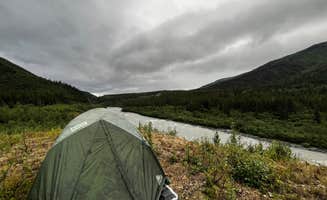
ScoutGood location. Quiet. Near river
Denali National Park & Preserve campgrounds sit within Alaska's subarctic climate zone, with summer temperatures typically ranging from 33-75°F. Elevation varies dramatically from 1,500 feet near the park entrance to over 20,000 feet at Denali's summit. Weather changes rapidly in this region, where afternoon thunderstorms are common during summer months and overnight temperatures can drop below freezing even in July.
Wilderness hiking beyond park roads: At Backcountry Unit 31: Polychrome Mountain, you can access remote terrain with minimal crowds. "We found an animal spine, saw a moose, got turned around by 3 bears chilling in our potential camp location, and then at the end of the trip also saw 2 more grizzlies less than 30 feet away," reports one camper. River crossings require advanced skills.
Mountain vista exploration: The Mountain Vista Trail offers accessible terrain near Savage River Campground, with minimal elevation gain. "This campsite was in the Savage River Campground in Denali National Park, just outside the bus station for the park transit and close to the bathrooms. You can hear the river flowing and it can lull you to sleep despite the near constant daylight," notes a visitor.
River bar hiking: The Teklanika River gravel bar provides natural terrain for exploration without marked trails. "Short walk to the gravel bar and Teklanika river. Nightly ranger programs. We bought a bus pass so we could take daily trips to a part of the park we wanted to explore and then would hop back on when we were done," explains one camper.
Wildlife viewing opportunities: Teklanika River Campground provides exceptional animal sightings. "After setting up camp I scrambled up the hill on the other side of the road and watched the caribou herd for what seemed like forever," shares one visitor. The remote location at mile 29 improves chances of wildlife encounters.
Ranger education programs: Evening programs at several campgrounds provide valuable insights. "We also took advantage of the ranger talk that was given in the evening," notes a camper at Savage River Campground. These programs cover wildlife, geology, and park history.
Solitude in accessible locations: Sanctuary River Campground offers a quieter alternative to larger facilities. "There aren't many sites in this place, maybe 10 or so but they are spread out and nice. Only tent sites with no hook ups," reports a visitor who accessed the campground via shuttle bus.
Extreme mosquito pressure: Be prepared for intense insect activity throughout summer months. "We were told mosquitoes were the national bird of Alaska haha. It is no joke at this campground. Be prepared for me," warns a visitor to Igloo Creek Campground. Pack appropriate repellent, head nets, and long-sleeved clothing.
Challenging river crossings: Water levels fluctuate rapidly in Denali's glacial rivers. "If you do not trust your river crossing skills to the highest level, do NOT cross the rivers. My friend and I got stuck on the other side of the river with those aforementioned grizzly bears and had to camp an extra night," cautions a backcountry camper.
Transport restrictions: Many campgrounds require shuttle bus access or have limitations on vehicle movement. At Teklanika River Campground, visitors must commit to staying: "We really enjoyed that we could drive our car further into the park to camp in this campground. Sites are flat and aren't too close together."
Discovery backpacks for children: Available at visitor centers, these contain science tools and activities. "If you have kids, be sure to check out a discovery backpack filled with activities and science kits they can use. Our 9-year-old loved it so much she asked for a science kit for Christmas!" recommends a parent who visited Savage River.
Shuttle bus planning for flexible day trips: Purchase appropriate bus passes to explore multiple areas during your stay. "We bought a bus pass so we could take daily trips to a part of the park we wanted to explore and then would hop back on when we were done," advises a family at Teklanika River Campground.
Base camp strategy for mixed adventures: Riley Creek Campground provides infrastructure for families with varied comfort needs. "My family stayed at Riley Creek in July of 2015 for 2 days and loved it so much that we decided to stay for 7 nights this summer. The sites are nicely maintained with nice, edged out tent pad areas." The campground offers access to showers and the visitor center.
Site selection based on actual dimensions: Denali RV Park and Motel lists site sizes differently than many parks. "This is the first time we came across a CG that lists the site as the literal size versus what size rig could fit with room to still fit your tow vehicle," explains an RVer, noting the importance of understanding total footprint requirements.
Water management for boondocking: Free roadside camping offers savings but requires planning. At roadside camps along Parks Highway, water access is limited. "Good free spot. Only downfall was we could hear the highway but at night there wasn't much traffic. Secluded spots," reports one RVer.
Dump station timing strategy: During peak season, plan extra time for sanitary services at Riley Creek. "The campground is very nice. Each site has a fire ring and picnic table. Tons of trees for shade and hammocks," notes a visitor who appreciated the facilities but recommended timing services strategically.
Frequently Asked Questions
What camping is available near Denali National Park & Preserve?
According to TheDyrt.com, Denali National Park & Preserve offers a wide range of camping options, with 30 campgrounds and RV parks near Denali National Park & Preserve and 6 free dispersed camping spots.
Which is the most popular campground near Denali National Park & Preserve?
According to TheDyrt.com, the most popular campground near Denali National Park & Preserve is Teklanika River Campground — Denali National Park with a 4.6-star rating from 14 reviews.
Where can I find free dispersed camping near Denali National Park & Preserve?
According to TheDyrt.com, there are 6 free dispersed camping spots near Denali National Park & Preserve.
What parks are near Denali National Park & Preserve?
According to TheDyrt.com, there are 3 parks near Denali National Park & Preserve that allow camping, notably Denali National Park and Denali National Park and Preserve.
Keep Exploring