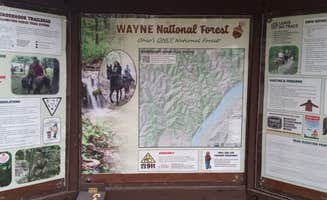
Kinderhook Horse Trail provides dispersed camping options approximately 15 miles east of Washington, West Virginia in the Wayne National Forest. The terrain consists of rolling hills with elevations between 600-1,200 feet, creating varied trail conditions for equestrian use. Summers in this area average 80-85°F with high humidity, while spring and fall temperatures range from 50-70°F with moderate rainfall.
What to do
Trail riding at Burr Oak State Park: Located about 35 miles northwest of Washington, riders can access over 30 miles of bridle trails. "We actually stayed at the lodge and it was lovely. We would hike around during the day and swim inside as it was before spring. Lots of great trails. We hope to come back and back pack one of the trails," notes Kenpocentaur K. from Burr Oak State Park Campground.
Fishing at Lake Hope: The 120-acre lake provides opportunities for bass, bluegill, and catfish angling. "The FOG on the lake at night gets so bad you can't see past the end of your boat," warns Robert R. from Lake Hope State Park Campground. Fishing licenses are required and can be purchased online or at nearby stores in McArthur.
Moonville Tunnel exploration: This historic railroad tunnel is accessible via connector trails from the southern loop of Zaleski State Forest. "We spent one afternoon hiking over to the Moonville Tunnel and it was one of the coolest parts of our four day trek," shares James W. The tunnel is approximately a 4-mile hike from the main camping areas.
What campers like
Access to multiple trail networks: The combined trail systems offer varied terrain for equestrians. "The trails are well marked and easy to follow. And there are several loop sections so you can easily plan various tips accordingly," reports James W. about Zaleski State Forest, which connects to several other trail systems in the area.
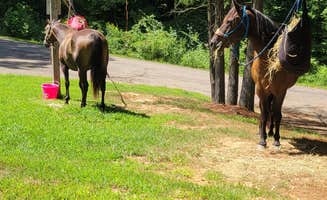
Water access for horses: Streams and water points along trails provide natural watering options. "Area is dedicated to horse trail riding. Nice clean area just off main road. Nice trails. Seem to be well maintained. Does have a small hand pump water spigot," describes Joe B. from Kinderhook Horse Trail.
Quiet camping experience: Many equestrian campgrounds offer more seclusion than standard campgrounds. "We stayed at both Dock 3 and Dock 2 with our dog, those are the only two areas that allow pets. At Dock 3 we were right on the water but dock 2 is probably 200 yards from the water," explains Kelsey R. The more isolated nature of equestrian sites can provide a more private camping environment.
What you should know
Limited facilities at primitive sites: Most equestrian campsites have minimal amenities. "The sites were nice and level, but a bit on the smaller side. Plenty of trails for hiking around the park," notes Isaac K. from Strouds Run State Park Campground.
Weather considerations: The region experiences significant humidity and occasional severe weather. "We camped at Dock 3 and Dock 2 with our dog. The hiking trails are nice but very muddy after the rain," shares Kelsey R. Spring seasons often bring muddy conditions that can make trails challenging.
Local activity after dark: Be prepared for possible visitors at more accessible sites. "It also seems to be a spot locals visit quite a bit. I've had two cars drive in after sunset who have just sat around for a bit then left. I would not recommend this site if you are traveling solo," warns Jack H.
Tips for camping with families
Choose campgrounds with amenities: For family equestrian camping, select sites with better facilities. "They have a nice beach and the lake is awesome. There are adequate shower facilities. Bring your own firewood. The firewood at the campstore is less than amazing," advises Sarah G. from Hocking Hills State Park Campground.
Plan for insects: The dense forest environment supports large insect populations. "A lot of insects, humid and dense deciduous forest surrounding the trailhead," notes Annika E. Bring appropriate repellents and protective clothing, especially during summer months.
Consider age-appropriate trails: Evaluate trail difficulty before bringing children. "Backpacked there for 3 days/2 nights. Good trail and campsites had water, but it can get a little humid and buggy there," shares Nick M. Shorter loop trails are better for younger riders.
Tips from RVers
Limited space for larger rigs: Most equestrian campgrounds have restricted parking areas. "Staying: 9/6/2020 - FREE. This campground is the equestrian Kinderhook Trailhead within Wayne National Forest. We pulled in and there was one couple setup at a designated site (picnic table and fire pit)," explains Dare To Everywhere from Kinderhook Trailhead.
Plan for self-sufficiency: Limited hookups mean preparing for boondocking. "The sites are supposed to have solar lighting. There is a handwritten sign saying the lights don't work taped to the light switch," reports JG S. Bring additional lighting, water supplies, and power options.
Uneven terrain challenges: Many sites require careful parking and leveling. "Sites are only rented in person once you arrive, they have clear instructions at the entrance. Sites were nice and level, but a bit on the smaller side," shares Isaac K.




 Ranger


