Equestrian camping options abound in the Darrington area, where elevations range from 500 to 6,000 feet throughout the Mount Baker-Snoqualmie National Forest. The region experiences wet winters and mild summers with temperatures typically between 40-80°F from May through September. The unique volcanic geology creates diverse terrain for horse trails through both old growth forests and along alpine meadows.
What to do
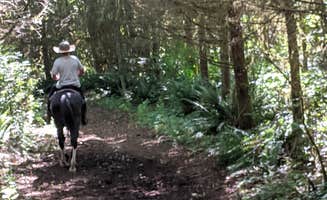
Trail rides through old growth forests: Maple Grove Campsites offers direct access to some of the most scenic forest trails. "The trail is relatively flat and goes through some beautiful old growth forest. We got a spot right by the lake that was flat and soft," reports Ethan A. The forest trails around Darrington often feature historic lumber scars and nurse logs that demonstrate the region's logging heritage.
Alpine lake swimming: During summer months, several alpine lakes reach temperatures comfortable enough for swimming. "The lake is lovely, though it was a bit too cold in June to swim," notes Karen L. about Baker Lake. Alpine lakes typically reach their warmest temperatures in August, with surface temperatures around 65-70°F.
Mountain photography: The combination of glacial peaks and forest settings creates ideal photography conditions, especially during golden hour lighting. "Spectacular views of Mt Baker and Mt Shuksan - be sure to watch the sunset," recommends Karen L. Dawn photography opportunities are particularly good at Lake Valhalla Backcountry Camping where "breath taking" vistas include snowcapped peaks reflecting in clear alpine water.
What campers like
Spacious corrals and tie areas: Horse owners appreciate the well-designed facilities at several equestrian campgrounds near Darrington. "We set up a portable corral and were fine. High-line poles are available to high-tie your horses," explains Elise M. about Harry Osborne State Forest. Stock water access points are typically available via trails even when vehicle access is restricted.
Well-maintained trail networks: The extensive trail system receives regular maintenance from both forest service and volunteer groups. "Trails are well maintained and extensive," notes Elise M. Most horse trails connect to larger wilderness trail networks, allowing for multi-day expeditions or shorter day rides.
Bear-safe food storage: Several backcountry sites provide bear boxes for food storage. "There are also a couple bear boxes to share, as bear (and deer!) roam this area," writes Karen L. about Maple Grove. These metal containers typically measure 48"×30"×24" and secure food from wildlife without needing to hang bags from trees.
What you should know
Seasonal road closures: Forest service roads leading to many campgrounds may close during winter months or due to maintenance issues. "Note that this is a working forest and may have heavy log truck traffic at times...the gates will be locked otherwise," warns Deb E. about Harry Osborne.
Limited amenities: Most horse campgrounds require self-sufficiency. "No water or electric at the camp, but you can drive down to a creek and pump or collect water for your horses. You will be boondocking," explains Elise M. Prepare to pack in drinking water and pack out all trash at most locations.
Varying stock water access: Not all equestrian sites have the same level of water access for horses. "Stockwater has been gaited off due to vandalism and trash dumping. You may utilize trails to walk your horses down to the water," notes Deb E. about Harry Osborne State Forest. At Baker Lake Horse Camp, water access varies with seasonal lake levels.
Tips for camping with families
Family-friendly lake sites: Choose lakeside sites for entertainment value with children. "Boaters frequent this lake so there is a bit of motor noise, but this doesn't bother me. Dog-friendly campsite," notes Karen L. about Maple Grove, making it suitable for families with both children and pets.
Easy access backcountry options: Some sites offer wilderness experiences without difficult hikes. "Not too far from the trail at baker lake. Quiet and peaceful," reports Sarah H. about Maple Grove Campsites. This makes these locations appropriate for families with younger children or those new to backcountry camping.
Wildlife viewing opportunities: The Darrington area offers excellent wildlife spotting chances. "Plenty of wild berries, flowers, and ferns along the way. We had fun just relaxing under the Big Leaf Maple trees," describes Karen L. Morning and evening hours typically provide the best wildlife viewing opportunities.
Tips from RVers
Urban alternative for large rigs: When forest campgrounds are full, Evergreen State Fairgrounds offers an alternative. "Great place if you are one of the vendors for an event at the fairgrounds. It was $35 a night," reports Adam A. The fairgrounds provides water and 30-amp power with a dump station.
Electrical setup considerations: At some campgrounds, electrical connections may require additional planning. "The power pedestals is set up for 2 rv's per pole so it might be on the wrong side so you need to run an extra cord or hose. Not a problem if your set up for it," notes Adam A.
Cell service availability: Connectivity varies throughout the region but some campgrounds maintain reasonable service. "There is a vault toilet and I got cell service on my phone," reports Elise M. about the Harry Osborne horse camping area, an important consideration for those needing to stay connected.






 Scout
Scout


