

T
Taylor C. Traveler
TravelerChisos Basin Campground (Big Bend, Tx) — Big Bend National Park
Stunning!!
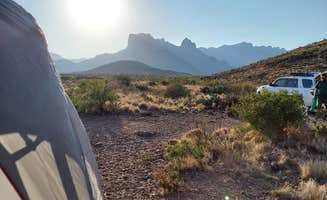
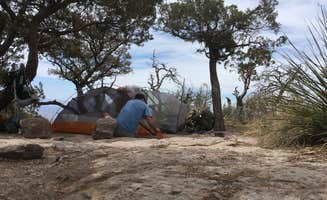
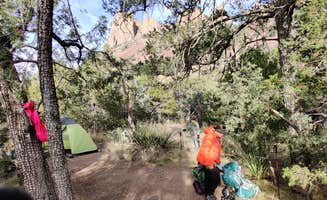
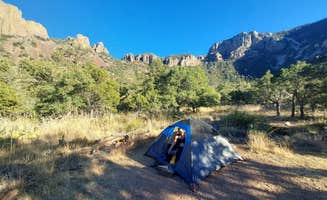
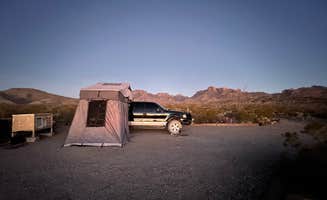
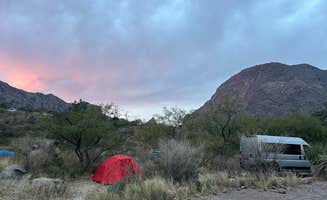
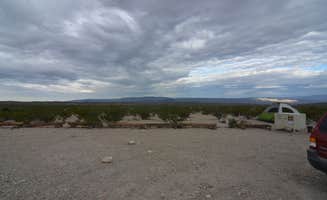
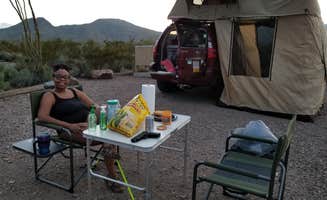
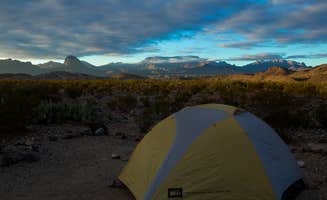
Amazing camping. $16 per night. Can be windy so bring cold gear.
Campers at Big Bend National Park find themselves surrounded by desert, mountains, and the Rio Grande River all in one place. Chisos Basin Campground sits higher in the mountains where temperatures stay cooler and hiking trails start right from your campsite. Down by the river, Rio Grande Village Campground has more trees for shade and better chances to see animals like javelinas wandering through. Both places have the basics - bathrooms and tables for eating. The park gets extremely hot in summer (often over 100°F) and can be surprisingly cold in winter, which is why most people camp there during March-April or October-November. Wildlife moves around freely through camping areas, so keeping food locked up is important. Cell phones rarely work in most of the park, and the nearest real grocery store is about 100 miles away in Alpine. You'll need to bring everything you might need, including extra water. The night skies are incredibly dark, making stargazing possible from your campsite. Big Bend's location on the Mexican border means you're truly away from everything when camping here.
Compare 2 top campgrounds at a time to find your favorite!


Round 1 of 5
$16 / night
"Big Bend National Park is one of the best stops in Texas, hands down, and the Chisos Basin Campground is the best spot in the park."
"Chisos Campground is the place to camp on Big Bend National Park. It is a high elevation location and many great hiking trails from the location."
"Rio Grande Village is a nice quiet spot in the Big Bend National Park. The outer rings of the campground provide private spots that are generator free. The facilities are clean and well maintained."
"Rio Grande Village Campground is located within Big Bend National Park. This park is HUGE and we were thankful to have a spot to camp for a few days. "
$16 / night
"If you want full hook ups for camping it is the only one in Big Bend National Park. they only have 25 sites all back in. Pay for showers if you don't have your own. But catch the sunrise and sunsets."
"We rode our e bikes to several areas, crossed the border for lunch, hiked many trails, and drove in the back country. It was an amazing trip."
$10 / night
"I took the Pinnacles Trail to get to the Boot Canyon camp site. The hike up is beautiful."
$60 - $100 / night
"Not to be confused with the nearby private campground, which has full hookups and is much less interesting IMO."
"They also have potable water all around the campsite. Rio Grande Village Nature Trail is close by and its a short but sweet hike. Sunsets on that trial over the Rio Grande is amazing."
"Pine Canyon has a number of well separated campsites (5 I believe) located along the length of the road, running up to the hiking area."
"Close to amazing forest trail, Pine Canyon. Trees at Pine Canyon (not at campsite) are seriously something else."
$16 - $60 / night
"Cottonwood Campground is a quiet oasis in the western corner of Big Bend National Park. Reservations are required."
"Central to multiple trails. Staff was friendly and knowlegable. Shade trees at many sites, important even in November in Texas. Showers and restrooms available. Highly recommend!"
$30 - $60 / night
"Only 3 miles from big bend national park. On the expensive side at $55 but I think everything was expensive in this area."
"This is in the desert so it's wide open and was easy to maneuver our truck and camper around."
"vistas and views are incredible and almost located exactly in the "middle of nowhere". wonderful place to watch sun rise and set over mountains. "
"It is also not very close to any park attractions or trailheads. If you are looking for remote peace and quite this is the spot."
"The site is an hour on pavement plus two hours on rough trail roads from the park entrance. my truck did fine, but there were definitely places I could have messed up. "
"Most of the time you won't see more than a handful of cars drive by the whole time you're there. The site gives panoramic views of the Sierra del Carmen, Chisos, Sierra Quemada, and the Mariscal mine."









 Traveler
Amazing camping. $16 per night. Can be windy so bring cold gear.
 Guide
GuideGreat views. Great location since its in the park but if going to Chisos Basin go very early (especially during holidays or will be waiting for hours to get into basin area).
Flush toilets, picnic table, bear box, grill provided.
No campfires allowed sadly.
Can drive/walk/bike to the river but not as nice of a place to go in it than Cottonwood Campground near Santa Elena. But Boquillas Canyon is close by and if you hike then there's the river to go in. Boquillas Canyon hike was one of our favorites! We climbed up the rocks. There's also a nature trail (we didn't do) that many people who don't camp here come and do.
Javelinas and a roadrunner made an appearance in the campground!
There's actually a no generator area in the campground that we didn't know about but it was hard to get a site so we just took what we got.
GuideVery big sites in a mostly open field with some cottonwood trees around for some shade. Pit toilets. Potable water at entrance for water bottles only. It actually ran out of water by nighttime but was back in action in the morning. Also has non-potable water spouts for washing dishes water throughout campground.
Very close to Santa Elena Canyon! and you are already in the park. Still an hour drive to Chisos Basin (go very early in the morning at least during holidays or you will be waiting to get into the basin for hours).
No campfires sadly. But a grill, picnic table, and bear box provided.
GuideIt's a ways west of Big Bend compared to camping inside but lots of people travel from outside the park each day and this is a great spot.
Make a reservation thru Big Bend state park - Barton Warnock Visitor Center. Then it's FCFS to pick your site. We were in lower Madera. Site are nice and each has a awning for some shade.
Pit toilets in two spots. Shortish walk/drive to river where you can pop in for a swim or put in a kayak. So lower is nice location but as I understand it, it can get flooded whereas upper cannot.
Campfires are allowed! Has a fire pit, picnic table, and lantern pole.
GuideThe site is an hour on pavement plus two hours on rough trail roads from the park entrance.
my truck did fine, but there were definitely places I could have messed up.
Be ready to deal with deep sand and a few hairy inclines as well as a single 20" tall rock shelf that can mostly be avoided if you go all the way to the side, but I could see some tire tracks of people that may not have seen it.
I got here around 5. weather app said 91.
I started setting up camp and pounding back the water. turns out it was 99 according to my truck and I got sick. I spent the next 24 hours hiding under my tarp trying to stay hydrated while spraying myself with water to keep cool.
Then the WIND started.
I left a day early when the gusts were at 40mph.
It's a shame I had such a crap time at such a beautiful place I worked so hard to get to.
GuideI booked site 62 for three nights as soon as reservations opened, and a few days later I tried to add a fourth night, but no sites were available. Months later, I found site 74 open, so I added a fourth night in that site. The CG had an awesome host, Paula, who was super friendly, helpful, and the best we’ve ever had the opportunity to meet. She even made sure to call me over to see javelinas on our last night. We rode our e bikes to several areas, crossed the border for lunch, hiked many trails, and drove in the back country. It was an amazing trip. We had some fun international neighbors (two different sets) in the next site for two nights, and then we were sad to have some silly people who ran their generator from 8-8 (yes, I know those are the hours) and they put their generator on the side closest to our site with the exhaust blowing at our site. We had to ask them to move it- which seemed silly since they could have placed their generator at the back of their rig and pointed the exhaust away from both sites. (Don’t be like them-just be considerate.) Then we moved to site 74 and all was well- but the poor guy who was staying in 62 after us had to literally put his chair on the back side of his camper to get away from the noise and exhaust. There is NO cell signal at the CG- but the visitor center has good WiFi. I was able to use satellite texting on my iPhone with no issues.
 Guide
GuideThe landscaping itself is pretty amazing. Water and a sink in each site is luxurious for me normal camping. They have stakes and hammer which is very helpful. Outdoor shower felt amazing. Okayish privacy. O% shade. The lack of shade is the only thing keeping this place from being a 5 star.
TravelerIf you are in the full hook up area, not bad. The water /electric sites are pretty bare desert.
 Ranger
Great Location close to Santa Elena Canyon! Very quiet at night. Level compacted dirt sites. Good clean pit toilets. Potable water to refill water bottles only... not RV tanks. Many big stumps... big cottonwood trees are GONE... Very limited shade from remaining smaller trees that remain! Very dusty if the wind blows over 20mph... which it did! No RV dump station... no cell service... Small NP Visitor Center 1 mile away... with very small store... not well stocked when we were there... completely out of ice cream... No walking paths between store and campground. Would stay again to visit Santa Elena Canyon.
Big Bend National Park spans over 800,000 acres where the Chihuahuan Desert meets mountain terrain, creating dramatic temperature variations between elevations. The park receives less than 12 inches of annual rainfall, contributing to its extremely dark night skies. Campground elevations range from about 1,800 feet along the Rio Grande to over 5,400 feet in the Chisos Basin, affecting temperatures by up to 20°F between these areas.
Hike the Window Trail: Access this popular trail directly from Chisos Basin Campground, making it ideal for early morning hiking. "Window View trail — 'our short mountain hike' —5 and some change miles round-trip out and back. Trail head in the Lodge parking lot but also has a trail head in the campground. Easier hike to a SUPER cool view through a 'window'-like chasm where a waterfall flows when it's rainier," explains Val W.
Visit Boquillas, Mexico: The border crossing near Rio Grande Village Campground allows for day trips to Mexico (passport required). "You have the ability to walk right up to the Rio Grande River and the border between the US and Mexico. It is physically possible to cross the river into Mexico, but technically one must have a passport to travel between the two borders," notes Troy W.
Stargaze from primitive sites: The back roads offer superior stargazing with minimal light pollution. "Late summer this is one of the penultimate places on the planet to photograph the Milky Way. Since you are near to Santa Elena canyon you can drive up and get the iconic picture of the Milky Way stretched across it," shares Charles A. about Cottonwood Campground.
Mountain isolation: Chisos Basin offers solitude despite being one of the more popular campgrounds. "There were a couple to pick from when we got there and more opened up over the course of the morning, though all 3 campgrounds in Big Bend were full every night we were there. The site we got was PERFECT! It was on the edge of the camp ground and tucked around a corner," notes Val W.
Wildlife viewing opportunities: The diversity of ecosystems supports varied wildlife. "We LOVED our stay here! The walk to both canyons were worth the time. We saw lots of animals in our campsite! Bob cat was a real treat!" says Diane M. about Rio Grande Village Group Campground.
Temperature variations: Campers value the cooler temperatures at higher elevations during hot months. "Colder up here at elevation, especially during the nights," mentions Sydney about mountain camping. "During the summer it will be brutally hot during the day, but I have had the entire campground to myself for up to a week," explains Charles A. about lower elevation sites.
Big Bend National Park camping reservations: Securing a spot requires advance planning, especially during peak seasons (March-April and October-November). "As typical of the national parks, you have to reserve and you need to know how the system works to get a good spot," advises Doug W. All established campgrounds require reservations through the national park booking system.
Limited facilities in primitive areas: Big Bend Backcountry Camping requires self-sufficiency. "Be prepared to be isolated and tranquil and all the beauty that comes with it! There is one considerable dip in road leading to site that may prevent all but the shortest tongued pull behinds from reaching the site," warns Neal L. about a primitive site.
Road conditions vary significantly: High-clearance vehicles are necessary for many backcountry sites. "You'll need a high-clearance vehicle to get here. It's one of the many back country car camping sites. Most of the time you won't see more than a handful of cars drive by the whole time you're there," explains Whitney L. about remote camping areas.
Choose shaded sites: In lower elevations, tree cover makes a significant difference in comfort. "Plenty of trees provide much needed shade, pit toilets, potable drinking water plus different spigots for dishwashing water," notes Rachel S. about Cottonwood Campground.
Pack extra water for all activities: Children require more water than adults in the desert environment. "I arrived just before noon. The plan was to spend 2 nights camping at the Boot Canyon hike in camp ground. Everything I read said that you really need at least a gallon of water per person per day so I left my car at the amphitheater parking lot with 9 liters of water," shares Douglas K., who still ran low despite planning ahead.
Consider alternative accommodations: Pine Canyon offers more accessible primitive camping. "Pretty Awesome primitive camping that doesn't need 4WD! These sites are awesome, accessible, quiet and remote and beautiful. All the things we wanted in primitive camping," recommends Aliza N., noting it's more manageable with children.
Length restrictions are serious: The mountain roads have tight turns that limit RV size. "The park service recommends that you not try to navigate the road to the campground with a travel trailer longer than 20 feet, but I didn't have any issues getting in and out with my camper. I may have benefitted from a shorter-wheelbase tow vehicle," explains Don T. about Chisos Basin.
Generator restrictions vary by area: Some campgrounds have generator-free zones for quieter camping. "We stayed in site 32 which added a lot to our stay, it was an outer campground with a secluded area and view of the mountains, rather than in the rows of RVs with generators," shares Kerry J. about Rio Grande Village.
Consider nearby private options: When park campgrounds fill up, nearby RV parks offer alternatives with more amenities. "This campground is easy to get to and navigate around in, which is important with a 44' 5th wheel. It quite and dark at night so you can see the amazing stars," mentions Brandon G.
Frequently Asked Questions
Are there RV-friendly campgrounds in Big Bend National Park?
Big Bend National Park has several RV-friendly options with varying levels of amenities. Rio Grande Village Group Campground accommodates larger vehicles with water hookups and toilet facilities. Cottonwood Campground is also big-rig friendly, though with more basic amenities. Note that while Chisos Basin has RV spots, there are length restrictions (generally 24 feet for RVs and 20 feet for trailers) due to the winding mountain roads. None of the campgrounds within the national park offer full hookups. Generator use is permitted during specific hours at designated sites. Reservations are highly recommended during peak season (November through April) as spaces fill quickly. Water and dump stations are available at developed campgrounds, but electrical hookups are not provided.
What are the different camping options within Big Bend National Park?
Big Bend National Park offers diverse camping options to suit various preferences. Chisos Basin Campground sits at a higher elevation, providing cooler temperatures and spectacular mountain views with easy access to hiking trails like the Window Trail. Rio Grande Village Campground offers riverside camping with generator-free outer rings for more privacy. For a more primitive experience, Cottonwood Campground provides basic amenities in a quiet setting. The park also features backcountry camping options requiring permits, allowing for a more remote experience in designated areas accessible by high-clearance vehicles or hiking. Developed campgrounds have toilets and water access, while backcountry sites are more rustic.
What camping options exist outside Big Bend National Park's boundaries?
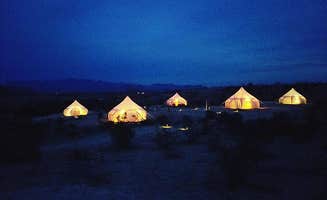
Several excellent camping options surround Big Bend National Park. Maverick Ranch RV Park offers 101 well-appointed RV spots with full amenities and is surprisingly uncrowded even during holiday weekends. Just 3 miles from the park entrance, RoadRunner Travelers RV Park provides convenient access with both full-service sites and boondocking options. For a unique experience, Sky Ranch Terlingua is about 20 minutes from the park entrance and near essential services in Study Butte. Less crowded than the national park, Big Bend Ranch State Park offers camping at Upper & Lower Madera Campground with beautiful views overlooking the Rio Grande. Stillwell Store & RV Park provides basic electric and water hookups.
What should I know about tent camping in Big Bend National Park?
Tent camping in Big Bend National Park offers incredible experiences but requires preparation. Chisos Basin Campground is ideal for tent campers seeking cooler temperatures, with Casa Grande peak to the east and stunning sunset views to the west. Sites are well-maintained with level tent pads. For backcountry enthusiasts, Big Bend Backcountry Camping offers a more isolated experience but requires permits obtained at visitor centers. Weather varies dramatically by season - summer brings intense heat (especially at lower elevations), while winter nights can be cold. Spring and fall offer the most comfortable conditions. Potable water is available at developed campgrounds but not at primitive sites. Wildlife is abundant, so proper food storage is essential. Reservations are highly recommended for developed campgrounds during peak season (November-April).
Keep Exploring