Dispersed camping near Wallowa Whitman National Forest ranges from 5,000 to over 9,000 feet in elevation across the 2.3 million acre forest. Summer temperatures typically range from 45°F at night to 85°F during daytime at lower elevations, while higher elevations remain 10-15 degrees cooler. Most dispersed sites lack cell service, requiring campers to bring printed maps or download offline navigation tools before arrival.
What to do
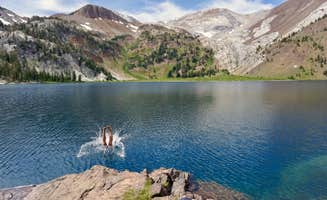
Fishing high-alpine lakes: The Wallowa Mountains contain dozens of fish-bearing lakes stocked with rainbow and brook trout. At Aneroid Lake, anglers find good fishing opportunities in a backcountry setting. "The lake is stocked every few years with rainbow trout, and has a good supply of brook trout," notes Nick J. about https://thedyrt.com/camping/oregon/aneroid-lake.
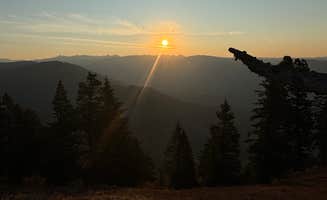
Photography at sunrise/sunset: Canyon overlooks provide dramatic lighting conditions for photographers. "Walking over late in the evening to Stargate over the canyon... And then woke up to watch the sunrise over the canyon. It's like a two minute walk from this campsite," reports Brody C. about the https://thedyrt.com/camping/oregon/dispersed-sites-near-hells-canyon-overlook.
Mountain hiking: Challenging summit routes reward hikers with panoramic views. "You can add some miles (and a lot of elevation) if you add a day hike to the Matterhorn. Second tallest to Sacajawea. When I say it takes 3 hours to get up and 30 minutes to get down... I'm not joking," says Sarah W. from https://thedyrt.com/camping/oregon/ice-lake.
What campers like
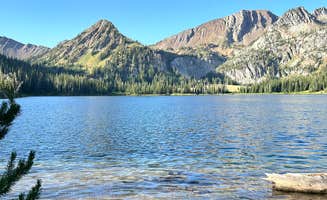
Solitude in high country: Many dispersed sites offer isolation from crowds even during peak summer months. "The trek to Echo Lake is about 8 miles (one-way) from the start of the Hurricane Creek Trail. When you arrive at Echo Lake, beauty awaits you! This location is a remote and peaceful retreat," shares Arielle W. about https://thedyrt.com/camping/oregon/echo-lake-or.
Clear night skies: Minimal light pollution allows for exceptional stargazing opportunities. "The stars are vivid and you can see the movement of the stars and moon along the mountains," reports a visitor to Echo Lake.
Off-grid experience: The lack of amenities appeals to those seeking a genuine wilderness experience. "No fires allowed. No amenities. Back-country hikers only. No cell service. Perfect getaway," says Michael about Ice Lake.
What you should know
Water temperatures: Alpine lakes remain extremely cold even in midsummer. "The water is no-joke cold," warns Michael about Ice Lake, while Nick J. notes about Aneroid Lake that "The water is very cold but worth the dip if it's a hot summer day."
Seasonal access windows: Most high-elevation sites remain snow-covered until late June or early July. "Photos are from August 2018 and July 2019... notice the snow in July. Couldn't do the added day hike that time," cautions a visitor to https://thedyrt.com/camping/oregon/hells-canyon-overlook-near-saddle-creek.
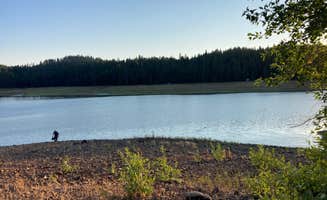
Fire restrictions: Seasonal fire bans typically run July through September. "Campfires are prohibited almost every year for most of July, August and September," notes Judy W. about Balm Creek Reservoir.
Property boundaries: Some lakes have mixed public-private ownership requiring awareness of boundaries. "The dispersed camping for backpackers is on the North side of the lake, whereas the South side is private property (Camp Halton)," explains a reviewer about Aneroid Lake.
Tips for camping with families
Choose accessible reservoirs: Lower-elevation water bodies offer easier access for younger children. "A handful of great places to camp for the night - very clean and well taken care of so please leave no trace. Just a spot and a table, no water, restrooms etc.," mentions Paige P. about https://thedyrt.com/camping/oregon/wolf-creek-reservoir.
Watch for grazing livestock: Free-range cattle commonly roam forest roads and camping areas. "Be ready to share space with free roaming mountain cattle," advises Amanda P. about Hells Canyon Overlook.
Pack for temperature swings: Even summer days can transition to near-freezing nights at higher elevations. "Mid 80's during the day in late July," notes Kenny R. about camping at Starvation Springs, though nighttime temperatures typically drop significantly.
Tips from RVers
Assess road conditions: Many access roads deteriorate significantly after wet weather. "Not far up a nicely paved road, and then onto maybe 0.3-0.4 mile bumpy gravel/rock FS road. Plenty of large open sites with rock fire rings," reports Kenny R. about https://thedyrt.com/camping/oregon/starvation-springs-nf-46-site.
Choose established pull-throughs: Some sites offer gravel parking designed for larger vehicles. "The site we got was nicely graveled and a pull through," mentions Heidi S. about Wolf Creek Reservoir.
Size limitations: Most rustic camping near Wallowa Whitman National Forest accommodates smaller RVs better than large units. "This is a great spot for me and my 20 foot RV," notes a camper about Starvation Springs, indicating that modest-sized rigs fare best on forest roads.






 Legend


