Tent campsites near Westmoreland, New Hampshire offer primitive options that require advance planning but reward with secluded sites and natural beauty. The Connecticut River Valley sits between the Green Mountains of Vermont and the Monadnock Highlands, with elevations ranging from 200-400 feet along the river to higher points in surrounding hills. Summer temperatures average 75-85°F during daytime, while spring and fall camping brings cooler nights requiring proper insulation.
What to do
Paddling opportunities: Tully Lake Recreation Area provides boat rentals for exploring the numerous islands and coves within the lake system. One camper noted, "We rented kayaks right at the campground for a paddle around Tully Lake. Great trip!" The lake offers multiple secluded spots for rest breaks during paddling excursions.
Hiking trails: Stratton Pond Shelter sits at an important trail junction where the Appalachian Trail, Long Trail, and Stratton Mountain trails converge. A winter visitor reported, "The shelter is a 3.75mi hike from the nearest parking lot in winter. There are 2 tent platforms, 2 outhouses and at least 16 bunk spaces in the shelter." The pond itself is "one of the largest bodies of water on the Long Trail."
Waterfall exploration: Multiple falls and cascades dot the region, with easy access from campgrounds. Campers at Tully Lake Recreation Area frequently visit nearby Doane's Falls, described as "a very quick walk from the campground area" with "beautiful" views that attract professional nature photographers.
Foraging opportunities: Seasonal wild edibles grow near many camping areas. Berries are particularly abundant in summer months, with one camper mentioning, "You can find lots of private areas to swim, pick blueberries and relax" around Tully Lake.
What campers like
Wheelbarrow transport system: Walk-in campgrounds provide large wooden carts for moving gear from parking areas to tent sites. A camper described, "Large wooden wheelbarrows are provided to bring your gear to your camp site," making the logistics of primitive camping more manageable while preserving the quiet atmosphere.
Privacy between sites: Maple Ridge Farm earns praise for its spacious layout, with a reviewer noting it's a "Very lush campground, plenty of space and privacy between sites. They'll drive you in an ATV up to some of the sites that are further away from the parking lot." This transportation assistance makes more remote sites accessible.
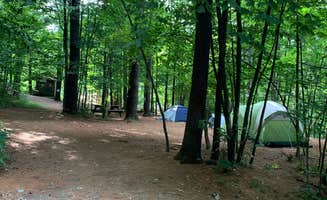
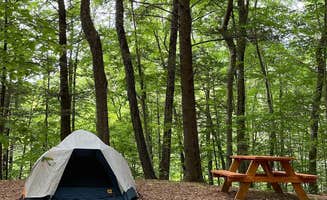
Vehicle-free camping: Many tent campers specifically seek out walk-in sites for the quieter experience. One visitor explained their site was "HUGE and extremely private" and appreciated that "No cars at all at the campsites... made for a super quiet stay" while still feeling secure as their "toddler roamed around."
Island camping: For adventurous campers seeking ultimate seclusion, island sites provide exceptional experiences. A camper who stayed at an island site called it "absolutely amazing" with "views to die for" but cautioned it's "really meant for people who want to be outdoors in the woods...but not good for people who want to take their kids somewhere easy."
What you should know
Reservation competition: The most desirable tent sites book extremely quickly when reservations open. For Tully Lake sites, "you have to be on your game" as "the sites fill up weeks out (and can completely fill the day registration opens, which is date-dependent each year)." Planning months in advance is often necessary.
Cell service limitations: Most primitive tent areas have minimal connectivity. Barton Cove Campground and similar sites often have "spotty to nonexistent" service, requiring campers to "download any maps you might want (driving, trail, geocaching) before you arrive."
Water access planning: Centralized water sources mean campers need containers for transporting drinking water to sites. As one reviewer noted, "There is 1 or 2 places to grab water so make sure to bring refillable containers" rather than expecting water access at individual sites.
Site access procedures: Some campgrounds have detailed entry protocols. At Barton Cove, a camper described the process: "You check in at the office, grab a key to unlock the gate, drive to the campground, unlock gate, drive through gate, lock gate, unload your stuff, drive to gate, unlock gate, drive through gate, lock gate, return key, drive back to campground, walk to your site."
Tips for camping with families
Site selection for bathroom access: Families with young children should consider proximity to facilities. Reviews note "long run with small kids in the middle of the night" from distant sites to bathrooms, suggesting families book sites closer to central facilities even if they offer less privacy.
Wheelbarrow logistics: Parents should pack minimally when using cart transportation systems. One visitor advised keeping "gear to a minimum" since "the trails can make hauling them tough" especially with children too young to help with transport.
Quiet atmosphere benefits: Zoar Outdoor and similar campgrounds enforce noise policies that create family-friendly environments, though one camper noted "their quiet hours are quite oppressive." The benefit is peaceful camping without late-night disruptions from other groups.
Weekend timing considerations: Several reviews mention busier, sometimes rowdy conditions during holiday weekends. One family reported, "We went memorial day weekend few years ago, busy holiday of young teens partying. Park staff tried their best, but other campers definitely took away from our stay."
Tips for RVers
Tent-focused facilities: Most camping areas near Westmoreland cater primarily to tent campers with limited RV accommodations. Lost Boys Hideout and similar sites offer "Simplicity at its best" which appeals to some RVers seeking a more primitive experience for occasional tent camping.
Limited hookup options: RV campers requiring hookups should look to established campgrounds like HQ Campground at Monadnock State Park rather than the more primitive options that dominate the area. While tent sites are plentiful, full-service RV sites are limited within 30 miles of Westmoreland.
Access restrictions: Many forest roads leading to camping areas have clearance limitations or gates restricting larger vehicles. Reviews frequently mention "high clearance vehicle is definitely preferred" for accessing more remote camping areas.









 Scout
Scout


