Dispersed camping near Quincy, Florida centers on the Apalachicola National Forest, Florida's largest national forest covering over 632,000 acres of pine flatwoods and cypress swamps. The forest sits at a low elevation averaging 100 feet above sea level with a subtropical climate that creates humid summers and mild winters. Forest service roads throughout the area provide access to numerous primitive camping options with variable seasonal conditions.
What to do
Paddle the waterways: Porter Lake Dispersed Camp offers direct access to the river system. "The river is beautiful to boat or kayak and fish," according to camper Annette L. Water levels vary seasonally, so check conditions before arrival.
Night wildlife viewing: The remote location provides excellent nocturnal wildlife observation opportunities. Christie S. noted at Porter Lake Dispersed Camp, "I stumbled upon a family group celebrating the beginning of small game tournament with a fish fry! Fun and laughter around a campfire."
Hunting access: Several designated hunt camps provide strategic forest access. Outside hunting season, these areas remain largely vacant. At Buckhorn Hunt Camp, Thomas V. observed, "Easy to find and roads in are OK. Not all that busy outside of hunting season."
What campers like
Remote solitude: The distance from urban areas creates genuine wilderness experiences. Annette L. reported, "This campground is at least 30 miles either way on F13 (dirt road to campgr) and other RTS to any type of civilization."
Minimal light pollution: The significant distance from cities provides exceptional stargazing conditions on clear nights, particularly in the drier winter months.
Basic facilities: Some dispersed sites offer rudimentary amenities. Christin P. mentioned at Porter Lake Dispersed Camp, "There's toilets and a non potable spigot to clean off personal items."
What you should know
Road conditions: Forest service roads can become difficult after rain. Four-wheel drive vehicles are recommended during wet seasons.
Logging activity: Commercial logging operations use many forest roads. According to Annette L., "There are alot of logging trucks who use the road during the day and other vehicles but at night total quiet just the wildlife."
Hunting season impacts: Campsite availability decreases significantly during hunting seasons. Thomas V. at Buckhorn Hunt Camp stated, "Not all that busy outside of hunting season. Four spots have a picnic table."
Hunt camp restrictions: Twin Poles Hunt Camp, Cliff Lake Hunt Camp, and White Oak Landing prohibit fires, pets, and alcohol with no amenities provided. Forest Service regulations apply regarding site occupancy limits.
Tips for camping with families
Water access points: Sites near water provide natural entertainment for children. Christie S. observed, "There is a boat ramp, pit toilets and water available here. Nice roads lead to this gem."
Facility planning: Most dispersed camping areas lack amenities. Pack all supplies including drinking water, as spigots at sites are not designated for potable use.
Seasonal considerations: Winter and early spring offer more comfortable temperatures and fewer insects for family camping in the Apalachicola National Forest.
Wildlife awareness: The forest contains diverse wildlife including snakes, alligators, and black bears. Store food properly and maintain appropriate distances from all wildlife.
Tips from RVers
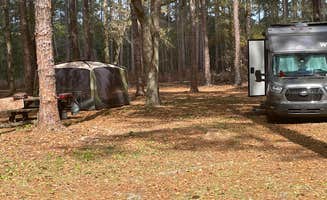
Site limitations: Most dispersed camping areas have limited space for larger rigs. Small to mid-sized campers and trailers work best at White Oak Landing and Hunt Camp.
Road clearance: High-clearance vehicles are recommended for accessing most dispersed camping areas, particularly during and after rainy periods when forest roads may deteriorate.
Supply management: No hookups are available at dispersed sites. Plan for dry camping with all necessary supplies for your entire stay, as the nearest services require significant travel time.
Generator restrictions: Most hunt camps prohibit generator use. Solar power systems offer the best solution for electricity needs in these primitive camping areas.



 Traveler


