Primitive camping near Flagler Beach, Florida exists primarily in Ocala National Forest, with several dispersed sites requiring careful preparation and navigation. Located in USDA Hardiness Zone 9a, this region experiences mild winters with occasional frost and hot, humid summers with average temperatures reaching 92°F from June through September. Annual rainfall exceeds 50 inches, concentrated during summer thunderstorm season from May through October.
What to do
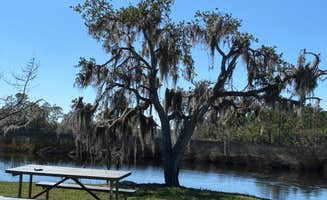
Kayaking and paddleboarding: Access points like St. Johns River dispersed camping spot provide excellent water entry. "Right next to the river and the trees open up so you get a great view of the stars," notes Mike D. about this St. Johns River Dispersed Spot.
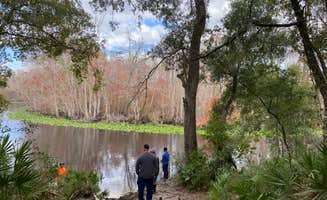
Hiking historic trails: Explore the 1.2-mile interpretive Davenport Landing Trail leading to a former steamboat landing. Stuart K. explains, "If you have an explorer's mindset, you'll be richly rewarded here as there is a small gravesite from the Civil War that you can find along with middens along the Ocklawaha River hiding traces of the Timucuan Indians that once populated this area" at Davenport Landing.
Fishing opportunities: Many sites offer direct water access for fishing. According to David P., "Pulled in around 9:30 pm. Big open spot. Last 100 yards driving back in were very bumpy but no problem with our van."
What campers like
Seclusion and solitude: Several sites offer true wilderness experiences far from crowds. Adamm A. shares about Freak Creek: "It's super secluded and quiet. Depending when you stay there's at times people who show up to party and then leave. Sites are primitive. I would not attempt bringing a camper unless it's really small. Great place to put a kayak in the water."
Star-gazing: Limited light pollution makes forest camping ideal for night sky observation. At Freak Creek Dispersed Camping, campers find clear night skies when the tree canopy opens up in certain areas.
Wildlife viewing: The forest hosts diverse wildlife. Hilary G. mentions: "I talked to another person that use to go out there and said she has seen a panther. I've yet to see anything."
What you should know
Road conditions vary dramatically: Many access roads require high-clearance vehicles. "The main road in has huge deep ruts, the other road has a water crossing that was over my bumper on my lifted Mojave," warns hilary G. about Freak Creek. "If you don't have 4wd and recovery gear I wouldn't risk it."
Changing accessibility: Forest management activities can alter access routes. Destiny R. notes about Blue Sink: "You may need ATV or creative backpacking to get there now. The Forestry Service recently chopped down trees and covered the easy access roads."
Safety considerations: Some areas have developed safety concerns. Michael S. cautions about Lake Dorr: "Attempted to stay at this campground but left because it felt unsafe. Spoke to a local that warned of violence, robbery, and killings in this area of the national forest."
Tips for camping with families
Choose established sites: For families, sites like Davenport Landing offer more reliable access. Ethan B. reports: "We didn't see anything bad with this place when we were there. Had no one around and nice and cool in the forest."
Prepare for no facilities: Pack in all water, sanitation supplies, and waste disposal bags. Frank E. notes about Davenport Landing: "Primitive, no reservations, gets some traffic visiting historic site."
Scout during daylight: Arrive with several hours of daylight remaining to assess site conditions and set up. David P. advises: "Pulled in around 9:30 pm. Big open spot. Last 100 yards driving back in were very bumpy but no problem with our van. Not sure about a larger RV."
Tips from RVers
Size restrictions: Most dispersed sites cannot accommodate large RVs. At Freak Creek, Adamm A. advises: "I would not attempt bringing a camper unless it's really small."
Ground conditions: Sand and mud can create hazards for vehicles. Michael S. warns: "Got stuck in sand on the way out and had to wait for a tow truck. If you do decide to come to this campground, avoid north part of Ron Paul Drive. You'll either get stuck in sand or have issues to low/tight trees."
Site selection: Carefully assess sites before committing to parking. "Big open spot. Last 100 yards driving back in were very bumpy but no problem with our van. Not sure about a larger RV," notes David P.






 Guide
Guide


