Apache-Sitgreaves National Forest spans over 2 million acres across east-central Arizona's Mogollon Rim and White Mountains. The forest contains over 400 miles of streams and more than 30 lakes and reservoirs, offering anglers and water enthusiasts multiple destinations. Dispersed camping options vary significantly in terms of accessibility, with many sites available year-round at lower elevations while higher areas become inaccessible during winter months.
What to do
Fishing opportunities: The Black River provides excellent trout fishing in a secluded setting. "It's beautiful. So many spots to camp, a river to fish, beautiful areas to walk around. Just gorgeous," notes a visitor to Black River Dispersed.
Wildlife observation: Concho Lake and surrounding areas host diverse wildlife. "There's prairie dogs and bunnies galore, which was a nice bonus," reports a camper at Concho Lake. Larger mammals including elk are common throughout the forest, particularly at dawn and dusk.
Hiking access: Several dispersed camping areas serve as trailhead access points. At Timber Mesa Trailhead, campers appreciate that there are "clearly marked trails and roadways. Hiking views were spectacular."
What campers like
Solitude and quiet: Campers value the remote nature of many sites. At National Forest Road 117C, one visitor shared, "Only a couple logging trucks on a very nice maintained road. All alone on a mountain top!! Me and my dog are living the life!"
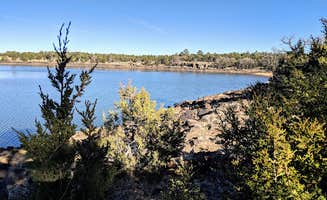
Winter camping opportunities: While higher elevations receive snow, some sites remain accessible year-round. "Stopped here prior to visiting the petrified forest. What a clean, quiet, gem. The lake was frozen over which made for tons of fun for us throwing rocks and listening to the ripple," writes a winter visitor to Concho Lake.
Convenience: Some camping areas offer unexpected amenities despite being dispersed sites. "There were two port o potty's that were not too bad. There were lots of cattle free range grazing around the lake," notes a Concho Lake camper.
What you should know
Fire restrictions: Fire bans are enforced seasonally and can impact camping plans. One camper at Concho Lake reported, "Due to fire danger in the area currently it's closed." Always check current fire restrictions before planning your trip.
Weather preparedness: High elevation sites experience significant temperature drops. A visitor to Beehive Spring Camp noted, "At 9200 ft elevation got cold at night in September."
Varying road conditions: Access to many sites requires careful driving. A camper warned about National Forest Road 117C: "Road is rocky and rutted in places but there are camp spots 2wd can access if one takes it slow."
Site cleanliness issues: Some popular free camping areas suffer from overuse. "Trash cans were overflowing with trash, and a few of the sites were trashed as well," reported a recent Concho Lake visitor.
Tips for camping with families
Wildlife viewing opportunities: Children often enjoy the abundant small wildlife. Near Timber Mesa Trailhead, a camper experienced, "So many kinds of animals. Elk. Coyote. Cow. Sheep. You name it! It was an exciting way to spend the evening."
Noise considerations: Highway proximity affects some sites. "The highway got quieter in the middle of the night for a little while," noted a Timber Mesa camper, suggesting families might want to select sites further from roads.
Site selection timing: Arriving during daylight hours allows for better site assessment. "I would estimate there are about 10 sites. Most appeared to have garbage cans," explained a Concho Lake visitor, highlighting the importance of early arrival to secure better sites.
Tips from RVers
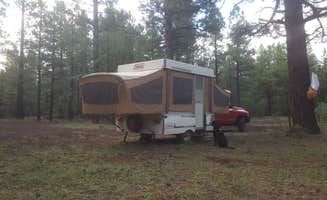
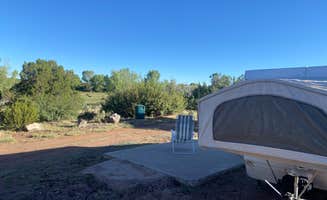
Concrete pad availability: Some dispersed sites offer unexpected amenities for RVs. At Concho lake, "~20 sites, most official sites have concrete pads & trashcans but a few more primitive spots just have driveways & rock campfire rings."
Cell service information: Connectivity varies by location but can be surprisingly good. "Good Verizon!" noted one RVer at Concho Lake, while another mentioned, "decent AT&T signal," making it viable for remote workers.
Weather impacts: Wind affects certain areas more than others. A camper at Concho Lake simply stated, "WINDY," suggesting RVers should secure awnings and outdoor equipment.








 Scout
Scout


