
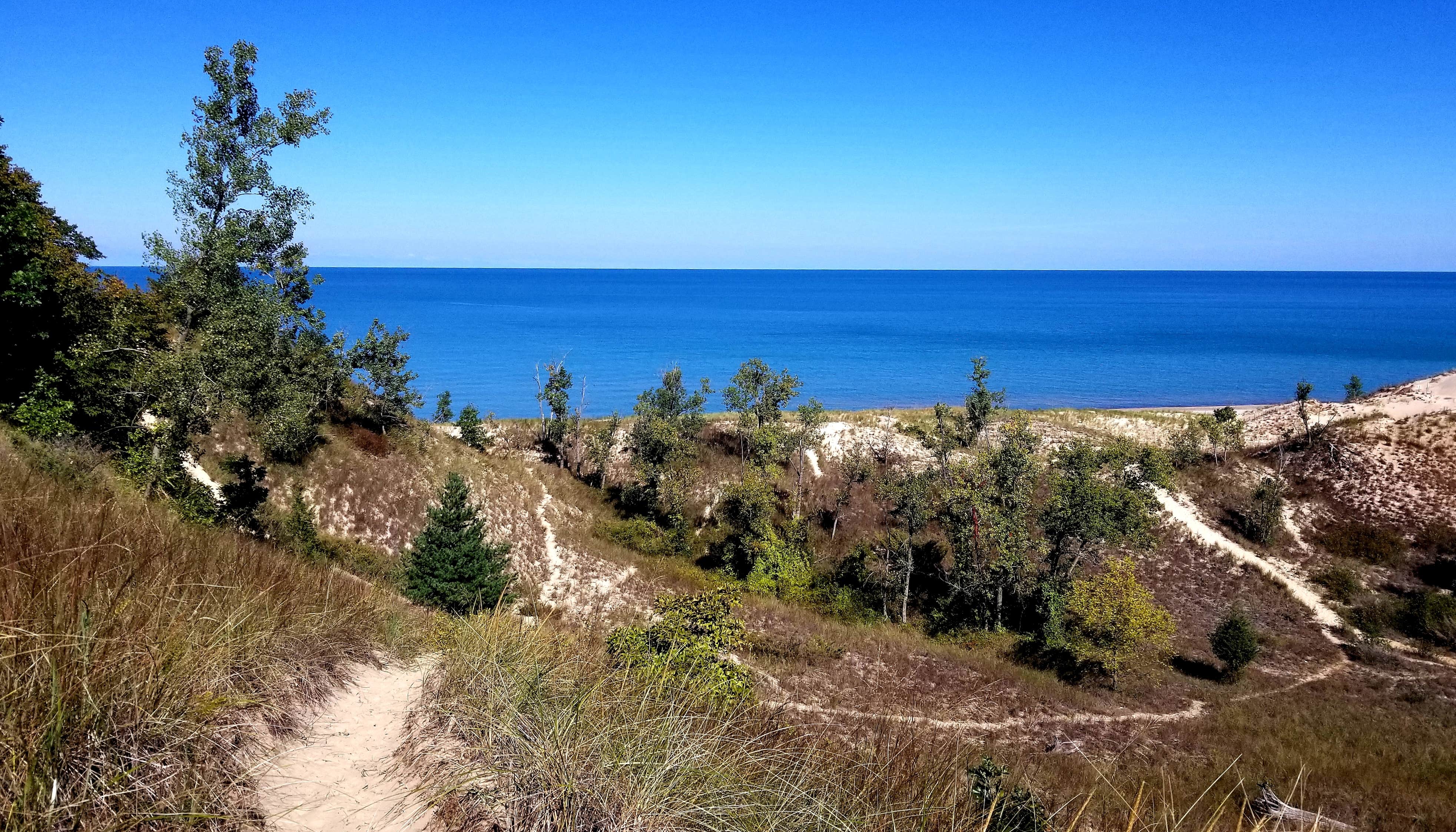
 Photo by Katrin M.
Complete Indiana Dunes National Park Camping Guide
Updated: April 2026
Indiana Dunes National Park stretches across 15 miles of Lake Michigan shoreline in northwest Indiana, combining sandy beaches with a surprisingly varied landscape of towering dunes, oak savannas, wetlands, prairies, and dense forest. The park holds one of the most varied ecological profiles in the National Park System -- a product of glacial history and thousands of years of ecological succession -- and it sits within a three-hour drive of more than 30 million people in Chicago, Indianapolis, Detroit, and Milwaukee. That urban proximity makes it one of the most visited national parks in the country, with camping that fills fast and beaches that draw heavy summer day traffic from the region. What most visitors miss is that Indiana Dunes pays off for the camper who plan ahead and go beyond the main beach access points: quieter walk-in sites, early-morning hikes on less-trafficked trail systems, and a ranger-led bog boardwalk program that has no equivalent anywhere else in the Midwest. This guide covers everything you need to know to plan, book, and enjoy an Indiana Dunes National Park camping trip, with practical detail on campground options, 2026 closures, trail conditions, and insights from campers who know the park well.
Indiana Dunes National Park Camping at a Glance
All camping inside Indiana Dunes National Park runs through one developed campground: Dunewood Campground. Reservations are required through Recreation.gov on a rolling 6-month window, with sites first available starting November 15 for the following camping season. Summer weekends book quickly -- often within days of release -- so early booking is critical. The campground operates April 1 through November 1 and has no electric, water, or sewer hookups at individual sites, though restrooms, showers, potable water, and a dump station are available on-site.
For 2026, two significant time-sensitive disruptions affect visit planning. Mount Baldy's access site is closed from late March through mid-June 2026 for a sand management project involving approximately 40,000 cubic yards of sand being relocated in coordination with the U.S. Army Corps of Engineers. Separately, Marquette Greenway construction will trigger temporary closures of Glenwood Dunes trail system segments beginning April 1, 2026 and Little Calumet/Mnoke Prairie trail system segments beginning May 1, 2026, with both expected to remain closed through December 31, 2026. Check NPS current conditions before finalizing any itinerary.
One planning reality that catches visitors off guard: Indiana Dunes National Park and Indiana Dunes State Park are adjacent but entirely separate fee systems. A national park entrance pass does not cover entry to the state park, and vice versa. Budget for both if you plan to use campgrounds or beaches in both jurisdictions. Campers coming from the southern Indiana corridor can check camping near Merrillville with pet-friendly options as a staging point for a dunes trip.
Indiana Dunes National Park Campground Quick Facts
| Quick Facts | Details |
|---|---|
| Number of Campgrounds | 1 main developed campground (Dunewood) plus walk-in and group sites inside the national park; adjacent state park and private options nearby |
| Total Campsites | 67 total at Dunewood: sites 1-54 drive-in (tent/RV), sites 55-67 tent-only walk-in; plus Dunbar Group Site (tent-only, hike-in, max 30 people) and 5 Central Avenue walk-in sites |
| Campsite Costs | $25/night at Dunewood and walk-in sites; $0 additional for group site base fee (check Recreation.gov for current group rates); Senior/Access pass holders receive 50% discount |
| Reservation Platform | Recreation.gov (6-month rolling window; seasonal reservations first open November 15) |
| Camping Season | April 1 through November 1 (Dunewood); no winter camping inside the national park |
| Temperature Ranges | Summer: 75-85 degrees F days, 55-65 degrees F nights Spring/Fall: 50-70 degrees F days, 35-50 degrees F nights |
| Entrance Fees | $25/vehicle valid 1-7 days; $45 Indiana Dunes annual pass; $80 America the Beautiful Pass covers national park entry (not state park) |
| 2026 Updates | Mount Baldy access site closed late March through mid-June 2026 (sand management project) Glenwood Dunes trail closures April 1 - December 31, 2026 (Marquette Greenway construction) Little Calumet/Mnoke Prairie trail closures May 1 - December 31, 2026 Prescribed burns planned in spring 2025/2026 -- check conditions before arrival Portage Lakefront and Riverwalk trail remains partially closed (flood damage) |
Indiana Dunes Campgrounds: Complete Guide
Indiana Dunes National Park has a compact camping inventory compared to larger parks, but the options inside park boundaries are supplemented by a well-developed neighboring state park and several nearby private campgrounds. Understanding which campground suits your setup -- and what each involves in terms of access, amenities, and tradeoffs -- makes a real difference. For a broader overview of camping near Indiana Dunes National Park, The Dyrt lists more than 60 campgrounds within driving distance. Campers looking specifically for cabin rentals near Indiana Dunes or glamping near Indiana Dunes will find options through The Dyrt's filter pages as well.
Dunewood Campground

Dunewood Campground — Indiana Dunes National Park
Dunewood Campground is the only developed drive-in campground inside Indiana Dunes National Park, set in a wooded area roughly 1.5 miles from Lake Michigan shoreline access. The campground has 67 total sites: sites 1-54 are drive-in and accommodate both tents and RVs (no hookups; length limits vary by site, so check individual site dimensions on Recreation.gov before booking a large rig), and sites 55-67 are tent-only walk-in sites requiring campers to park and carry gear a short distance. Amenities include flush toilets, hot showers, potable water at central stations, a dump station near the entrance, and fire rings and picnic tables at each site. The campground operates April 1 through November 1 on a reservation system through Recreation.gov (6-month rolling window starting November 15). Loop spacing provides more separation than many regional campgrounds, making this a genuinely quieter option -- though it is not beachfront. Senior Annual, Senior Lifetime, and Access interagency passes receive a 50% discount on site fees; Annual, Military, and Volunteer passes do not. Best for campers who want a park-based wooded setting with standard amenities and a short drive to multiple beach access points.
Central Avenue Walk-In Sites
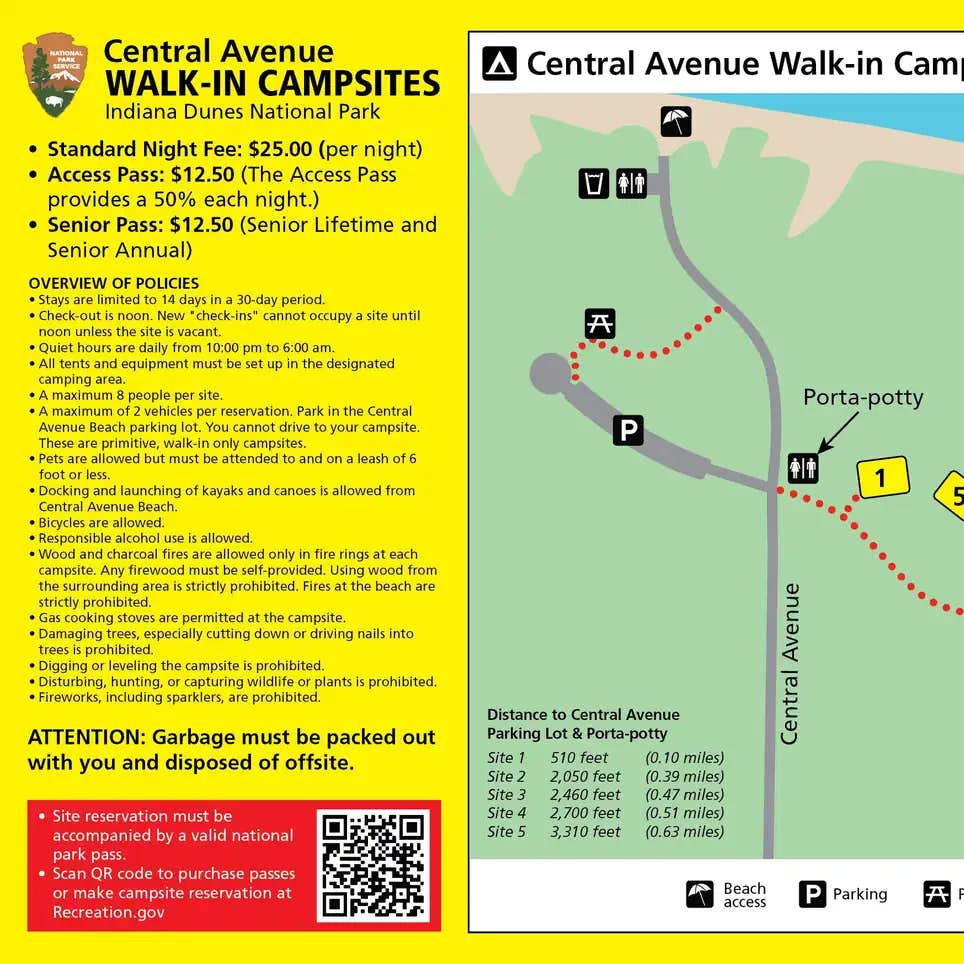
Central Avenue Walk-in Sites — Indiana Dunes National Park
Central Avenue Walk-In Sites are 5 tent-only sites requiring campers to park at the Central Beach parking area and carry gear to their site on foot. Walking distances range from approximately 0.10 miles to 0.63 miles depending on site assignment, and the approach involves a steep hill with uneven terrain -- pack light and wear trail shoes. Important: there is no potable water at these sites; you must carry all water in. Vault toilets are available near the parking area. A specific note for these sites: campfires are not permitted even though fire pits may be present at some sites -- check your site's specific regulations on Recreation.gov before arrival. These sites are reservable through Recreation.gov and tend to book quickly during peak season. Best for tent campers who want more separation from drive-in traffic and a quiet, more remote feel without a full backcountry commitment.
Dunbar Group Site
Dunewood Campground — Indiana Dunes National Park
The Dunbar Group Site is a tent-only, hike-in group camping area accessible for up to 30 people. Vehicle access stops at the gate; campers must carry all gear from the parking area to the camping zone. The site is approximately 0.2 miles from Dunbar Beach and includes a parking area with a maximum vehicle length restriction of 20 feet. During peak season, parking at the access point can fill, so plan an early arrival. The group site is reservable through Recreation.gov and works well for organized groups, scout troops, and family reunions that want a lake-proximate experience with a more separated, hike-in feel. Check Recreation.gov for current group pricing and availability windows.
Indiana Dunes State Park Campground
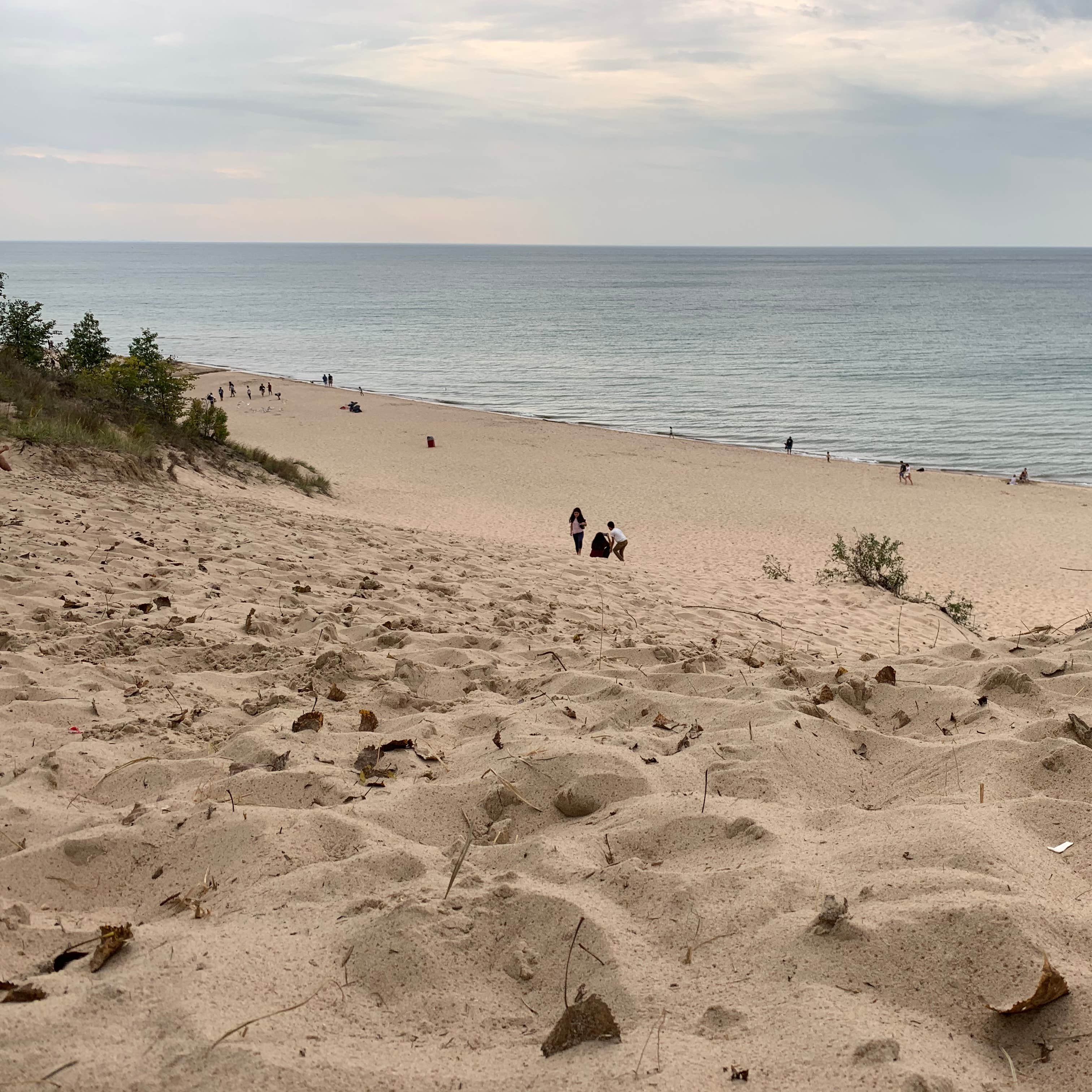
Indiana Dunes State Park Campground
Indiana Dunes State Park Campground sits inside the adjacent 2,182-acre state park, which manages more than three miles of Lake Michigan beach and has a separate gate fee structure entirely independent of the national park. The campground includes 140 electric sites (all 50-amp service) plus a youth tent area, making it the region's main option for RV campers who need hookups. Sites are closer together than Dunewood and the campground sees heavier RV traffic, but the direct trail and boardwalk access to the beach is a significant advantage. Reservations are required and fill well in advance during summer. Gate fees are $7/day for Indiana plates and $20/day for out-of-state plates -- these are separate from and not interchangeable with national park entrance fees. Full amenities (running water, modern restrooms) are generally available May through October; many facilities are winterized between November and April. Best for campers who want electric hookups and the quickest possible access to the Lake Michigan beach.
Nasaki Youth Camp Area
Nasaki Youth Camp Area — Indiana Dunes State Park
Nasaki Youth Camp Area is a group/youth camping option associated with Indiana Dunes State Park, suited for scout troops, school groups, and organized youth programs. Reservations are available through ReserveAmerica. This site provides a structured group camping setting separate from the main state park campground loops, with access to state park amenities and beach proximity. Check the Indiana DNR website for current availability, group rates, and any seasonal operating changes before booking.
Michigan City Campground
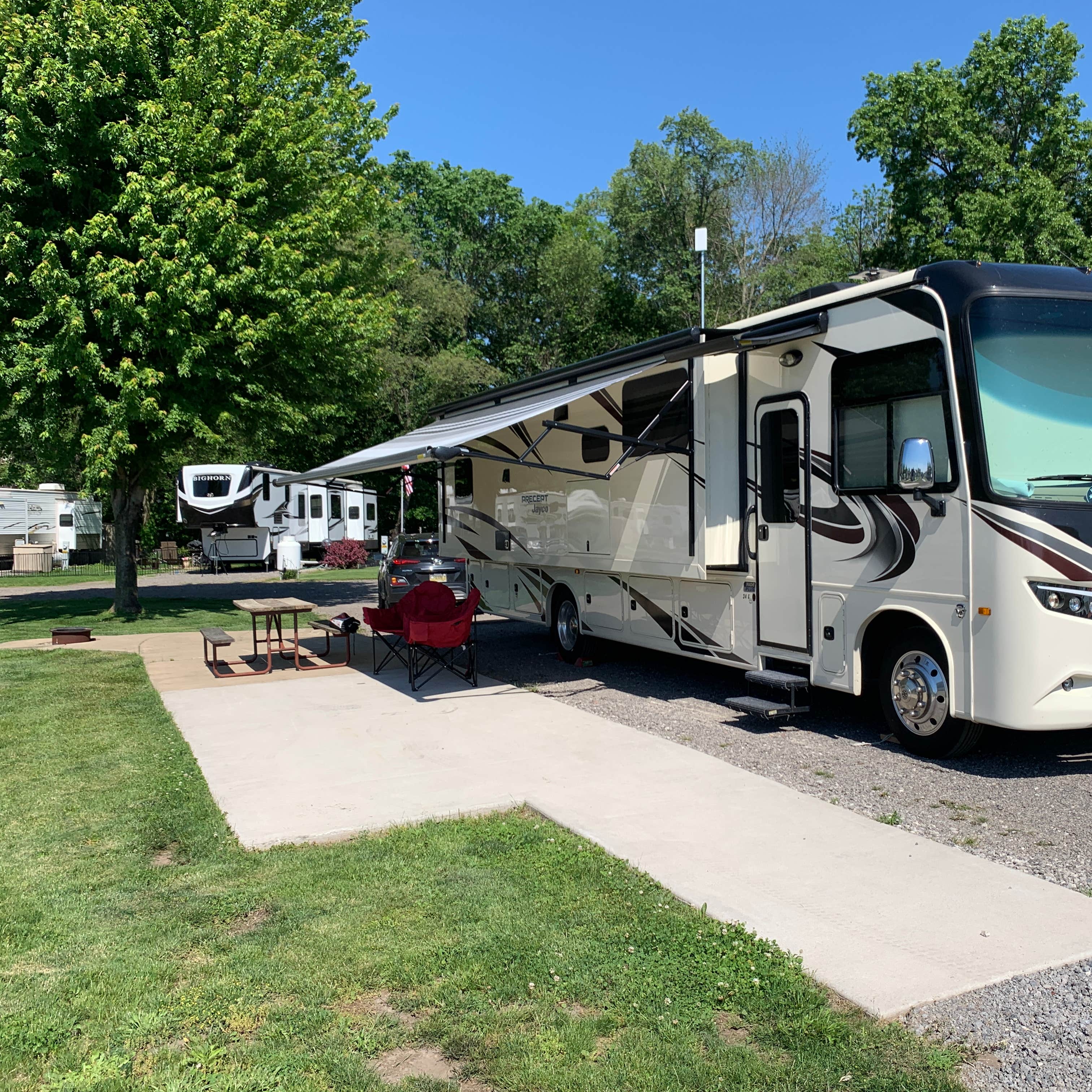
Michigan City Campground
Michigan City Campground is a private campground located approximately 5 miles from the eastern section of the national park. Camper reports on The Dyrt highlight a full amenity set including WiFi, showers, drinking water, 50-amp hookups, pull-through sites suitable for larger RVs, a pool, playground, and dog park -- making it one of the most complete setups for families and full-hookup RV campers in the region. Its location near Michigan City also provides easy access to dining and supplies. Best for RV campers who want full hookups and family-friendly facilities while staying close to the park's eastern access points and trails.
Sand Creek Campgrounds

Sand Creek Campground
Sand Creek Campground is a private campground near Chesterton, roughly 6 miles from the national park. It offers a mix of tent sites, RV sites, and cabin accommodations, with pricing typically ranging from $30 to $90 per night depending on site type and season. Camper feedback describes clean facilities and a workable amenity set. One tradeoff noted in community reviews is train noise, a recurring issue in parts of this corridor -- light sleepers may want to bring earplugs or request a site with more buffer from rail corridors. Best as an alternative when Dunewood and the state park are full, or for campers who want cabin accommodations close to the park.
Campground Comparison Table
| Campground | Location and Sites | Cost and Reservations |
|---|---|---|
| Dunewood (National Park) | Wooded, inland 67 sites (drive-in + walk-in) | $25/night Recreation.gov |
| Central Avenue Walk-In | Tent-only, walk-in access 5 sites (no water on-site) | $25/night Recreation.gov |
| Dunbar Group Site | Tent-only, hike-in Max 30 people | Group rate Recreation.gov |
| Indiana Dunes State Park | Near beach 140 electric sites + youth area | $25-40/night + gate fee ReserveAmerica |
| Michigan City Campground | Near Michigan City Private, full hookups | Varies -- private Direct booking |
| Sand Creek Campgrounds | Near Chesterton Tent, RV, cabins | $30-90/night Private |
Campground Amenities and Best Uses
Dunewood Campground: The best choice for campers who want a wooded, park-based setting with standard amenities and reasonable spacing between sites. Works well for tents and smaller RVs, though no hookups are available. The tradeoff is that it is not beachfront -- a short drive or bike ride gets you to any of the main beach access points.
Walk-In and Group Sites: Central Avenue walk-in sites provide more isolation for tent campers who want a quieter setup without requiring full backcountry logistics. The Dunbar Group Site is the only option inside the national park for large organized groups. Both require carrying gear on foot, with no water at Central Avenue -- plan accordingly.
Indiana Dunes State Park: The go-to for RV campers who need electric hookups or for anyone who wants immediate beach access on foot. The closer-together layout and heavier traffic are the main tradeoffs. The separate fee structure is worth understanding before you go -- national park passes do not apply here. Browse Indiana Dunes State Park campground reviews on The Dyrt for current camper feedback on sites and conditions.
Private Campgrounds: Michigan City Campground is the strongest full-service option for families and large RV rigs. Sand Creek works as a solid backup when in-park and state park options are full. Both are a short drive from multiple park trailheads and beach access points.
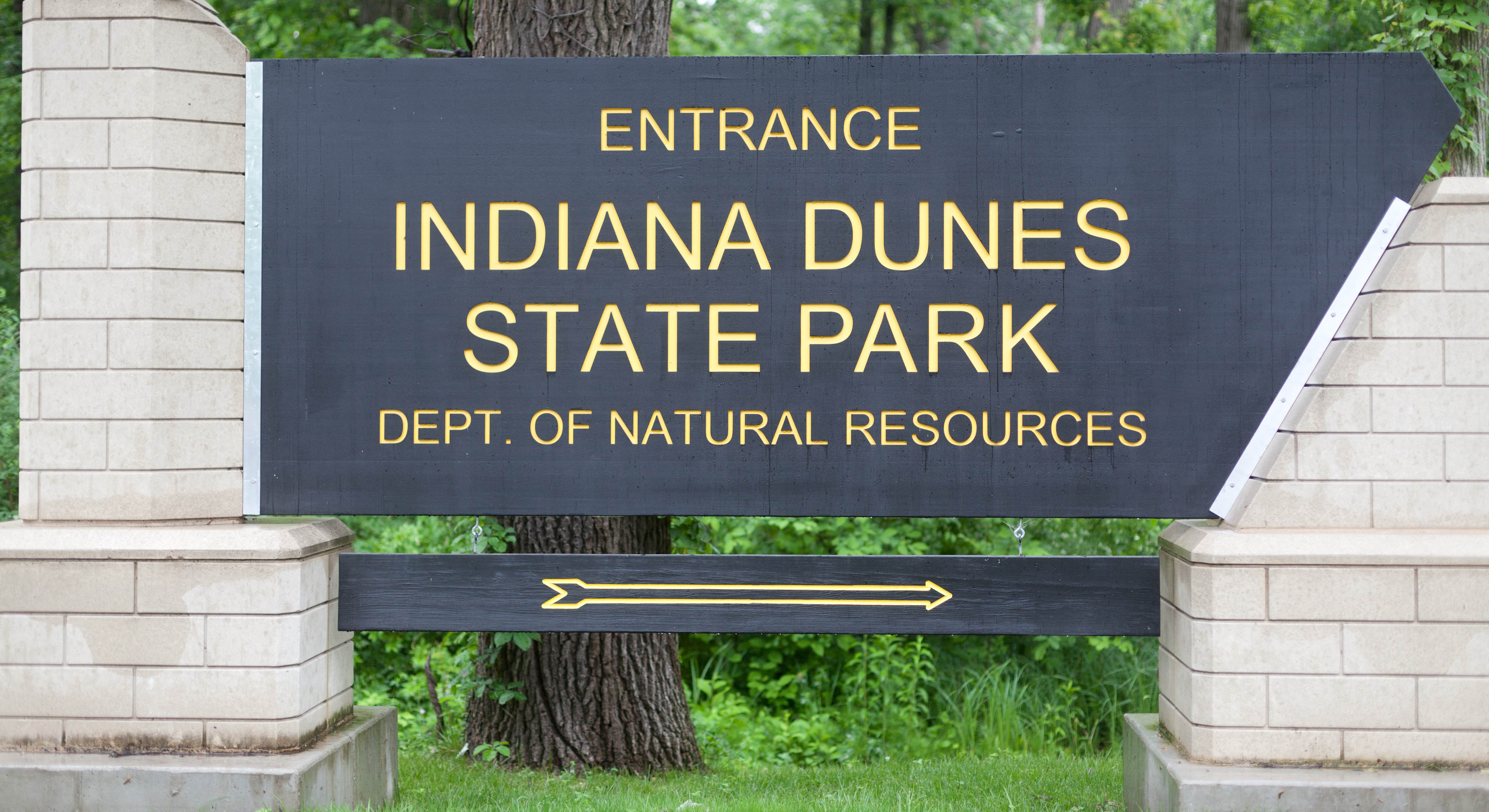 Photo by Lauren M
Planning Your Indiana Dunes Camping Trip 
When to Visit Indiana Dunes
| Season | Temperatures | Camping Conditions |
|---|---|---|
| Spring (April-May) | Days: 50-70 degrees F Nights: 35-50 degrees F | Campground opens April 1 Spring wildflowers peak in May Trail conditions may be muddy Prescribed burns possible; check conditions |
| Summer (June-August) | Days: 75-85 degrees F Nights: 55-65 degrees F | Peak demand -- book early Heavy beach and day-use traffic Mosquitoes can be intense near wetlands Train noise affects some sites at night |
| Fall (September-October) | Days: 55-70 degrees F Nights: 40-50 degrees F | Best balance of weather and crowds Good hiking conditions Campground closes November 1 |
| Winter (November-March) | Days: Below freezing Nights: Well below freezing | No campground access inside the park Day-use areas remain open Snowshoeing programs available when conditions allow |
Spring (April-May):
Spring is a strong choice for trail-focused campers. Heron Rookery and Cowles Bog are especially active in May, with wildflowers along the Little Calumet River corridor and high bird migration activity across the wetland systems. Temperatures are comfortable for hiking but nights can still drop near freezing in April, so pack warm sleeping gear. The campground opens April 1, and spring crowds are significantly lighter than summer. One important check: NPS planned approximately 1,534 acres of prescribed burns in spring 2025, with projects including the Mnoke Prairie and Cowles Dune areas, and similar programs continue in 2026. Smoke, closures, and reroutes are possible -- check current conditions before finalizing which trails to hike.
Summer (June-August):
Summer is the busiest season by a wide margin. Indiana Dunes draws from the entire Chicago metro area and beyond, and beach parking fills early on hot weekends. Campground sites book quickly and West Beach's 642-space lot can fill before noon on summer Saturdays. The upside is that all trail systems and beach access points are fully open (except where noted in 2026 closure updates), water temperatures warm to swimmable levels, and the park's programs and visitor center are fully staffed. Tent camping near Indiana Dunes has the most competition for sites in summer -- midweek arrivals see substantially better availability. Mosquitoes near the bog and wetland areas can be severe from late June through July -- repellent is not optional. If you are sensitive to train noise, ask about site locations when booking, as rail corridors affect ambient sound at some campground areas.
Fall (September-October):
Fall is when Indiana Dunes performs best as a camping destination. Crowds drop sharply after Labor Day, temperatures are ideal for hiking longer trail systems like Glenwood Dunes and Cowles Bog, and the late-afternoon light on the dunes is worth the trip alone. The state park campground typically stays open through fall with reduced loop access, and Dunewood remains open through October 31. If Dunewood is full in fall, camping near Chesterton, Indiana has nearby tent camping alternatives with similar access to the park's western trail systems. Pack layers -- mornings and evenings can drop into the 40s by October, and Lake Michigan weather can shift quickly.
Winter (November-March):
No overnight camping is available inside the national park in winter, and the state park winterizes most facilities between November and April. That said, the park remains open for day use. When snow accumulates to at least 6 inches, the Douglas Center at Miller Woods offers a snowshoeing program with loaner snowshoes available on a first-come basis. Birding groups including the Dunes-Calumet Audubon chapter lead seasonal outings at Portage Lakefront and Riverwalk. The park's winter landscape -- ice shelf formations on Lake Michigan, snow-covered dunes -- is genuinely worth a visit and draws photographers throughout the cold months.
Indiana Dunes Reservation System Explained
Indiana Dunes National Park campgrounds operate entirely through Recreation.gov with no first-come, first-served option during the operating season. Here is what to know before the booking window opens:
When reservations open: Sites become available on a rolling 6-month window, with the seasonal booking period first opening November 15 for the following year's April 1 campground opening. This means if you want a summer weekend site, you should plan to book 6 months out from your target dates -- often well before the new year.
How to improve your chances:
- Create your Recreation.gov account before the booking window opens and keep payment information current
- Have backup dates ready -- summer weekends at Dunewood fill within days of release
- Midweek arrivals (Monday-Wednesday) have substantially better availability than weekends
- Check for cancellations regularly; the 7-14 days before a booking's arrival date often sees a wave of last-minute openings as campers cancel or modify plans
Pass discounts: Senior Annual, Senior Lifetime, and Access interagency passes receive a 50% discount on nightly fees. Annual, Military, and Volunteer passes do not receive the camping discount at Dunewood.
Indiana Dunes State Park reservations are handled separately through ReserveAmerica (Indiana DNR's system), not Recreation.gov. These are also competitive for summer weekends.
Campground Costs and Budgeting
| Campground Type | Nightly Cost | Key Features |
|---|---|---|
| Dunewood (drive-in) | $25 | Flush toilets, showers, potable water, dump station; no hookups |
| Central Avenue Walk-In | $25 | Tent-only; no water on-site; vault toilet nearby; carry in all water |
| Indiana Dunes State Park | $25-40 + gate fee | 50-amp electric hookups; modern restrooms; beach proximity; separate fee system |
| Michigan City Campground | Varies (private) | Full hookups, pool, WiFi, pull-throughs; best for families and larger RVs |
| Sand Creek Campgrounds | $30-90 | Mix of tent, RV, cabin; clean facilities; some train noise |
Additional Costs and Budget Tips
Park Entry Fees: The national park charges $25 per vehicle valid for 1-7 days or $45 for an Indiana Dunes annual pass. The $80 America the Beautiful Pass covers national park entry for all passengers in a vehicle but does not cover the state park gate fee. Budget separately for state park access ($7/day Indiana plates; $20/day out-of-state plates) if you plan to visit both.
Parking and Beach Fees: Some beach access areas have parking fees or limited parking, and lot capacity is enforced. West Beach's 642-space lot is the largest and most accessible, but it fills on summer Saturdays. Lake View Beach has only 25 spaces and a specific warning from NPS: do not park in the adjacent Beverly Shores beach lot or you risk a citation.
Budget-Friendly Tips: Midweek camping at Dunewood is the most cost-effective way to access the national park with a reserved site. Campers arriving from the Chicago metro can also check camping near Hammond, Indiana for options closer to the Illinois border that make day trips to the dunes practical. For dispersed or free camping options near Indiana Dunes, The Dyrt's database includes additional listings beyond the developed campgrounds that may suit budget-focused campers.
Essential Gear for Indiana Dunes Camping
Indiana Dunes sits at the edge of a large freshwater lake with variable Midwest weather. Pack for temperature swings and insect pressure:
Sleeping and Shelter:
- Tent with a full rainfly -- lake weather can shift overnight
- Sleeping bag rated at least 20 degrees F colder than forecast lows (spring and fall nights drop fast)
- Sleeping pad with good ground insulation
Kitchen Setup:
- Camp stove and fuel
- Bear canister or car-side food storage (raccoons are active at Dunewood)
- Water containers -- Central Avenue walk-in sites have no water on-site; carry all you need
Clothing:
- Layering system for temperatures from 35 to 85 degrees F depending on season
- Rain jacket (lake squalls develop quickly)
- Sun protection -- dune hiking offers little shade; UV exposure is higher than most visitors expect
Bug Protection:
- DEET or Picaridin insect repellent -- wetland proximity makes this non-negotiable from late June through August
- Head net for bog and marsh trails
- Light long sleeves for evening camp use
Other Essentials:
- Offline maps downloaded to phone (cell coverage varies across the park)
- Bike lock and trail map if planning to use the regional trail system
- Earplugs if you are a light sleeper -- train noise is a real factor in parts of this corridor
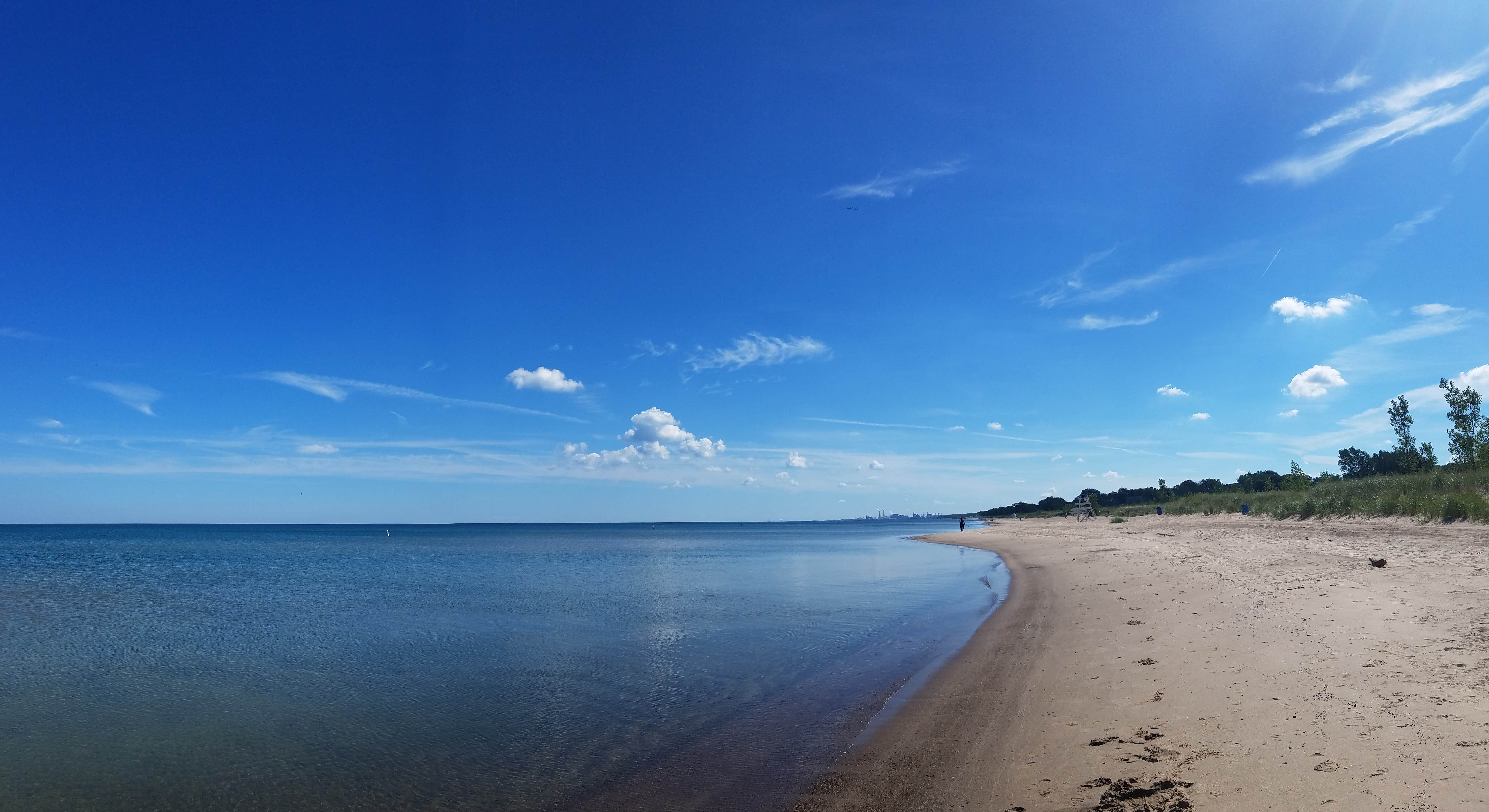 Photo by Emily W
Wildlife Safety and Park Regulations 
Wildlife at Indiana Dunes
Indiana Dunes supports a surprising range of wildlife given its urban proximity. The park's mix of wetland, forest, savanna, and dune habitats supports more than 350 bird species, making it one of the top birding sites in the Midwest. Mammals include white-tailed deer, red fox, raccoon, and a variety of small mammals common to Great Lakes ecosystems. The wetland systems also support turtles, frogs, and migratory waterfowl. For campers traveling with animals, pet-friendly camping near Indiana Dunes options are listed on The Dyrt with current pet policy details.
Wildlife safety at Indiana Dunes is different from bear-country parks but still requires common sense:
- Store all food and scented items in your car or in the bear-resistant campground storage when not in use -- raccoons in particular are persistent and clever at Dunewood
- Do not feed any wildlife; fed raccoons become nuisances and are often removed
- On birding outings and bog hikes, maintain distance from nesting areas and follow any posted seasonal closures protecting ground-nesting birds
Lake Michigan safety is a separate and serious concern. Rip currents occur at Indiana Dunes beaches and have caused fatalities. NPS provides rip current guidance at trailheads and beach access points. If caught in a rip current, swim parallel to shore rather than directly against the current.
Park Regulations and Etiquette
| Regulation Category | Specific Rules | Penalties |
|---|---|---|
| Campfires | Permitted only in designated fire rings at Dunewood drive-in sites No fires at Central Avenue walk-in sites (even where fire pits are present) Subject to seasonal fire restrictions; check upon arrival | Fines and possible site eviction |
| Quiet Hours | 10 PM to 6 AM throughout the campground | Enforced; repeated violations result in site eviction |
| Stay Limits | 14 nights within any 30-day period | Enforced; sites may be reassigned after limit |
| Drones | Prohibited within park boundaries without written NPS authorization | Citations and fines |
| Pets | Allowed in campground and on most trails on a leash no longer than 6 feet Not permitted on the beach at some access points; check trailhead signs | Fines for off-leash violations |
Additional Park Regulations
Dune Vegetation: Walking or running on vegetated dune faces damages the root systems that hold dunes in place. Stay on marked trails and boardwalks at all dune access areas. Sand ladders and designated routes exist at key points -- use them.
Collecting: No collecting of rocks, plants, shells, sand, or natural materials is permitted within the national park.
Fire Restrictions: During dry periods and high-wind conditions, the park may impose temporary fire bans. Check the NPS website or inquire at the visitor center upon arrival, especially during late summer.
 Photo by Meg S
Beyond the Campground: Activities and Exploration 
Day Trips and Itinerary Ideas from Dunewood
Beach Days and Dune Access:
West Beach is the park's largest and most accessible beach, with 642 parking spaces, a paved access road, accessible restrooms and potable water, and a beach bathhouse with a concession presence. The beach is 0.3-0.5 miles from the parking lot via paved path. Arrive before 10 AM on summer weekends -- the lot fills. West Beach also connects to the Dune Succession Trail, which lets you combine a swim with a short interpretive hike the same morning.
Lake View Beach in Beverly Shores is a smaller, quieter option with 25 parking spaces, seasonal restrooms, and lake views with less crowd pressure. One specific warning from NPS: do not park in the adjacent Beverly Shores beach lot to access Lake View Beach -- that lot is private, and campers who misread the signage have received citations. Plan to arrive early at Lake View on any day above 80 degrees F.
Ranger-Led Programs:
The park offers seasonal programming that goes beyond standard hiking. Pinhook Bog -- an unusual glacial bog environment with carnivorous plants and sphagnum moss -- is not open for independent access. The boardwalk through the bog interior is available only through ranger-led open house events, typically scheduled on select weekends. Check the NPS events calendar before your trip if this is a priority; it books up. Winter snowshoeing programs run from the Douglas Center at Miller Woods when snow reaches 6 inches, with a limited number of loaner snowshoes available on first-come basis. Chellberg Farm offers cultural history events including the annual Maple Sugar Time festival in late winter and seasonal open houses. The Dunes-Calumet Audubon chapter leads birding outings at Portage Lakefront and Riverwalk, particularly strong during spring and fall migration.
2026 Closure Note:
Mount Baldy's access site is closed from late March through mid-June 2026 for sand management work. Crescent Beach, adjacent to the project, may see periodic truck traffic and access disruptions during the same period. If Mount Baldy is on your itinerary for a spring 2026 visit, plan an alternative. Note also that Mount Baldy's summit itself is not open to independent hiking at any time -- it is accessible only on ranger-led tours due to ongoing subsurface hazard management and restoration. Plan trail days around the open trail systems and confirm access status at the visitor center on arrival.
Top Hiking Trails at Indiana Dunes
| Trail Name | Difficulty and Distance | Key Features |
|---|---|---|
| Cowles Bog Trail | Moderate to Rugged 4.7 miles | High habitat diversity -- ponds, marshes, swamps, savannas, and beach; best longer half-day hike in the park; connects to Lake Michigan shoreline |
| Glenwood Dunes Trail | Moderate 6.8 miles | Largest interconnected loop system; popular with hikers, trail runners, and equestrians; CLOSED April 1 - December 31, 2026 for Marquette Greenway construction |
| Heron Rookery Trail | Easy 3.3 miles | Spring wildflower destination along the Little Calumet River; best for early-season visits; easy terrain suitable for families |
| Great Marsh Trail | Easy 1.3 miles | Birding-forward route with observation deck; accessible paved option available; strong year-round for waterfowl and shorebird activity |
| Tolleston Dunes Trail | Moderate 2.9 miles | Dune and wetland plant diversity including prickly pear cactus; separate accessible segment; good option when Glenwood is closed in 2026 |
| Dune Succession Trail | Moderate 0.7 mi | Short trail showing distinct ecological zones from beach to forest; good complement to a West Beach swim day |
| Portage Lakefront and Riverwalk | Easy 0.9 miles | Excellent for lake weather observation, migration watching, and winter shelf-ice viewing; NOTE: portions remain closed due to past flood and high-water damage -- confirm status before visiting |
| Pinhook Bog Upland Trail | Moderate 2.1 miles | Public-access loop through beech-maple uplands; bog boardwalk interior only via ranger-led open house (not self-guided) |
Trail Access and Starting Points
Cowles Bog Trail begins from the Cowles Bog trailhead parking area off Mineral Springs Road in Portage. The trail connects multiple habitat zones before reaching the Lake Michigan shoreline -- plan 3-4 hours for the full loop.
Glenwood Dunes Trail System starts from multiple trailheads, with the primary access near Chesterton. The full 6.8-mile system is closed April 1 through December 31, 2026 for Marquette Greenway construction -- check NPS current conditions for 2027 reopening status.
Heron Rookery Trail is accessed from the trailhead parking area off CR 600 E near Chesterton. Best visited in April and May when wildflowers are at peak along the Little Calumet River. Family-friendly and flat with easy footing.
Great Marsh Trail departs from the Great Marsh trailhead off US Highway 20 near Beverly Shores. The observation deck provides one of the best birding vantages in the park. An accessible paved alternative route follows the north side of the marsh.
Biking and Multi-Use Trails
The Marquette Bike Trail and Calumet Bike Trail are the main cycling corridors through the park, but both have stretches where gravel surfaces are uneven and may require dismounting. The broader Marquette Greenway regional trail project will connect communities across the Chicago-Indiana shoreline corridor, but 2026 construction activity has temporarily closed segments within the park. Specifically, sections affecting the Glenwood Dunes system are closed from April 1, 2026 and portions of the Little Calumet/Mnoke Prairie trail system are closed from May 1, 2026, with both expected through December 31, 2026. Plan bike itineraries around these closures and verify open routes at the visitor center.
For tent camping near Indiana Dunes National Lakeshore, The Dyrt's filter pages can help identify campgrounds with easier bike trail access depending on which trail system is your focus. Campers with horses can check horse camping near Indiana Dunes -- the Glenwood Dunes trail system is popular with equestrians, though note the 2026 construction closures.
Water Activities
Lake Michigan provides swimming access at multiple beach points throughout the park. West Beach is the most developed option with an accessible bathhouse, showers, and a concession area in season. Lake View Beach and Dunbar Beach offer less-developed alternatives. Water temperatures typically reach swimmable levels in late June and stay pleasant through September.
Swimming Safety:
Rip currents are a documented hazard at Indiana Dunes beaches and have caused fatalities. NPS posts rip current guidance at beach access points. If caught in a rip current, swim parallel to the shore rather than fighting it directly. Check water conditions before entering; wave flags and advisory boards at beach access points should be read before getting in. No lifeguards are posted at most beach areas -- swim at your own risk and never alone.
Fishing:
Fishing is available along Lake Michigan shorelines, the Little Calumet River, and other waterways within the park. An Indiana fishing license is required for anglers 18 and older. The Little Calumet River provides access for freshwater species. Fishing from the Lake Michigan shoreline targets species including perch and salmon during run periods. Check current NPS and Indiana DNR regulations for species-specific rules.
The Dyrt Community Insights 
What Experienced Campers Know About Indiana Dunes
The Indiana Dunes camping experience has some non-obvious realities that repeat across The Dyrt's community reviews and are worth knowing before your first visit. For a broader look at what campers are saying, browse the Indiana Dunes National Park campground listings on The Dyrt.
The two-fee-system is the most common planning mistake. The national park and the state park charge completely independent entrance fees, and neither pass works at the other facility. Campers who arrive at the state park gate expecting their national park pass to cover entry have to pay a separate fee on the spot. Budget for both if you plan to camp at Dunewood and use the state park's beach access.
Walk-in sites are worth the extra effort. Central Avenue walk-in sites require carrying gear uphill on uneven terrain, with the farthest site over half a mile from the parking area and no potable water on-site. Campers who make that tradeoff consistently describe a quieter, more separated experience -- less vehicle traffic, less ambient noise, and more privacy than the drive-in loops at Dunewood. Carry at least two gallons of water per person per day. Browse Central Avenue Walk-In Sites on The Dyrt for current reviews from campers who have made this trip.
Mosquitoes near wetland areas are genuinely intense. Camper reviews on The Dyrt repeatedly describe mosquito pressure as severe from late June through July, particularly near the bog and marsh trail systems. Standard repellent helps, but a head net is the more practical solution for an early-morning hike at Cowles Bog or a birding session at Great Marsh.
Train noise is a real factor in some areas. The South Shore Line and freight rail corridors run through this region, and several campground and private camping areas near the park experience nighttime train noise. Light sleepers should bring earplugs and, when possible, select sites with more distance from rail lines.
Beverly Shores parking has a well-known citation trap. NPS explicitly warns campers not to park in the Beverly Shores beach lot adjacent to Lake View Beach. The lot is private, the signage is easy to misread, and campers who park there to access the national park beach have received tickets. Use designated NPS parking areas.
Dunewood is not beachfront -- and that is actually fine. Many campers arrive expecting Dunewood to have beach access equivalent to the state park. It does not -- the campground sits in a wooded area roughly 1.5 miles from Lake Michigan. For most people, that means a short drive. But if immediate beach access at dawn or dusk is the priority, the state park campground or planning an early morning drive to West Beach will serve better. For campers who want beach-proximate options outside the park, camping near Ogden Dunes and camping near the Indiana Dunes National Lakeshore with cabin options are worth checking on The Dyrt.
Ranger Recommendations
For the best Dunewood site selection: Loop spacing at Dunewood is generally good by regional campground standards, but specific site numbers with the most tree cover and separation from loop roads book earliest. Check the individual site maps on Recreation.gov before making a reservation rather than selecting blindly -- site dimensions and tree cover vary noticeably between loops.
For walk-in sites: Book Central Avenue walk-in sites as a first choice if you want a quieter tent experience. Arrive prepared -- carry all water, know which site number you have and its walking distance from the lot, and wear footwear with grip for the uphill approach.
For birding: Great Marsh in early morning during spring migration is one of the most productive birding locations in the Midwest. Combine with a Portage Lakefront visit (check closure status) and a Heron Rookery loop for a full birding day. The Dunes-Calumet Audubon chapter runs guided outings that are worth checking for scheduling.
Top-Rated Sites from The Dyrt Community
| Category | Top Pick | Key Highlights |
|---|---|---|
| Best In-Park Campground | Dunewood Campground | Wooded setting, good site spacing, standard amenities; best base camp inside the national park |
| Best for Walk-In Privacy | Central Avenue Walk-In Sites | No vehicle traffic, more separation, quieter setting; carry all water |
| Best for Electric Hookups | Indiana Dunes State Park | 50-amp service, direct beach access, full amenities; separate fee structure |
| Best for Full-Service RVs | Michigan City Campground | Full hookups, pool, WiFi, pull-throughs; best family amenity set in the region |
| Best Glamping Near Park | Dragonfly Dune | Glamping near Indiana Dunes for campers who want a more comfortable setup near the park |
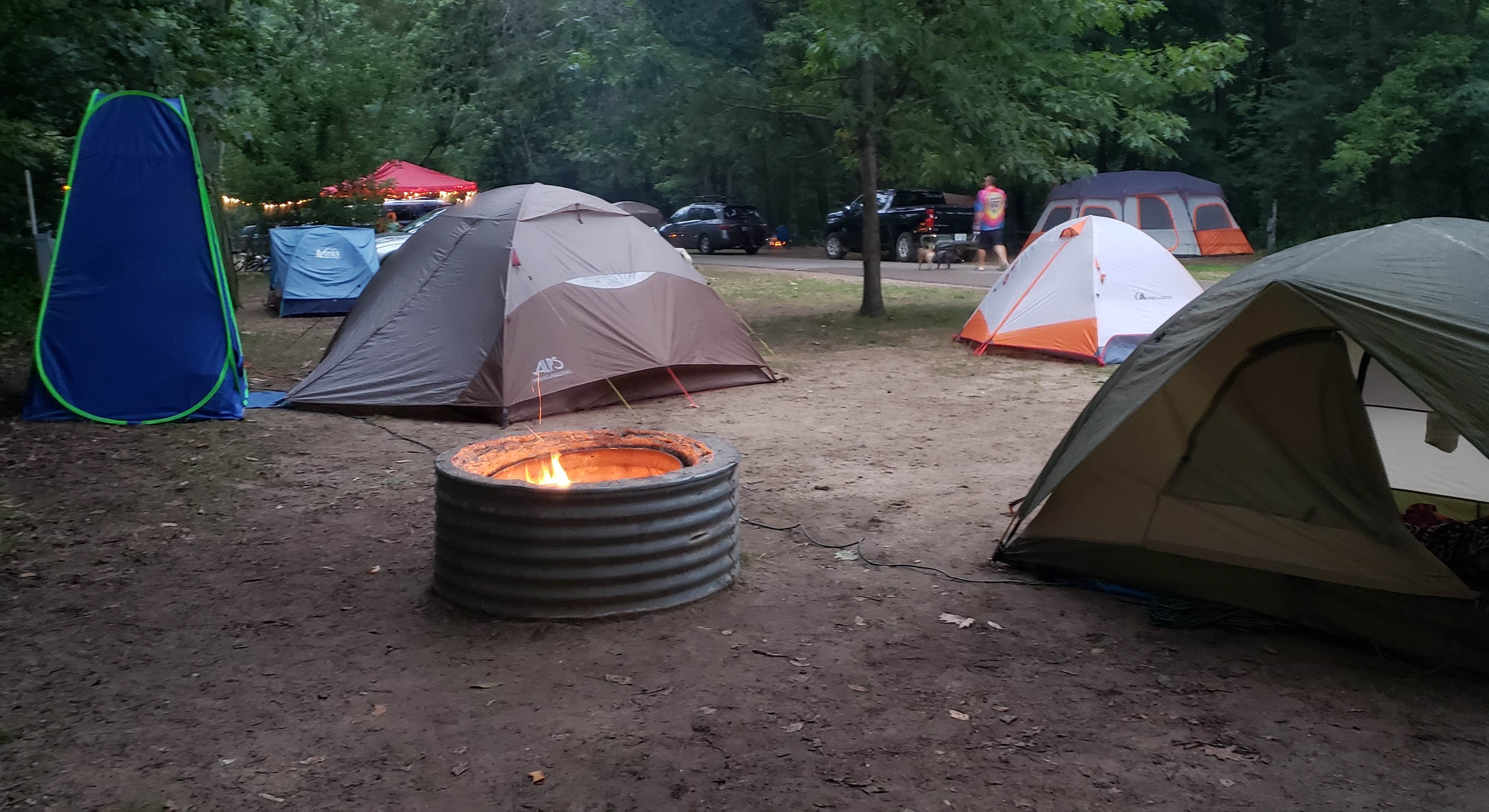 Photo by Shawn M
Responsible Camping Practices 
Leave No Trace at Indiana Dunes
Indiana Dunes is one of the most ecologically complex national parks in the system, and its urban proximity means heavy visitor pressure year-round. Small individual choices compound quickly here:
Protect the Dune Vegetation:
Dune stabilization depends entirely on plant root systems -- marram grass, cottonwood, and other species that bind sand and allow succession to continue. Walking on vegetated dune faces destroys these systems, accelerates erosion, and can take decades to recover. Use marked trails, boardwalks, and sand ladders. If there is no designated path to a viewpoint, the viewpoint is not accessible by foot.
Pack It In, Pack It Out:
There is no leave-something-behind culture at developed campgrounds that justifies leaving firewood, food, or supplies. Take everything you brought. Empty beer cans near walk-in sites attract raccoons and impact neighboring campsites. Use the bear-resistant trash receptacles at Dunewood loops and do not leave food or scented items unattended at any site.
Water and Wetland Protection:
The park's wetland systems -- bogs, marshes, swamps, and interdunal ponds -- are sensitive to physical intrusion and chemical contamination. Do not wash dishes, cookware, or clothing in or near water sources. Use biodegradable soap and wash at least 200 feet from any waterway or standing water. Gray water should go to designated utility sinks at developed campgrounds. Keep dogs and children out of bog environments where posted.
Fire Safety:
Follow all fire regulations. Drive-in sites at Dunewood have fire rings -- use them and only them. Central Avenue walk-in sites do not permit fires even where a pit is present. During dry or high-wind conditions, fire restrictions may be in effect park-wide; check current status at the visitor center or NPS website upon arrival. Extinguish fires completely: drown with water, stir, drown again until cold to the touch. Never burn trash.
Frequently Asked Questions 
How do I make campground reservations at Indiana Dunes? All Dunewood Campground sites, including drive-in and walk-in sites, are reserved through Recreation.gov. The seasonal reservation window opens November 15 for the following April 1 campground opening, and sites become available on a rolling 6-month window after that. Summer weekend sites often book within days of release, so set a calendar reminder for your target booking date and have your Recreation.gov account ready. Indiana Dunes State Park reservations use a separate system through ReserveAmerica. Check Dunewood Campground on The Dyrt for current camper reviews on site quality before choosing a loop.
Is there beach camping at Indiana Dunes? No. All camping inside the national park is in designated campground areas -- Dunewood is about 1.5 miles from the lake, and Central Avenue walk-in sites require carrying gear from the beach parking area. There is no sleeping on the beach. Indiana Dunes State Park is the closest option to the water, with trail and boardwalk beach access from the campground.
Are RV hookups available inside Indiana Dunes National Park? No hookups are available inside the national park. Dunewood has a dump station, potable water, and restrooms, but no electric, water, or sewer connections at individual sites. For RV camping near Indiana Dunes, Indiana Dunes State Park offers 140 electric sites with 50-amp service, and Michigan City Campground provides full hookups about 5 miles from the park.
What is the difference between Indiana Dunes National Park and Indiana Dunes State Park? They are adjacent but entirely separate parks with independent entrance fee systems. The national park is managed by the NPS and covers 15,349 acres including the main trail systems, most beach access points, and Dunewood Campground. The state park is managed by the Indiana DNR, covers 2,182 acres, and has its own entrance gate, fee structure, and campground. A national park pass does not cover state park entry and vice versa.
What trails are closed in 2026? Two significant 2026 closures affect the trail system. Mount Baldy's access site is closed from late March through mid-June 2026 for sand management work involving the U.S. Army Corps of Engineers. Portions of the Glenwood Dunes trail system are closed beginning April 1, 2026, and portions of the Little Calumet/Mnoke Prairie trail system are closed beginning May 1, 2026 -- both due to Marquette Greenway construction expected through December 31, 2026. Always check NPS current conditions before finalizing your itinerary.
What is the Mount Baldy summit situation? Mount Baldy's summit is not open to independent hiking at any time due to ongoing subsurface hazards from decaying buried trees and active dune restoration work. Summit access is available only on ranger-led tours. Separately, the access site to the Mount Baldy area is also temporarily closed from late March through mid-June 2026 for the sand management project. Check NPS for ranger tour scheduling when the access site reopens.
Can I bring my dog camping at Indiana Dunes? Pets are permitted in Dunewood Campground and on most national park trails on a leash no longer than 6 feet. Dogs must not be left unattended. Pets are not permitted on the beach at some access points -- check trailhead and parking area signs when you arrive. For pet-friendly camping near Indiana Dunes, The Dyrt's filter pages can help identify nearby campgrounds with pet policies that work for your situation.
How bad are the mosquitoes? Near the bog, marsh, and wetland trail systems -- genuinely bad from late June through July. Campers at Dunewood with sites near wooded wetland edges report significant mosquito pressure in summer. Bring effective repellent (DEET or Picaridin), and carry a head net if you plan to hike Cowles Bog or Great Marsh in the morning. Conditions improve substantially in September.
Is the South Shore Line a practical way to get to the park? Yes. The South Shore Line commuter rail has multiple stops within the park and provides a practical way for Chicago-area visitors to reach Indiana Dunes without a car, especially for day-use beach trips. For campers, having a car at Dunewood makes moving between trailheads and beach access points significantly easier -- the park's activity points are spread across a 15-mile corridor. Campers traveling from the Gary, Indiana area can also check camping near Gary with glamping options and nearby alternatives on The Dyrt. The Indiana Dunes National Park visitor center campground listing on The Dyrt provides additional local information and review context.
Planning Resources
Essential Indiana Dunes Links
- Indiana Dunes National Park Official Website -- Current conditions, closures, and regulations
- NPS Current Conditions -- Trail and beach closures, prescribed fire notices, and facility status
- The Dyrt Indiana Dunes Campground Finder -- Reviews and availability for campgrounds in and around Indiana Dunes National Park
- Camping in Indiana on The Dyrt -- Full statewide campground database
- Indiana Dunes Magazine Feature on The Dyrt -- Background on the park's designation and history
- Camping near Portage, Indiana -- Options near the park's western sections and Portage Lakefront access
- Camping near Michigan City, Indiana -- Tent camping options near the eastern park entrance and Michigan City amenities
- Camping near Dune Acres -- Additional options in the Beverly Shores and central dunes area
Reservation Timeline
| Time Period | Reservation Task | Platform and Details |
|---|---|---|
| November 15 (year before) | Book Dunewood for following summer | Recreation.gov -- seasonal window opens; summer weekends fill within days |
| 6 Months Before Trip | Rolling window opens for any date | Recreation.gov -- set calendar reminders for target check-in dates |
| 3-4 Months Before | Book state park or private campground alternatives | ReserveAmerica (state park) or direct booking (Michigan City, Sand Creek) |
| 1-2 Months Before | Check for cancellations at Dunewood; confirm 2026 closures | Monitor Recreation.gov; review NPS current conditions page for trail and access updates |
| 1 Week Before | Final weather and conditions check | NPS conditions page; check prescribed burn notices; confirm Mount Baldy and Glenwood Dunes status |
| Day Before Arrival | Confirm parking strategy for beach access | West Beach lots fill early on summer weekends; identify backup access points |
Indiana Dunes Camping Checklist
Reservations and Permits:
- Campground reservation confirmation (printed and digital)
- National park entrance pass or payment ready
- Indiana fishing license if fishing
- State park pass or payment if visiting Indiana Dunes State Park
Camping Gear:
- Tent with full rainfly
- Sleeping bag rated 20 degrees F below forecast lows
- Sleeping pad with good insulation
- Headlamp with spare batteries
- Camp chairs and table
Kitchen Items:
- Camp stove and fuel
- Cookware, utensils, plates
- Cooler with ice
- Water containers -- especially important if camping Central Avenue walk-in sites (no water on-site)
- Biodegradable soap and dish basin
- Trash bags for pack-out
Clothing:
- Layering system (35 to 85 degrees F range depending on season)
- Rain jacket
- Sun hat and sunglasses -- dune hiking offers little shade
- Sturdy hiking footwear with grip for sandy and uneven terrain
Bug and Sun Protection:
- Insect repellent (DEET or Picaridin) -- essential June through August
- Head net for bog and marsh hiking
- Sunscreen and lip balm
Safety and Navigation:
- Offline maps downloaded to phone
- Rip current awareness -- read posted beach advisories before entering water
- First aid kit
- Earplugs if sensitive to train noise
Planning a trip to Indiana Dunes pays off for the camper who goes beyond the beach. Camping here puts you in position to catch the moments the day-trippers miss -- watching the sunrise turn the dunes gold from a quiet walk-in site, spotting warblers along the Great Marsh observation deck during spring migration, or getting your boots muddy on the Cowles Bog loop. For current campground reviews, photos, and availability from campers who have been there, browse Indiana Dunes campgrounds on The Dyrt.