Equestrian camping near Mendota, Virginia offers access to over 66 miles of multi-use trails through the Jefferson National Forest and surrounding highlands. Most campsites in this southwestern Virginia region sit at elevations between 3,500-5,200 feet, creating distinct weather conditions compared to surrounding lowlands. Winter temperatures frequently drop below freezing with winds reaching 20-30 mph along exposed ridges.
What to do
Trail riding access points: Fox Creek Horse Camp provides direct connection to the Virginia Highlands Horse Trail network without needing to trailer horses to trailheads. "With a wide network of multi-use trails in this area, Fox Creek Horse Camp provides a nice base for exploring on horseback," notes reviewer Jean C. at Fox Creek Horse Camp.
Wildlife observation: Riders commonly encounter diverse wildlife throughout the region. At Chestnut Hollow Horse Campground, Kelly C. reports: "Lots of wildlife! We camped at an equestrian campgrounds... Saw a Family of black bear about a mile from camp then a bobcat in camp later that day!"
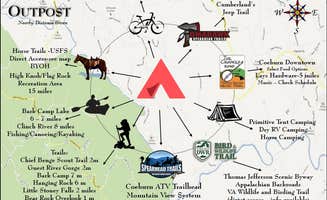
Water activities: Many trails feature water crossings and swimming opportunities. Noah O. at Cliffhanger Ranch Adventure Outpost shares: "We were able to kayak at Bark Camp Lake which was not busy at all and hike at Little Stoney Falls. Plenty to do and see in this area."
What campers like
Budget-friendly accommodations: Fox Creek Horse Camp offers economical options for horse campers. "At $5/night, it's hard to beat the price," according to Jean C. Sites include hitching posts and manure collection areas without the expense of full-service facilities.
Seasonal diversity: Old Forge Recreation Area provides opportunities for different experiences throughout its April-October season. Justin S. reports: "Very wooded and private large campsites, babbling creek, outhouses... Very simple rustic site with very little facilities."
Privacy between sites: Many equestrian campgrounds offer sufficient spacing between camping areas. Heather K. from Clinch River Family Campground mentions: "It's a little off the beaten path, down a dirt/gravel road, nestled next to the river... We had a peaceful, memorable vacation."
What you should know
Weather challenges: Wind can create difficult camping conditions, particularly at higher elevations. Scott B. warns about Chestnut Hollow: "This place is by far the windiest place I've ever camped in. We couldn't get a proper fire started due to the wind! It was blowing up all over the trails at some points!"
Limited services: Most horse camps have minimal facilities. Jean C. notes about Old Virginia Group Horse Camp: "There is no potable water available, so plan to bring your own. There is a stream at the site where the horses may drink."
Road access considerations: Some campgrounds require navigation on unpaved roads. Beth B. explains about Cherokee Trails Campground and Stables: "Most of the final road to campground is paved with exception of last mile, its wide enough but slow going. You will lose cellular pretty quickly when you turn on that road."
Tips for camping with families
Playground access: Several campgrounds offer recreation equipment for children. Terri W. mentions about Cedar Ridge Hammock Campground: "There are 2 main campgrounds here for rvs and tents. Is it a nice safe place for families. Pets welcome."
Trail difficulty planning: When hiking with children, research trail conditions beforehand. Beth B. advises: "We chose to only hike to Devils bathtub (about 2 miles one way). It was exceptional but difficult."
Fire safety protocols: Fire conditions vary by location and season. Dennis from Clinch River Family Campground reports: "Mostly level gravel spots... Beautiful river. Lots of open space pets. This is very country setting. Friendly host."
Tips from RVers
Site leveling: Prepare for varied site conditions at horse campgrounds. Holli C. notes about Cherokee Trails: "Campground consist of a fire ring in the middle with benches and tables surrounded by back-in camp sites. There was a nice clean bathhouse with showers."
Road navigation challenges: Some equestrian campgrounds present access difficulties for larger rigs. Debbie O. cautions about Rocky Top Campground: "The camp on the west side is Dangerous to drive up in a motorhome. I personally drove my 36' up the most curvy incline I wouldn't recommend anyone to give this a second thought if your not a seasoned driver."
Utility connections: Check available hookups before arrival. Jean C. explains that Chestnut Hollow Horse Campground sites are "long, gravel, relatively level with water/electric" and the campground offers "open and closed stall options for an additional fee."





 Legend


