Equestrian camping near Churchville, Virginia offers access to miles of mountain trails and riverside sites within the Monongahela National Forest region. The area sits at elevations between 1,800-4,800 feet, creating cooler summer temperatures that typically range 10-15°F below surrounding valleys. Campers should note that many campgrounds in this region have limited or no cell service due to proximity to the Green Bank Observatory's radio-quiet zone.
What to do
Trail riding access: Douthat State Park Campground offers direct access to mountain biking trails and horseback riding paths. "We did a decent amount of biking here, the main road is nice for road biking, we rode out about 15 miles and back, saw a black bear. Beautiful country roads. And the trails are great for mountain biking. Bring your legs, lots of climbing!" reports Robyn S.
Fishing opportunities: The mountain streams and lakes provide excellent fishing spots, particularly for trout. Tim M. notes at Spruce Knob Lake Campground: "Lake is stocked with trout spring and fall. It is an easy drive to many of the local trout streams such as the Gandy, the Glady and Shavers Fork."
Stargazing: The area has minimal light pollution, making it ideal for night sky viewing. "This is a wonderful spot for viewing the stars because of the lack of light pollution. James River State Park has been named an International Dark Sky Park," explains Daryl L. at Red Oak Campground.
What campers like
Creek-side camping: Primitive riverside sites provide natural water access and peaceful surroundings. At Gandy Creek Dispersed Camping, Tommy S. shares: "We lucked out with a very spacious site right at the creek's edge. Towering pines lined the sight, and provided a gorgeous backdrop for the stars and fireflies at night. This site I believe was two sites down from the one at the gigantic cliff carved up by the bend in the creek."
Privacy between sites: Many sites offer natural separation for a more secluded experience. "Laurel fork campground is a nice place to go if you are looking to get away from the busy life. It's not a very large camp ground or heavily populated. Finding a spot shouldn't be a problem," notes Adam W.
Clean facilities: Several campgrounds maintain well-kept bathroom facilities despite remote locations. According to Dana M. at Laurel Fork Campground, "Pit toilet was very clean and well stocked. Animal proof trash disposal was very convenient and newly emptied. Our site was right on the creek and the sound was awesome for sleeping."
What you should know
Remote locations: Many campgrounds require driving on gravel roads with limited services nearby. "It takes forever on dirt forest service roads to finally stumble upon this place, making its beauty that much more enchanting," explains Christopher B. about Laurel Fork Campground.
Radio quiet zone restrictions: The Green Bank Observatory creates a technology-limited area. Randall T. at Yokums Vacationland and Princess Snowbirds Indian Village cautions: "Be forwarded this entire area has no cell service due to the Green radio telescopes."
Seasonal conditions: Higher elevations can experience significant temperature changes and weather impacts. "Download your maps before you come, because there's no cell service and you'll truly get away. In mid April the campground had plenty of space, but nearby Spruce Knob Lake was encircled by fishers seeking trout from the latest release," advises Jean C.
Tips for camping with families
Look for educational programs: Rangers often provide family-friendly activities. Bridget H. shares about Red Oak Campground: "The rangers here are very interactive and very helpful. We enjoyed a fire making class followed by s'mores on Friday night and then an owl searching hike on Saturday night."
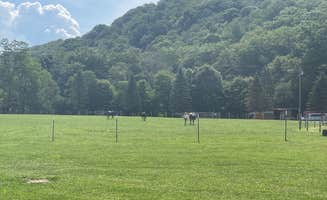
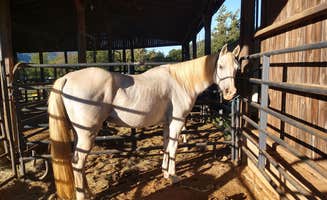
Farm experiences: Some campgrounds offer animal interactions for children. At Graves Mountain Farm Campground, Matt notes: "For kids, there is a duck pond, chicken coop, shallow brook, disable farm tractor, and some other stuff to play with/on/in across the street near the lodge. Free range horses come back at dusk and head out at dawn -- fun to watch from the campground, especially for kiddos."
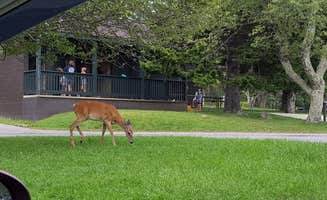
Wildlife viewing opportunities: The area offers frequent wildlife encounters. Rachel M. from Big Meadows Campground reports: "We saw many deer and bear while camping. Just being in Shenandoah is a soothing experience. With so many hiking trails and waterfalls nearby we love to camp in Big Meadows - and for the star watching at night."
Tips from RVers
Site selection: Choose campsites based on your specific needs and rig size. Jeremy W. advises about Douthat State Park: "Whispering Pines is a few miles away along the entry road and has a different character. It's a very flat and wide-open campground perfect for big RVs with much larger sites."
Water and electricity details: Understand available hookups before arrival. Dana P. notes: "We use a teardrop camper so we appreciated the water and electric hookup (although we disconnected the water at night to prevent freezing)."
Flooding awareness: Riverside sites can experience rapid water level changes. Kelly G. warns about camping at Yokums: "I couldn't figure out why I was the only one picking a choice spot by the river. The first night was great. I had a little trail down to the waters edge and sat on giant boulders to eat my meals. I should have checked the weather. The skies opened up, a large limb fell on my tent and the water level began rising."



 Traveler


