Appalachian Trail backpacking dominates the camping opportunities near Thetford Center, Vermont, with multiple wilderness accommodations available within the White Mountains and Green Mountain National Forest regions. The area sits at elevations between 400-1,800 feet, experiencing temperature ranges from below freezing in winter to 70-80°F in summer months. Most camping requires significant hiking with elevation changes of 500-1,000 feet between campsites.
What to do
Day hikes from shelters: Trapper John Backcountry Campground serves as an excellent basecamp for exploring nearby attractions. According to Justin P., "There were no views at the shelter itself, but a bit further up the trail there were good views at Holt's Ledge" - making this a strategic overnight stop for hikers wanting to explore the surrounding terrain.
Fishing opportunities: Baker Rocks Campground provides access to river fishing along the Baker River. "I only caught a few minnows when fishing but that may have been more to do with the angler. Along another bend of the river were two chairs for taking in the scenery," notes a camper who appreciated the waterfront access despite limited fishing success.
Rock climbing access: Rumney's world-class climbing routes are within reach from AAC Rattlesnake Campground. "I started climbing at Rumney about a decade before this campground was developed, and man, were we overdue for one! Maintained by the American Alpine Club, pretty much all the campers here are rock climbers," reports Les R.
What campers like
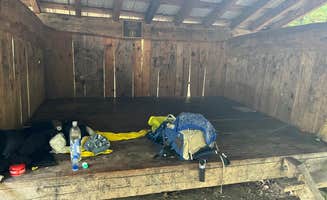
Multi-level shelter designs: Happy Hill Backcountry Shelter offers unique sleeping arrangements. "The shelter had a ground floor and a loft but each floor could maybe fit 4-5 people comfortably... The loft was nice since folks could decide to sleep up there while others were down below, either cooking, arriving, or departing," explains Justin P., highlighting the functional design that creates more usable space.
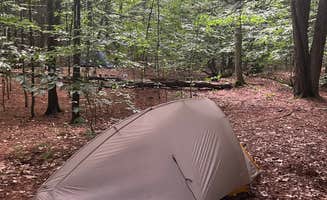
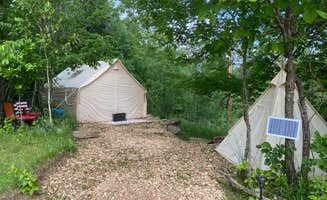
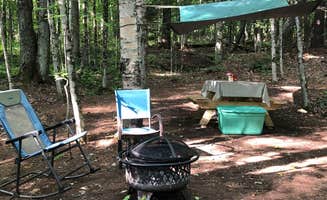
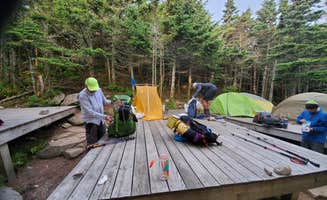
Secluded tent platforms: Baker Rocks provides well-designed tent camping areas with thoughtful amenities. "The site had a large tent platform they could fit multiple tents, a brand new picnic table, a fire ring (with a free bundle of firewood), two chairs by the fire ring, and even a few strings of solar lights around the camp area," notes a reviewer who appreciated the extra touches.
Strategic mountain access: Cardigan Campsites offers convenient positioning for hikers tackling nearby peaks. "Great spot to spend the night before a climb of Mt. Cardigan! Or after! The climb is challenging but shouldn't take too long. Great fire tower views at the top too!" shares Madison G., highlighting its utility as a basecamp for summit attempts.
What you should know
Water availability varies dramatically: Moose Mountain Backcountry Shelter, like most AT shelters in the region, has unreliable water sources. "There can be seasonal water sources but water is not guaranteed," warns Justin P., who recommends carrying extra water or planning resupply points carefully.
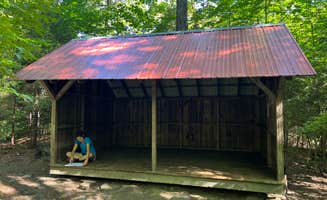
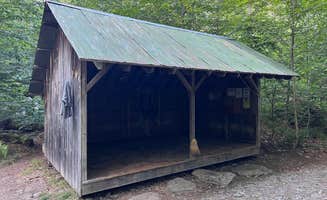
Shelter occupancy fluctuates seasonally: Thistle Hill Backcountry Shelter provides limited space during peak hiking seasons. "The shelter was a one-story standard AT shelter with a fire ring and a bench for seating... it seemed to have smaller spots for tent camping that were somewhat sloped," notes a reviewer who arrived late and found less-than-ideal tent sites remaining.
Road noise affects some sites: Despite forest settings, some campgrounds experience traffic sounds. At Baker Rocks, a camper noted, "The tent sites are within the wooded area around the property and felt very secluded. There was a bit of road noise overnight." This sound pollution varies depending on site location and seasonal traffic patterns.
Tips for camping with families
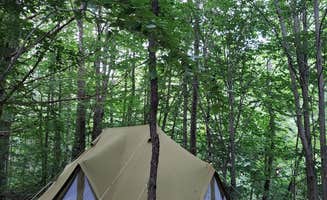
Glamping options for beginners: Baker Rocks offers alternative accommodations for families not ready for primitive camping. "Our family of 4 visited Baker Rocks during a very rainy week and still had an amazing time... We stayed 2 nights in the double bell tent with two clean full size beds and a 3rd night in the yurt both were spacious and wonderful," shares April W., who found the elevated camping experience worked well even during inclement weather.
Wildlife viewing opportunities: Some campgrounds incorporate small animal interactions. "They even have animals to visit like bunnies and goats (far away from the campsites)," mentions a Baker Rocks visitor, noting these encounters provide entertainment for children while maintaining appropriate distance from camping areas.
Bug protection essential: Insect activity intensifies during warmer months. "Do bring bug spray, the mosquitoes at certain times of day were aggressive, as to be expected," advises a family who camped in the area during summer, highlighting the importance of proper insect preparation when camping with children.
Tips from RVers
Limited RV accommodations: Tent camping near Thetford Center predominantly serves backpackers and car campers with few dedicated RV facilities. Velvet Rocks Shelter Backcountry Campground exemplifies this limitation, with a reviewer noting, "Note this is a back country shelter along the Appalachian Trail, so it is 100% long hike in with no guaranteed water and a basic privvy." Most campgrounds in the area lack hookups, dump stations, and large vehicle access.
Bathroom facilities vary significantly: Campgrounds with road access typically offer more substantial facilities than backcountry sites. Baker Rocks provides "a full bathhouse with individual rooms for showers and sink/toilets, with running water," according to Justin P., making it suitable for RVers seeking more amenities than typically found at primitive sites.









 Legend


