




Paige P. Ranger
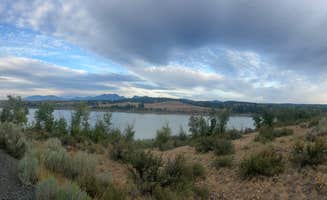
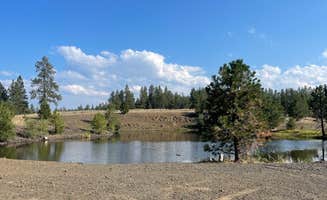
RangerWolf Creek Reservoir
Sweet Spot
A handful of great places to camp for the night- very clean and well taken care of so please leave no trace. Just a spot and a table, no water, restrooms ect.
20 campgrounds · Check availability for any dates.
Multiple dispersed camping options exist near Lostine, Oregon along the edges of the Eagle Cap Wilderness, ranging from backcountry hike-in sites to drive-in dispersed campsites accessible by vehicle. Echo Lake offers remote primitive camping about 8 miles up the Hurricane Creek Trail with significant elevation gain. A visitor noted, "This is a hike that one should work towards, with about 3,500 feet of elevation gain in about 5 hours." Ice Lake provides another backcountry option at approximately 8,000 feet elevation with a 9-mile hike in. Aneroid Lake features dispersed camping for backpackers on the north side of the lake, with the south side being private property.
For vehicle access, Starvation Springs NF 46 Site provides drive-in camping with access via a paved road followed by a short stretch of bumpy gravel forest service road. Sites include established rock fire rings and accommodate tents and RVs. North Thomason Meadows offers dispersed camping along NF-46 between Thomason Meadow Guard Station and Buckhorn Lookout. As one camper reported, "This section of NF-46 road is extremely quiet. Only the occasional ranch vehicle travels through." Be aware of seasonal fire restrictions throughout the area, particularly during summer months when complete fire bans are common.
"The trek to Echo Lake is about 8 miles (one-way) from the start of the Hurricane Creek Trail. When you arrive at Echo Lake, beauty awaits you! This location is a remote and peaceful retreat."
"Be aware of burn bans and/or prescribed burns in the area. This is a great spot for me and my 20 foot RV, with fantastic starlink speeds. Mid 80’s during the day in late July. Love this spot!"
"No amenities. Back-country hikers only. No cell service. Perfect getaway."
"This backpacking trip is a very accessible hike."
"Aneroid Lake is one of my favorite locations in the Eagle Cap Wilderness."
"Not to far off of the freeway, and the coordinates make it really easy to find."
"We spent one night here while driving through on Hwy 84. It is a steep drive up a gravel road to get here, but it was nice to get away from the freeway, and above the smoke."
"A handful of great places to camp for the night- very clean and well taken care of so please leave no trace. Just a spot and a table, no water, restrooms ect."
"Beautiful free camping close to I-84! Some gravel to get there but manageable and worth it for reservoir views"
"The night we camped here it was just outside the area that was under a level two evacuation notice."
"Many options for private pull-offs once you drive past established NF campgrounds—likely tough to do without high clearance and/or 4WD when wet. Only “traffic” was the occasional ATV/OHV."
"Primitive dispersed campsites with rock fire rings right off the highway. Down side is it's a little too noisy for my taste."
"One of the trailheads to the historic Nez Perce Nee -Me-Poo Trail is near this "Camp-1" dispersed spot.* *One of our maps calls the marked spot "FSR 46 Camp-1," but the dispersed camp sites are all along"
RangerA handful of great places to camp for the night- very clean and well taken care of so please leave no trace. Just a spot and a table, no water, restrooms ect.

 Guide
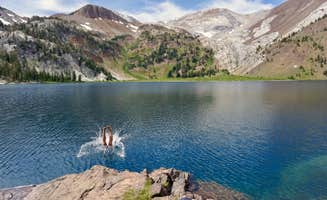
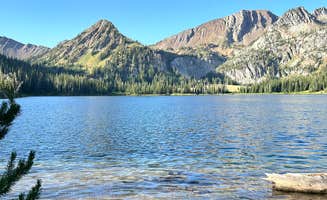
GuideThis is not an official campground. There is a lot of space for campers, though, and it is not heavily trafficked. The trek to Echo Lake is about 8 miles (one-way) from the start of the Hurricane Creek Trail. When you arrive at Echo Lake, beauty awaits you! This location is a remote and peaceful retreat. The lake is so clear and serene. The views of the mountainside are breathtaking. This is a great site for groups and there is enough space to spread out. The stars are vivid and you can see the movement of the stars and moon along the mountains. The trek to the lake is SO WORTH IT! This is probably one of the most beautiful places that I have ever been to. It gave me the wilderness escape that I needed. It is a hidden gem! Whenever you visit, leave your stressors behind you and enjoy the preserved beauty. The lake is very cold, but I definitely enjoyed the shock after the hike in!
The hike into Echo Lake is an intense incline! We tracked about 3,500 feet of elevation gain in about 5 hours during our hike in. The way back only took us about 3.5 hours and is mostly downhill. I would not recommend this hike for a beginner hiker/backpacker. I carried 60 lbs on my back up and down this trek and it was A LOT for me as a relatively new backpacker (with endurance conditioning). It is a hike that one should work towards, for sure! This trek is would be great crosstraining for an endurance athlete (like me!). At times, the incline felt like a 10-15% grade, but I do not know this for sure. It is pretty steep and challenging if you are carrying a lot of weight. I recommend going as minimalist as possible to avoid extra weight, if possible. I brought my bull mastiff dog along with me and she had a blast! I would recommend conditioning your dog for a trek like this. It can be pretty gnarly and steep at times! My dog wouldn't have made it if she had not done treks like this before. There are creeks along the route to the lake and I would bring extra water to hydrate your dog in between water sources. As always, leave no trace and keep this spot pristine and clean :)
GuideDirections: About 13 miles from Medical Springs on a gravel road (half hour or so). Take Big Creek Rd to Collins Lane. That turns into USFS 67, then 72. The gravel road is good, but access to the camping is pretty narrow and rougher. Probably not a good place for a big nice camp trailer.
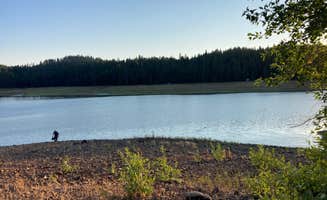
Camping is dispersed, mostly on the west side of the reservoir. The east side has a few spots but the road is really rough toward the dam. Fish are stocked. Boats with oars, paddles or electric motors are allowed. There are no improvements. Check fire restrictions. Campfires are prohibited almost every year for most of July, August and September. Cattle graze here. The water level gets pretty low by August.

 Scout
ScoutGreat free place to camp 4x4 is advised and not really car accessible. Down side no water near by, not even a creek.
 Ranger
Many options for private pull-offs once you drive past established NF campgrounds—likely tough to do without high clearance and/or 4WD when wet. Only “traffic” was the occasional ATV/OHV. Tons of great hiking around.
 Guide
GuideAneroid Lake is one of my favorite locations in the Eagle Cap Wilderness. The dispersed camping for backpackers is on the North side of the lake, whereas the South side is private property (Camp Halton). The lake is stocked every few years with rainbow trout, and has a good supply of brook trout.
The water is very cold but worth the dip if it's a hot summer day.
 Guide
GuideEasy and vacant find for a last minute change to our route. Primitive dispersed campsites with rock fire rings right off the highway. Down side is it's a little too noisy for my taste. Would have driven further down into the woods if I had more time to set up as we got here late. All in all its an easy find just off the highway.
 Guide
GuideEither these are not the correct coordinates, or the trail has been overgrown. We’re car camping here for one night and it’s a lovely spot! Could not find the trail and just pulled off to camp on the side of the road. Dispersed & free & very wooded area!
 Guide
GuideI recommend this section of Wallowa-Whitman NF Rd 46 (4600) between Thomason Meadow Guard Station and Buckhorn Lookout because it is grazed less than surrounding areas, and thus has more plant diversity--i.e. great WILDFLOWER BLOOM in the spring. At 5000 feet, June to early July is a peak bloom time.
This is the top of the Imnaha River breaks, and you can see fully down into the BEAUTIFUL canyonlands of the Imnaha and Snake. Birdwatching was good for us out here too, especially raptors. One of the trailheads to the historic Nez Perce Nee -Me-Poo Trail is near this "Camp-1" dispersed spot.*
*One of our maps calls the marked spot "FSR 46 Camp-1," but the dispersed camp sites are all along NF Rd 46 from here north to Buckhorn.
The drive up to this area is well-maintained gravel, and an SUV with decent tires can do it. (We did it with a truck hauling a toy-hauler trailer). Bring all the water and supplies and tools you need--this area is REMOTE.
Take Crow Creek Rd off of Hwy 82 (btwn Enterprise and Joseph). All is paved until your intersection with Zumwalt Road, where you veer R to stay on Zumwalt (aka Zumwalt-Buckhorn Rd). It's gravel after that intersection.
Follow signs to Zumwalt Prairie or Buckhorn Lookout.
Crossing over Zumwalt Prairie is a GORGEOUS drive. The Nature Conservancy has their Zumwalt Prairie Preserve here, and it's a great side trip from the camp spot.
This section of NF-46 road is extremely quiet. Only the occasional ranch vehicle travels through. In fall this is a popular camp area for hunters.
I gave it 4 stars instead of 5 because of zero water, zero data, the ecosystem/soil that has been abused in the past (not wilderness), the 50-minute drive to WiFi/ restaurant/ water refill/ black water dump. But if I was comparing primitive camping to primitive camping, this would be a 5 of 5.
I would go back here (in late spring or early fall) in a heartbeat.
Dispersed camping near Lostine, Oregon provides access to the rugged Wallowa Mountains where elevations range from 5,000 to 8,000+ feet throughout the region. Seasonal weather variations create distinct camping windows, with snow lingering into June at higher elevations and fire restrictions common from July through September. Many sites feature primitive conditions with no amenities or facilities.
Fishing opportunities: At Aneroid Lake Backcountry Dispersed Campsite, rainbow trout are stocked every few years and a healthy population of brook trout inhabit the waters. "The lake is stocked every few years with rainbow trout, and has a good supply of brook trout," notes camper Nick J.
Stargazing sessions: The remote locations around Lostine offer exceptional night sky viewing due to minimal light pollution. At high-elevation sites like Ice Lake, the clear mountain air enhances visibility. "The stars are vivid and you can see the movement of the stars and moon along the mountains," reports a visitor to the area.
Wildlife observation: The meadows and forests near Lostine host numerous wildlife species including elk, turkeys, and various raptors. A camper at North Thomason Meadows notes, "Birdwatching was good for us out here too, especially raptors." Spring and early summer provide optimal wildlife viewing opportunities.
Mushroom hunting: The forest floors in the Blue Mountains above Weston feature seasonal mushroom populations. "Just past the village you get into the woodland where the Morels are plentiful. This is an ideal location to go mushrooming," shares Brandon K. about the McDougall area.
Cold water immersion: The alpine lakes near Lostine offer refreshing—albeit extremely cold—swimming opportunities. "The water is no-joke cold. Fantastic nine-mile hike into the forest," explains Michael about Ice Lake, adding that the elevation is around 8,000 feet.
Convenient highway access: For travelers passing through, several dispersed sites provide easy road access for quick overnight stays. "Easy and vacant find for a last minute change to our route. Primitive dispersed campsites with rock fire rings right off the highway," reports Michael W. about a site in the Wallowa-Whitman National Forest.
Satellite connectivity: Some dispersed sites offer surprising technology benefits. A camper at Starvation Springs NF 46 Site reports, "This is a great spot for me and my 20 foot RV, with fantastic starlink speeds. Mid 80's during the day in late July."
Wildflower displays: Spring brings vibrant wildflower blooms to the meadows at higher elevations. "At 5000 feet, June to early July is a peak bloom time," notes a visitor to the North Thomason Meadows area, specifically mentioning the plant diversity due to less grazing than surrounding areas.
Seasonal road limitations: Winter access to many dispersed sites becomes impossible due to snow. "The road to the site was not plowed. Several feet of snow. Not many alternatives in the area so plan accordingly if you hope to stay here," warns David D. about the McDougall area.
Noise considerations: Sites closer to highways may experience traffic sounds throughout the night. One camper notes, "Down side is it's a little too noisy for my taste. Would have driven further down into the woods if I had more time to set up as we got here late."
Water sources: Pack all necessary water as most sites have no reliable sources. Hells Canyon Overlook Near Saddle Creek and similar remote locations require complete self-sufficiency. The drive to water refill points can be substantial—a camper reports "the 50-minute drive to WiFi/restaurant/water refill/black water dump" as a drawback.
Altitude sickness risk: Campsites above 7,000 feet can trigger altitude-related symptoms in some visitors. "Got altitude sickness on day two," reports a camper who stayed at Ice Lake, where the elevation sits at approximately 8,000 feet.
Vehicle selection matters: Forest service roads require appropriate vehicles in many cases. "Be ready to share space with free roaming mountain cattle. We came by way of Imanha," advises Amanda P. about the drive to Hells Canyon Overlook.
Dog-friendly considerations: Many dispersed sites welcome pets but require preparation. For hikes to remote locations, dog conditioning is essential: "I recommend conditioning your dog for a trek like this. It can be pretty gnarly and steep at times! My dog wouldn't have made it if she had not done treks like this before."
Campsite cleanliness varies: Some dispersed areas suffer from previous visitors leaving trash. Jodi noted about McDougall, "There was trash everywhere. Every time we found a good spot, full of poopy toilet paper, litter, beer cans, cigarette butts ect."
Private property awareness: When camping near lakes with mixed ownership, respect boundaries. At Aneroid Lake, "The dispersed camping for backpackers is on the North side of the lake, whereas the South side is private property (Camp Halton)."
Road quality considerations: North Elgin Dispersed Camp and similar sites require careful vehicle selection. "Great free place to camp 4x4 is advised and not really car accessible. Down side no water near by, not even a creek," notes a camper.
Site selection for size: RV campers should scout potential sites before committing. "Plenty of large open sites with rock fire rings," reports Kenny R. about Starvation Springs, noting the reasonable access road: "It's also great that it isn't 5 miles down some super washboarded gravel road."
Seasonal temperature variations: Summer days can reach mid-80s at 5,000 feet elevation sites, while nights cool significantly. Pack accordingly for temperature swings of 30+ degrees between day and night.
Frequently Asked Questions
Where can I find dispersed camping along the Lostine River in Oregon?
The Lostine River area offers several dispersed camping options within the Wallowa-Whitman National Forest. Wallowa-Whitman NF 21 - Dispersed provides numerous private pull-offs past established campgrounds, though high clearance vehicles are recommended, especially in wet conditions. For backpackers seeking more remote experiences, trails from the Lostine River lead to backcountry sites like Aneroid Lake Backcountry Dispersed Campsite, located on the north side of the lake within Eagle Cap Wilderness. Most dispersed sites along Forest Road 21 feature basic rock fire rings and are spaced far enough apart to provide privacy.
What amenities are available at dispersed campsites in the Lostine area?
Dispersed campsites in the Lostine area are primitive with minimal to no amenities. North of Spring Creek on Forest Road 21 offers typical dispersed sites with no facilities but provides secluded forest spots. Similarly, Balm Creek Reservoir Dispersed Camping features basic sites with no services. Most dispersed locations have simple fire rings, but no potable water, restrooms, trash service, or picnic tables. Cell service is typically limited or nonexistent. Campers should come fully prepared with water, waste disposal bags, and all necessary supplies for self-sufficient camping.
What are the regulations for dispersed camping in the Wallowa-Whitman National Forest near Lostine?
In the Wallowa-Whitman National Forest near Lostine, dispersed camping is generally allowed with a 14-day stay limit. Practice Leave No Trace principles, as emphasized at areas like Wolf Creek Reservoir where campers note the importance of keeping sites clean. In wilderness areas such as Ice Lake, fires are prohibited due to fragile alpine environments. Some areas have seasonal restrictions, particularly at higher elevations which are typically accessible from June through September. Always camp at least 100 feet from water sources, pack out all trash, and check with the Eagle Cap Ranger District for current fire restrictions before your trip.
Keep Exploring