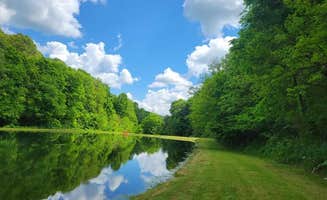
Dispersed camping opportunities near Graysville, Ohio concentrate primarily within Wayne National Forest, which covers over 244,000 acres across southeastern Ohio. The forest terrain features mixed hardwood forests with elevations ranging from 650 to 1,000 feet and numerous creek valleys. Free camping in this region requires understanding specific site limitations and access considerations that vary significantly with seasonal conditions.
What to do
Hiking the trails: The Paw Paw Trail near Kinderhook Horse Trail offers a smooth hiking experience. "The Paw Paw trail was very smooth, dry and wide. The trail leads to the top of the hill," notes Annika E. from Kinderhook Horse Trail.
Wildlife viewing: Spring visits to Wildcat Hollow provide exceptional nature observation opportunities. "I recommend visiting Wildcat hollow in the springtime as the forest floor will be carpeted with beautiful wildflowers," writes Lucille W. from Wildcat Hollow Hiking Trail Dispersed.
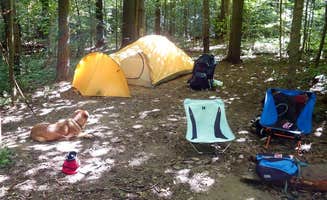
Overnight backpacking: Wayne National Forest provides various backpacking routes for different experience levels. "Just wanted an overnight spot to clear our heads and enjoy the outdoors. Parked our RRT in the parking lot on a Monday evening and had the place pretty much all to ourselves all night," reports Chris B. about his experience at Wildcat Hollow.
What campers like
Free camping access: No fees or reservations make this area attractive for spontaneous trips. "Wildcat Hollow is a fantastic free camping and backpacking location. It's quite secluded, has well established trails, and has a variety of remote campsites to choose from," shares Ruby W.
Solitude on weekdays: Visiting during off-peak times can provide a more secluded experience. "Overall, it was a beautiful, quiet place and I only saw 2 other people in the trail while I was hiking out the second day," notes Steve C. from his stay at Wildcat Hollow Hiking Trail Dispersed.
Beginner-friendly backpacking: The shorter loops provide accessible options for those new to backcountry camping. "Perfect place for a first time backpacking trek," mentions Lucille W., though she cautions that popular sites can fill quickly on busy weekends.
What you should know
Avoid filtering stream water: Multiple reports indicate water sources may be contaminated. "While there is water in the valleys I wouldn't use it even with a filter. There are signs posted at the trailhead that advise against it plus there is still active oil drilling in one of the hollows," warns Steve C.
Mud conditions: Trails become extremely difficult after rainfall. "If it has rained recently then expect numerous mudpits," cautions Shane from Wildcat Hollow. Another camper reports that even in July, "the trail was a cesspool of mud in too many places."
Cell service limitations: Connectivity varies significantly with terrain. "There is cell service when you're up in the ridges but there are a lot of dead zones in the valleys and even at the trailhead," notes a visitor to Kinderhook Horse Trail.
Tips for camping with families
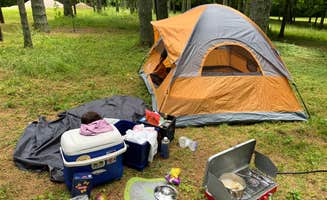
Choose sites near trailheads: For easier access with children, consider camping near parking areas. "If you're just looking for a quick campsite then pull up to the trailhead and you can find several within the first mile of the trail," advises Shane.
Pack all water needs: No reliable drinking water exists at these sites. "Pack in everything you need including water," recommends Jason M., who enjoyed the shorter loop trail at Wildcat Hollow.
Be cautious with site selection: Safety considerations include checking for hazardous trees. "It is a great area, but there were lots of dead trees/widowmakers, so be careful where you pitch your tent," warns Leon H. from Wildcat Hollow Hiking Trail Dispersed.
Tips from RVers
Trailhead parking limitations: Some areas permit small RVs in parking areas only. "Area is dedicated to horse trail riding. Nice clean area just off main road. Can camp here in certain spots. Not much area to camp. Definitely only for very small camper, car camp, or tent, small group," explains Joe B. from Kinderhook Horse Trail.
Difficult access roads: Prepare for rough driving conditions to reach dispersed sites. "The road to it is difficult also (as are most with dispersed camping)," notes Jade G., who recommends these areas for backpacking rather than RV camping.





 Ranger


