Pachaug State Forest encompasses approximately 27,000 acres of mixed hardwood forest in eastern Connecticut, offering multiple dedicated equestrian camping areas. The forest contains 70+ miles of trails winding through varied terrain ranging from 200-600 feet in elevation. Fall temperatures typically range from 40-65°F, making it a popular season for horse camping due to decreased insect activity and moderate temperatures.
What to do
Explore multi-day trail rides: Three dedicated riding loops connect directly from Frog Hollow Horse Camp, allowing immediate access to longer forest routes. Riders can connect to the 22-mile Nehantic Trail for extended adventures without needing to trailer horses between locations.
Fish at nearby ponds: The forest contains multiple fishing spots including Green Falls Pond and Beachdale Pond. "There's also fishing and hiking available in the forest," notes one camper who visited Frog Hollow Horse Camp.
Visit historical sites: LeGrand Reynolds Horsemen's Camping Area at Arcadia Management Area provides access to colonial-era stone walls and foundations along forest trails. The area contains numerous 18th and 19th-century homestead remains visible from horseback.
What campers like
Quiet atmosphere: Most equestrian campsites maintain adequate spacing to prevent crowding or stress among horses. At Mashamoquet Brook State Park, campers appreciate that "most sites are relatively short level pads, with little or no shade, but very pleasant. We picked site 33 for the best shade and longer pad."
Trail diversity: The Pachaug trail system accommodates varying skill levels from beginner to advanced. Wolf Den Campground at Mashamoquet Brook State Park offers "a larger intermediate hiking trail" nearby that's also suitable for riders of different experience levels.
Fall camping season: October provides optimal trail conditions with cooled temperatures and minimal mud. A visitor to Mashamoquet Brook State Park noted that "the park was completely cleaned up from any damage or debris, all in great shape" even after a hurricane passed through the area.
What you should know
First-come, first-served policy: Most equestrian campgrounds near Westville Lake operate without reservations. Arrive early on weekends, especially during fall foliage season when sites fill quickly.
Limited amenities: Composting toilets are standard at most horse camps, with minimal other facilities. At Normandy Farms Campground, which offers more amenities, campers should note that "it is a little on the pricey side, but has great amenities for campers with kids and pets."
Water access: While water is available for horses, storage containers for feed must be brought by campers. No secured feed storage exists at most equestrian sites, and wildlife may investigate unsecured containers.
Weather preparation: Fall temperatures can fluctuate significantly with overnight lows sometimes reaching near-freezing by late October. Pack appropriate layers and weatherproof gear for both riders and horses.
Tips for camping with families
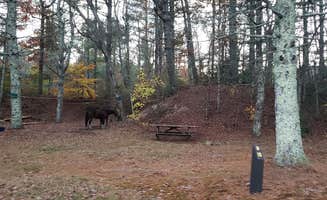
Bring entertainment: Horse campgrounds typically lack playground equipment or organized activities. At Frog Hollow, picnic tables provide space for games, but families should bring their own entertainment options.
Trail difficulty ratings: When camping with younger riders, utilize the color-coded trail difficulty system. At Wolf Den Campground, campers appreciate "a small walking path and a larger intermediate hiking trail" with clear markings.
Off-season benefits: Camping with families during weekdays or shoulder seasons provides a quieter experience. One camper at Mashamoquet Brook State Park noted, "No other campers here when we arrived, so totally silent. No road noise."
Tips from RVers
Site length limitations: Most equestrian campgrounds accommodate smaller RVs and horse trailers but have limited space for larger rigs. Sites typically prioritize trailer parking over RV amenities.
Limited hookups: While some sites offer basic water access, full hookups are rare at dedicated horse camps. Consider Normandy Farms Campground if full hookups are essential, where "campsites are big and well spaced" and facilities are "super clean."
Backup power: Without electrical hookups at most equestrian sites, solar panels or portable power stations are recommended for extended stays. Generator use may be restricted during quiet hours at certain campgrounds.




 Legend


