The Deer Isle Archipelago southeast of Thorndike offers several primitive camping opportunities accessible only by water. Located approximately 45 miles from Thorndike in the Gulf of Maine, these islands feature distinctive granite shorelines and provide camping experiences ranging from novice-friendly to challenging. Water temperatures in this region remain cold year-round, rarely exceeding 55°F even in summer months, requiring careful planning for kayakers and boaters.
What to do
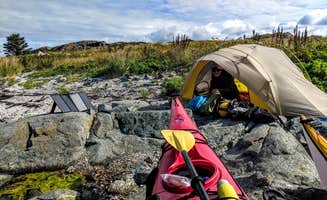
Island exploration: Several islands in the Deer Isle Archipelago connect via paddling routes. Wheat Island serves as an excellent base for exploring Isle au Haut, a remote section of Acadia National Park. "Perfect island for exploring the close-by Isle au Haut, a remote section of Acadia National Park, but very hard to get reservations at Duck Harbor Campground," notes one camper.
Beach combing: The shorelines of these islands offer diverse coastal discoveries. Doliver Island features a "gorgeous shell covered beach and a beautiful view of Isle au Haut, just next door." This small island provides a strategic stopping point for longer paddling journeys across Jericho Bay.
Stargazing: The minimal light pollution and open ocean horizons create exceptional night sky viewing. The camping area at Sand Cove on Marshall Island offers particularly dark skies for astronomy enthusiasts.
What campers like
Accessibility options: The islands vary in landing difficulty, making some better suited for beginners. Buckle Island is "perfect for those new to sea kayak camping as the sandy shore, which is exposed for a good portion of the day, is easy to land on and a short walk to a trail into the woods."
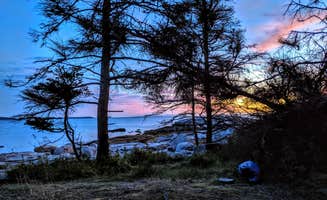
Sunset views: Many campers note the exceptional evening scenery from strategically located campsites. Wheat Island campers report enjoying "a gorgeous view of the sun setting and full moon rising" from the southwest site, which accommodates larger groups.
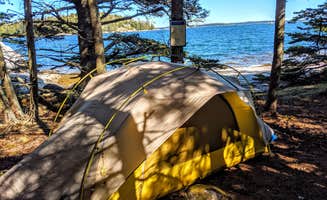
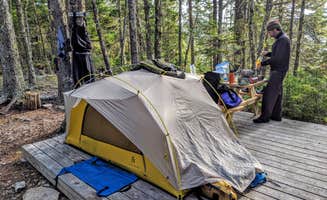
Site variety: Despite their small size, these islands offer different campsite configurations. Marshall Island provides "a truly gorgeous wooded area with a tent platform and a picnic table at each site" near Sand Cove, which is described as "perfect for a beach fire and stargazing on a clear night."
What you should know
Limited capacity: Some islands have extremely minimal camping space. Doliver Island is "small with barely a tent space, but a good stop for us on our 9 day journey and a perfect launching spot for crossing Jericho Bay (4.5 miles) to Marshall Island."
MITA membership required: Access to these primitive camping sites requires Maine Island Trail Association membership. Sites operate on a first-come, first-served basis with no reservation system.
Weather planning: Landing conditions vary significantly with tide levels. Several islands require careful timing. Wheat Island "can be a tricky island to land on at high tide, so plan accordingly."
Insect preparation: Bug activity varies by location and season. Campers report that "despite the fact that the other islands had pesky mosquitoes, [Marshall Island] had none." However, on Doliver Island, mosquitoes were "pretty bad all day long" even in early September.
Tips for camping with families
Beginner-friendly option: For families new to island camping, choose sites with easier landings and more space. Buckle Island offers a good introduction with its accessible shore and multiple site options.
Supply planning: No fresh water sources exist on these islands. Families must pack in all drinking water plus extra for emergencies. One camper notes that "if you happen to need a food or water resupply, Swan's Island is a short paddle away and has a very small grocery store and town office with fresh water."
Beach activities: Sand Cove on Marshall Island provides natural entertainment for children with its sandy beach area, though adult supervision remains essential due to the remote location and cold water.
Tips from RVers
Mainland base camps: No RV facilities exist on the islands, but mainland staging areas serve as practical base camps. RVers can park at designated areas on the mainland while taking day or overnight paddling trips to the islands.
Outfitter coordination: Several outfitters in the region offer kayak rentals and guided trips for RV travelers wanting to explore the islands without transporting their own watercraft.
Storage considerations: RVers report challenges finding secure storage for campers and vehicles during multi-day paddling expeditions. Advance arrangements with local businesses or campgrounds may be necessary during peak season.




 Legend