Dispersed camping near Lincolnville, Maine requires seafaring skills, as all primitive sites in the area are located on offshore islands in Penobscot Bay. The Maine coast features a tidal range of 8-12 feet, significantly affecting landing conditions and campsite access throughout the day. Most island campsites remain snow-free from May through October, with summer water temperatures averaging 55-60°F.
What to do
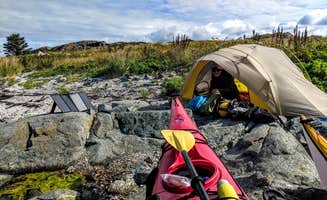
Paddle between islands: Experienced kayakers can navigate between Buckle Island and neighboring sites. "This is a perfect island for those new to sea kayak camping as the sandy shore, which is exposed for a good portion of the day, is easy to land on and a short walk to a trail into the woods," notes one camper.
Stargazing: The minimal light pollution around these remote islands creates exceptional night sky viewing opportunities. A visitor to Marshall Island described it as offering "some of the best stargazing spots we've ever seen" particularly at Sand Cove which is "perfect for a beach fire and stargazing on a clear night."
Beach combing: The shorelines of these islands feature interesting geological formations and marine debris. Participate in conservation efforts while camping. "If you do a beach clean-up during your stay and send in a picture, you will receive a Maine Coast Heritage Trust hat," reports one Marshall Island visitor.
What campers like
Simple shoreline access: Some islands offer easier landings than others. "One of the MITA camping areas in the Deer Isle Archipelago, this island has 2 sites - one very small one on the northeast side, the other perfect for larger groups on the southwest side," explains a camper who stayed at Wheat Island.
Strategic location: The islands serve as practical waypoints for multi-day expeditions. "This island is small with barely a tent space, but a good stop for us on our 9 day journey and a perfect launching spot for crossing Jericho Bay (4.5 miles) to Marshall Island the next day," shares a paddler who visited Doliver Island.
Shell beaches: Several islands feature distinctive shorelines with natural collections. One camper noted Doliver Island has a "gorgeous shell covered beach and a beautiful view of Isle au Haut, just next door."
What you should know
Site capacity varies significantly: Not all islands accommodate groups equally. Doliver Island "is small with barely a tent space" according to one visitor, while other islands offer multiple designated camping areas.
Insect conditions vary by island: Mosquitoes can be problematic, particularly at sunset. "We thought we were passed mosquito season in early September, but alas, they were pretty bad at sunset," reports a Wheat Island camper. However, Marshall Island appears to have fewer issues, with one camper noting "despite the fact that the other islands had pesky mosquitoes, this site had none."
Supply planning is crucial: No services exist on any islands. Swan's Island, while not a camping destination, offers limited resupply options. "If you happen to need a food or water resupply, Swan's Island is a short paddle away and has a very small grocery store and town office with fresh water," notes a Marshall Island visitor.
Tips for camping with families
Choose sites with easier landings: For families with children, some islands provide safer access points. Buckle Island features a sandy shore that remains accessible throughout much of the day, making loading and unloading gear with children more manageable.
Plan for limited camping space: Some islands have very restricted tent areas. Doliver Island has been described as having "barely a tent space," making it impractical for family camping with multiple tents.
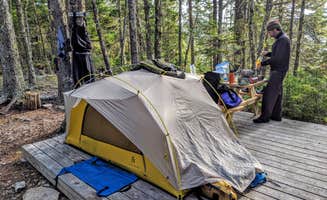
Consider tent platforms: Certain sites provide more stable camping surfaces. The Sand Cove area on Marshall Island features "a tent platform and a picnic table at each site," offering more comfortable accommodations for families with young children.
Tips from RVers
Limited to no RV options: The rustic camping near Lincolnville, Maine consists exclusively of boat-in island sites with no facilities for recreational vehicles. RVers would need to store their vehicles on the mainland and transport camping gear via watercraft to access these primitive island locations.




 Legend