Dispersed camping near Lincolnville Center, Maine centers on the coastal waters of Penobscot Bay. This region features several primitive island camping opportunities within the network maintained by the Maine Island Trail Association (MITA). The Gulf of Maine experiences significant tidal fluctuations of 8-12 feet, which directly impacts landing conditions and campsite access for boat-in campers.
What to do
Explore remote beaches: Sand Cove on Marshall Island offers excellent opportunities for beachcombing and relaxation. A camper noted, "Sand Cove is perfect for a beach fire and stargazing on a clear night."
Visit nearby islands: The archipelago provides opportunities to explore multiple islands in one trip. From Wheat Island, paddlers can access Isle au Haut, a remote section of Acadia National Park. "Perfect island for exploring the close-by Isle au Haut, a remote section of Acadia National Park, but very hard to get reservations at Duck Harbor Campground."
Participate in conservation: Environmental stewardship opportunities exist through beach clean-ups. At Marshall Island, visitors who complete beach clean-ups and submit photo documentation receive Maine Coast Heritage Trust hats, supporting local conservation efforts.
What campers like
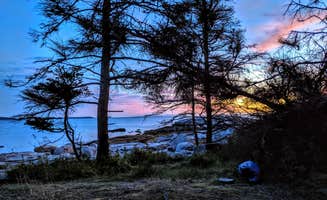
Sunset viewing: The western-facing campsites provide exceptional sunset viewing opportunities. A camper at Buckle Island reported, "We stayed at the site by the shore and had a gorgeous view of the sun setting."
Night sky observation: The minimal light pollution creates optimal stargazing conditions. Marshall Island campers frequently comment on the exceptional celestial views, with one noting they experienced "some of the best stargazing spots we've ever seen."
Shell collecting: The beaches along these islands contain diverse shell collections. Doliver Island features a "gorgeous shell covered beach and a beautiful view of Isle au Haut," making it popular for beachcombers despite its small size.
What you should know
Limited site availability: Each island contains only 1-2 camping sites, creating potential competition during peak season. Doliver Island has particularly limited space, described as "small with barely a tent space, but a good stop for us on our 9 day journey."
Water logistics: No fresh water sources exist on any islands. All drinking water must be transported to campsites. For longer stays, Swan's Island offers resupply options with "a very small grocery store and town office with fresh water."
Landing conditions: Tide levels significantly impact landing ease. Plan arrivals according to tide charts. Wheat Island can be "a tricky island to land on at high tide, so plan accordingly."
Insect considerations: Mosquitoes remain active throughout the summer and into early fall. Campers report significant mosquito activity even in September, particularly on Doliver and Wheat islands.
Tips for camping with families
Begin with accessible sites: For families new to sea kayak camping, certain islands offer gentler landing conditions. Buckle Island provides ideal introduction to island camping as "the sandy shore, which is exposed for a good portion of the day, is easy to land on and a short walk to a trail into the woods."
Plan appropriate crossings: When planning multi-island itineraries with children, consider paddling distances between islands. Doliver Island serves as "a perfect launching spot for crossing Jericho Bay (4.5 miles) to Marshall Island."
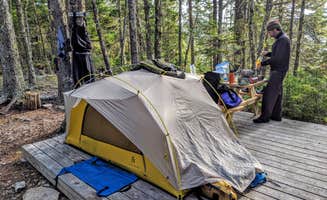
Consider site amenities: When camping with children, prioritize islands with established facilities. Marshall Island's Sand Cove area includes "a tent platform and a picnic table at each site," providing more structure for family camping.
Tips from RVers
No vehicle access: These primitive camping opportunities near Lincolnville Center require boat transportation. No RV or vehicle camping exists on these islands.
Alternative options: RV campers seeking coastal experiences should consider mainland campgrounds in the Penobscot Bay region as alternatives to these boat-in sites.




 Legend