Dispersed camping near Greenville, Maine centers around primitive sites across several public land areas with varying accessibility. The region sits at approximately 1,023 feet above sea level, bordered by Moosehead Lake at the northern edge of Maine's Appalachian Mountains. Summer temperatures typically range from 45-75°F with frequent rainfall, while winter brings heavy snowfall making most sites inaccessible without specialized equipment.
What to do
Wildlife photography at dawn/dusk: At Lazy Tom Bog Primitive Campsite, prime opportunities await patient photographers. "I really enjoyed the scenery here! My only complaint is that there was minimal cell service(ATT)," reports Tim M. The bog area offers exceptional sightings, especially in kayaks.
Hiking accessible trails: The primitive campsites provide excellent hiking access. From Upper Gravel Pit, "Great spot is you don't mind dry camping. Amazing views of the surrounding mountains," notes Thomas B. Several trailheads begin within walking distance of the site.
Kayaking on calm waters: Calm mornings offer ideal paddling conditions before winds pick up. "You only need to walk your boats about 10 feet to slide them in the water from the camping area," reports a Lazy Tom Bog visitor. Water access points exist at several sites, though none provide rental equipment.
What campers like
Remote solitude with wildlife: Campers consistently value the wildlife encounters. "I have been here numerous time with my GF and my friends alike and just about every time we have spotted moose and had a great time in the backroads of maine," writes Ethan S. about Dead River Access.
Cost-free camping: The no-fee policy attracts campers willing to forgo amenities. "The main camping area has about 10 long narrow sites that have large rocks bordering each site. Each site is bordered by the road. There is a single vaulted toilet," notes Kevin C. about Dead River Access.
Natural soundscapes: The absence of development creates natural sound environments. "The sound of the river put us to sleep and greeted us the next morning," one camper reports about riverside camping. Most sites sit far enough from roads to minimize traffic noise except for occasional logging trucks.
What you should know
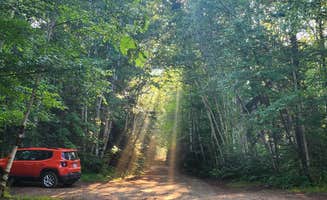
Road conditions vary significantly: Access requires suitable vehicles for unpaved roads. A visitor to Trout Brook Campground warns, "The access road in is rough, not for normal street cars." Low-clearance vehicles risk damage on several routes.
Limited site privacy: Many sites offer minimal separation between camping spots. "There are 4 sites, 3 have no separation between them, 1 is at the entrance, all are on the access road with 0 privacy," notes Miccal M. at Trout Brook Campground.
Seasonal closures and mud season: While technically open year-round, winter access requires specialized equipment. Spring brings mud season, making many roads impassable without 4WD. Summer weekends see highest competition for sites.
Cell service limitations: Coverage varies widely between sites. "My only complaint is that there was minimal cell service(ATT)," reports one camper. Most locations have spotty-to-no coverage, requiring preparation for offline navigation.
Tips for camping with families
Pack extra water containers: With no water sources, families need substantial supplies. "Basically, it is a wide-open area with two fire pits. You are permitted to collect downed wood for fires or there are numerous places to purchase bundles in town," notes Nancy W. about Upper Gravel Pit, highlighting the lack of facilities.
Bug protection essential: Philbrick Landing and other sites report heavy mosquito activity in summer. "When we were there, there was a small bench and a few stumps that were nice for seating. The campsite is at the end of an old logging road that you can walk down quite a ways," writes Sarah C., mentioning the primitive conditions.
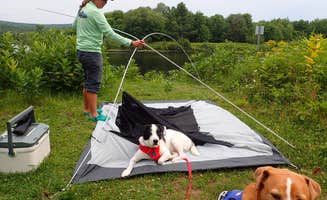
Check site availability early: First-come, first-served status means uncertainty, especially problematic with children. "Went there looking for privacy with our dogs to camp overnight. There are about 4 total spots, but only 1 of the four is truly enjoyable/private," reports one camper about site competition.
Tips from RVers
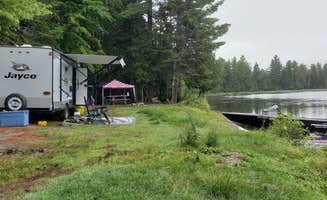
Site size constraints: Most dispersed sites accommodate smaller rigs only. "Very wooded. Road is passable for most any vehicle. Not larger RV friendly but was comfortable enough to get the 27' foot trailer in," reports Chris T. about Trout Brook Campground. Sites rarely offer turnarounds suitable for longer vehicles.
Dumping stations limited: Nearest dump facilities require planning. "There is a dump station at the nearby Moosehead Family Campground," notes one camper, highlighting the need to research waste management options before arrival.
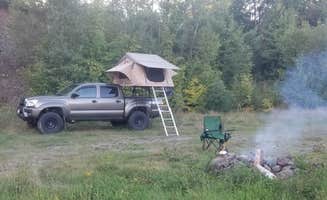
Level parking challenges: Few sites offer naturally level parking for RVs. Most require blocks and careful positioning, with limited options to reposition once larger vehicles are parked. Small travel trailers and truck campers fare best in these primitive locations.









 Legend


