Dispersed camping near Bristol, Maine centers around a chain of islands accessed only by water vessels in the Gulf of Maine. These primitive boat-in campsites form part of the Maine Island Trail, a 375-mile water trail connecting over 200 islands and mainland sites from the New Hampshire border to Canada. Water temperatures in this region rarely exceed 60°F even during summer months, requiring paddlers to prepare for potential hypothermia risks regardless of air temperature.
What to do
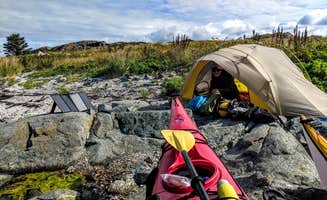
Island hopping adventures: The marine environment surrounding the Bristol area offers extensive paddling routes. Buckle Island provides an ideal stopping point with relatively easy landing access. As one camper noted, "This is a perfect island for those new to sea kayak camping as the sandy shore, which is exposed for a good portion of the day, is easy to land on and a short walk to a trail into the woods."
Wildlife viewing opportunities: The waters around Doliver Island serve as observation points for marine wildlife. "Gorgeous shell covered beach and a beautiful view of Isle au Haut, just next door," reports one visitor who used the island as part of a multi-day paddling journey.
Cross-bay paddling: More advanced paddlers use these islands as waypoints for larger crossings. According to one visitor at Doliver Island, it serves as "a perfect launching spot for crossing Jericho Bay (4.5 miles) to Marshall Island the next day."
What campers like
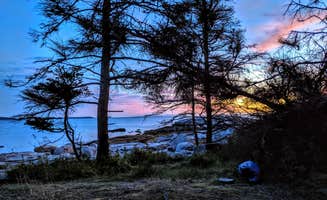
Natural features: The granite shorelines and forested interiors create distinct camping environments. At Wheat Island, campers appreciate the southwestern campsite where they can "have a gorgeous view of the sun setting and full moon rising."
Solitude and remoteness: The limited accessibility ensures minimal crowding even during peak seasons. Doliver Island offers extreme seclusion with "barely a tent space, but a good stop for us on our 9 day journey."
Astronomical viewing: Clear nights away from light pollution create optimal stargazing conditions. Wheat Island campers specifically mention enjoying views of "the sun setting and full moon rising" from the larger campsite on the southwest side.
What you should know
Tidal considerations: Landing conditions change dramatically with tides. A camper at Doliver Island warned, "This can be a tricky island to land on at high tide, so plan accordingly."
Complete self-sufficiency required: No potable water exists on any islands. Buckle Island visitors emphasize the need to "come prepared with fresh water (there is no fresh water for filtering) and wag bags (no toilets)."
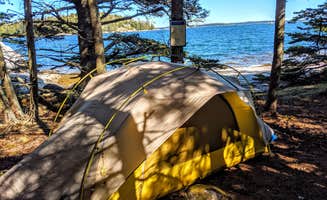
Membership requirements: All island camping requires Maine Island Trail Association membership. Sites on these islands are "first come, first served and completely free for MITA members."
Insect preparedness: Mosquito activity extends later into the season than mainland areas. Even in September, campers report, "We thought we were passed mosquito season in early September, but alas, they were pretty bad at sunset."
Tips for camping with families
Choose beginner-friendly landing sites: For families with children, prioritize islands with gradually sloping shores. Experienced paddlers recommend Buckle Island because "the sandy shore, which is exposed for a good portion of the day, is easy to land on."
Select appropriately sized sites: Group camping requires sufficient space. The southwestern site on Wheat Island is described as "perfect for larger groups."
Pack extra fresh water: Children typically require more water than adults, especially during summer heat. No natural water sources exist on these islands, making advance planning essential.
Weather monitoring: Gulf of Maine conditions can change rapidly. Families should check marine forecasts hourly and maintain communication devices for emergency updates.
Tips from RVers
Mainland staging areas: No RV facilities exist on the islands, but several mainland staging points provide overnight parking for paddlers. Secure belongings completely before departing for overnight island stays.
Equipment transfer logistics: Plan efficient methods for transferring camping gear from vehicles to watercraft. Collapsible wagons with large wheels can navigate coastal launch points.




 Legend