






 Legend
Northwoods RV Resort
New Campground Scent Emanates From this Freshly Minted RV Outpost
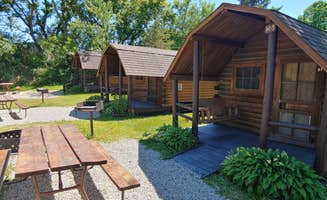
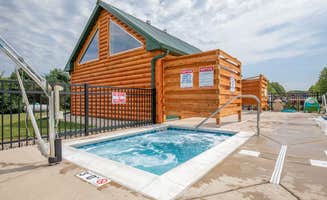
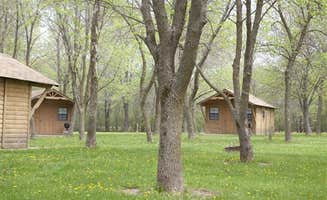
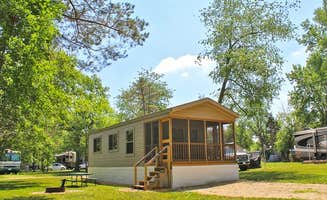
My first impression when I first arrived here was the overwhelming scent of a newly minted campground, what with the freshly laid gravel, the mint condition security gates, finely manicured and recently raked greenery (as it was October when we visited, it might be better described as brownery) surrounded by a fairly decent gated enclosure lined with perfectly pruned tall towering oaks. Upon arrival, you’ll find what looks to be a brand-spanking new log cabin office on the right after passing a seemingly freshly-minted activities center / community lodge complete with in-ground heated swimming pool and jacuzzi on the left.
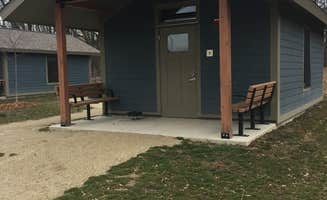
Amenities? As you could guess, this pet-friendly 60-acre RV resort has all the attractions in spades from pickleball, playgrounds, volleyball, log pergola patio, full hook-ups (30 / 50 amp electric, water & sewage), picnic tables, fire pits, BBQ grills, wagon rides, river access, picnic areas, bathhouses w/ showers & restrooms, cable TV WiFi (pretty poor connection though), gaga ball, game room, community room, billiards table, playground, wet bar, tabletop shuffleboard, community living room with large screen TV, DVD player w/ DVD library, clubhouse, dog park, horseshoes, hot tub, covered pavilions with picnic tables, catch & release ponds, inflatable water toys, jumping pillow, laundr-O-mat, propane refueling station and dump station.
Insider’s tips? Here’s a handful: (1) This place isn’t EZ to find – for some reason, if you plug the campground into your GPS, you’ll literally be on the wrong side of the tracks, where you will arrive at a dead end with a sign that says you are in the wrong place and that you’ll need to double-back, cross the train tracks heading north and turn right just before arriving to High Road School of Belvidere (so if you see a school, you’ve gone too far); (2) You will want to take note that yes, you actually cross train tracks to get to this campground, so if you’re sharp, you’re going to want to ensure you haven’t booked a site right next to where trains will shoot through every few hours, this specifically means avoiding sites #E1-#E5 and #FS23-#FS36 as well as #FE1-#FE20; (3) If you’re a tent camper, you can certainly stay here, but you will want to note that this is very much an RV outpost; (4) The best sites IMHO are those on the northernmost perimeter, as far away from the train tracks as you can get and that also border the Kishwaukee River with sites #S9-#S20 being excellent, as well as #S25-#S81, which are equally amazing; (5) If you are planning on using that amazing pool that you saw as you came in, make sure you call management a good day or two before you come in to ensure that they turn on the heater – when we were there for 2 days, by the time we left, the pool was still too cold to go for a dip; and (6) When you grow weary of trying to conjure up a meal from the depths of your Cordova roto-molded cooler and want to venture out to try some local fare, just a short walk into the nearby town is Garden Prairie Café, which has a very simple menu offering no shortage of fried everything (fish, shrimp, chicken, etc.) and then there’s Pleasant Street Tavern, but that’s mostly cheap national beers and frozen pizza fare, so if you want something a bit more substantive, head west of here to Miles Bar N’ Grill that serves up typical Midwestern fare like cheese curds, pork tenderloin, Italian beef and a variety of fried fish like blue gill, cod and catfish.
Happy Camping!


