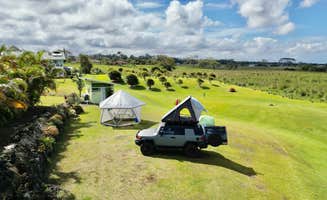
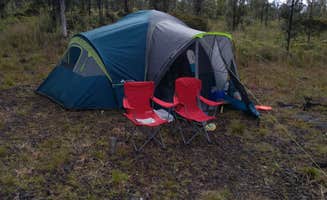
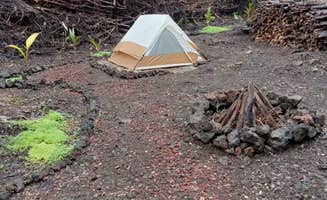
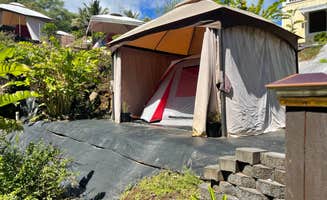
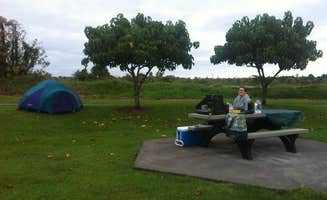
Hawaii Volcanoes National Park camping areas range from secluded backcountry sites to established campgrounds at various elevations between 3,000-4,000 feet. Temperature fluctuations can be dramatic, with daytime highs reaching 90°F while dropping to the low 60s at night. Many campsites require hikers to navigate across hardened lava fields using stone pile markers called ahu.
What to do
Night viewing of volcanic activity: Take advantage of staying in the park to see Kilauea crater after most day visitors leave. At Nāmakanipaio Campground, campers can make the "15-20 minute hike up to the Jagger Museum overlook/observatory to see the glowing lava in the crater," according to Sharon N., who notes that "the campground is technically outside of the national park and if you hike in there is no park fee."
Coastal exploration: Hike to remote beaches accessible only by trail. Jordan B. stayed at Halape Shelter and reports: "Didn't see a soul the whole time, and we were in the national park for 5 days. The highlight of the trip was harvesting mussels off the rocks, climbing up the coconut palms to get fruit, and cooking up the mussels in coconut water with some curry powder we brought in."
Snorkeling with sea turtles: Drive 45 minutes to Punalu'u Beach Park where Dave G. found "sea turtles on the beach" while exploring the various trails. Sasha W. adds: "We had some of the best snorkeling we have ever had, here. We saw turtles, tons of fish, and 1 shark!! The water was super clear and pretty warm."
What campers like
Solitude and stargazing: Many campers value the quiet camping areas away from crowds. At Kulanaokuaiki Campground, Shari G. notes: "If getting away from the crowds is on your list at Hawaii Volcanoes National Park, then this primitive camping area is one of the places to do it." The rewards include "expansive views of Mauna Loa and the surrounding area including some pretty cool night-time glow of the eruption in Kilauea crater."
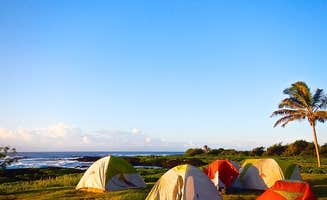
Wildlife encounters: Coastal camping areas provide opportunities to observe native wildlife. While staying at Punalu'u Beach Park, Christy K. enjoyed camping "on a grassy area next to the beach so you can sleep to the sound of the crashing waves without the hassle of sand." The park offers more than just camping, as Molly B. discovered: "Beautiful black sand beach, awesome sunsets and rises... Sea turtles, mongoose, centipedes, and lots of birds!"
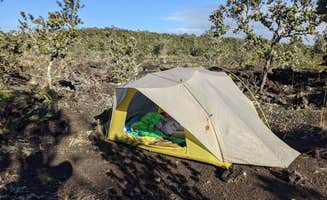
Unique camping environments: The volcanic landscape creates distinctive camping experiences. Elliott B. describes Kulanaokuaiki as "nice and secluded" with campsites that are "really exposed" during the day when "it gets hot." He adds that there are "8 campsites and actually it's pretty cool that 2 of the sites are wheelchair accessible."
What you should know
Water availability varies dramatically: Many campgrounds require you to bring all water. Miles G. describes Kulanaokuaiki Campground as "Free dispersed camping! Pretty cool lava landscape. Make sure to bring water for your stay." At backcountry sites like Keauhou, Jake C. warns: "There is a 7 mile hike to the shelter. So bring lots of water and supplies. There is also a water tank there but you need to get a permit to be able to get the water."
Navigation challenges: Hiking across lava fields requires careful attention to markers. Shari G. explains: "Hiking across the lava flows offers no discernable trail except for the regularly spaced ahu stone piles(cairns) which are the only way to navigate. Should the weather turn or fog roll in, visibility can be greatly reduced."
Temperature extremes: Plan for significant temperature swings. Elliott B. notes that Kulanaokuaiki "gets hot... during the day and turn around and get really cold at night." Eric N. confirms this at Nāmakanipaio: "The higher altitude kept the temperatures in the low 60's and perfect for sleeping."
Tips for camping with families
Consider cabin options: For families wanting more comfort, several campgrounds offer cabin accommodations. At Nāmakanipaio Campground, Brittany R. advises: "If you're planning on staying here I'd definitely recommend getting here early!" Alejandro G. adds: "We stayed in a cabin and it was excellent. The doors have key cars swipe (don't forget your key, the doors lock automatically behind you!)"
Time your activities: Visit popular areas before tour buses arrive. Denice S. suggests: "If you want to do the touristy hikes (which are generally short and easy, but offer great things to see), do them early in the morning, (get started by 8:00am) and you will beat the tour busses."
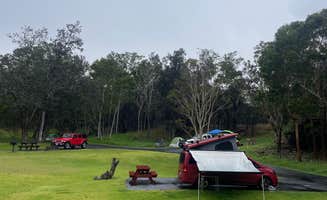
Plan for changing weather: Pack layers for all conditions. Jennifer H. describes Nāmakanipaio as having "Roddy efficient grass sites - big enough for a couple or snag multiple for a family. Little cabins you can rent too. Bbq at each site, mowed grass, bathrooms and sinks."
Tips from RVers
Limited hookup availability: RV camping options are restricted within the park. Jessica F. stayed at Nāmakanipaio Campground and noted the facilities were basic: "The camping bathroom didn't have showers, but the communal bathroom for the cabins did, and a sympathetic cabin renter let me into that bathroom. (I'm a bike tourist, so I really need the shower.)"
Supply planning: Stock up before arriving as services are limited. Shari G. explains: "Just outside the park is Volcano Village with a small market and gasoline station for groceries and limited camping supplies. For something specialized like camping gas we had to drive to a hardware store outside of Hilo."
Be strategic about vehicle size: Some roads to camping areas are challenging for larger vehicles. Denice S. observed: "The access road is off of the Chain of Craters Drive and it seems to go on forever through the lava fields. The road is not great, but we were in a little car and did not have any issues."