Camping options near Hawaii Volcanoes National Park range from primitive backcountry sites to accessible beach camping areas. The park sits at elevations between 2,200 and 4,000 feet, creating diverse microclimates that affect camping conditions throughout the year. Night temperatures can drop significantly compared to coastal camping areas, especially during winter months when overnight lows can reach the 40s Fahrenheit.
What to do
Explore tide pools: At Halape Shelter, campers can investigate marine ecosystems along the shoreline. "The highlight of the trip was harvesting mussels off the rocks, climbing up the coconut palms to get fruit, and cooking up the mussels in coconut water with some curry powder we brought in," shares Jordan B..
Discover secluded beaches: The hike to Halape rewards visitors with multiple beach areas. "Walk over to Halape Iki for another perfect little beach cove," suggests Laura H..
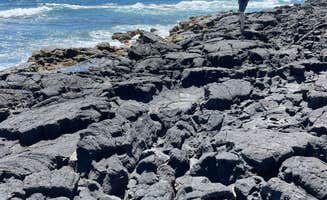
Coastal sightseeing: While exploring free camping near Hawaii Volcanoes National Park, take advantage of ocean vistas. "We actually just stumbled upon this campsite as we were trying to get a view of the coast line and wow! What a beautiful place!" writes Brittany R. about Whittington Beach Park.
What campers like
Isolation and privacy: Backcountry camping at Halape offers remarkable seclusion. "Didn't see a soul the whole time, and we were in the national park for 5 days," notes Jordan B. about his January trip.
Wild food opportunities: Resourceful campers appreciate foraging options at certain sites. "The lilikoi that grows on the hillsides just up from the beach are delicious too," shares a visitor about Halape's natural food sources.
Cost-effective options: No-cost camping is rare but available near Hawaii Volcanoes National Park. "It's free!! Not many of those on the island," explains Brittany R. about Whittington Beach Park.
What you should know
Permits required: Backcountry camping at Halape requires advance planning. "You have to go the day before or the morning of to get camping permits from the backcountry office on a first come first served basis," explains Laura H.
Water considerations: Water access varies by location. "Check with the backcountry office when you get your permits about the water supply there. There is generally plenty of water available at the beach site but bring your water filter or purification tablets," advises a Halape camper.
Local sensitivities: At some free dispersed camping locations, residents may have concerns about overnight visitors. "We were warned, however, that the locals don't really take too kindly to people staying here. Not sure why, but everyone warned us," notes Sasha W. about Whittington Beach Park.
Tips for camping with families
Safety awareness: Familiarize everyone with emergency protocols, particularly in coastal areas. "Be aware of the earthquake/tsunami history of the campsite in the past. The park rangers are good about telling you what to do in case of anything," mentions Laura H. about Halape.
Duration planning: Consider shorter stays when testing new camping locations with children. "We camped in a spot that was hidden, so we didn't have any troubles. Just FYI before you plan to come here or stay long. Again, we stayed only 1 night," recommends a visitor to Whittington.
Activity scheduling: Plan specific recreation activities appropriate to each camping location. "This beach park offers so many activities, views, and great places to eat. We also enjoyed snorkeling here," shares a camper about coastal camping options near the national park.
Tips from RVers
Limited RV accommodations: Traditional RV camping with hookups is scarce in the immediate vicinity of Hawaii Volcanoes National Park. Many nearby options are dispersed or primitive camping.
Beach park accessibility: Some coastal locations like Whittington Beach Park are "big-rig friendly" according to site information, though specific RV amenities remain limited.
Plan for basic facilities: Most camping near the national park lacks traditional RV services such as dump stations, electrical hookups, or dedicated RV sites. Self-contained vehicles with onboard water and power systems offer the most flexibility.




 Ranger


