Haleakala National Park tent camping requires substantial preparation due to the volcanic terrain and significant elevation changes. The park rises to 10,023 feet at the summit, creating dramatic temperature variations between daytime and nighttime hours regardless of season. Tent campsites near Haleakala National Park often demand water filtration systems, as most sources provide non-potable water, and cold-weather rated sleeping gear, with temperatures frequently dropping below 40°F at night throughout the year.
What to do
Explore unique forest environments: Polipoli Spring State Recreation Area offers a completely different camping experience than the crater. "Polipoli does not even feel like you're in Hawaii! I mean this in the best way possible! Hawaii is amazing with all the beaches, ocean views, and sunshine. Polipoli is high upcountry tucked in the clouds and forests," according to camper Savannah G.
Look for native Hawaiian birds: The eastern section of Paliku Backcountry Campsite provides rare bird watching opportunities. "I can't say that I've ever heard more interesting and diverse bird calls in my life that come from vividly colored native Hawaiian birds that live in this unique habitat. Be sure to collect a bird brochure at the visitor center when you pick up your permit," suggests camper Bryce K.
Find unexpected shelter in adverse weather: Some hikers have discovered alternative options during heavy rain. At Holua Primitive Wilderness Campsite, "The guys we talked to said it was constantly raining the night before, so they camped in a small lava cave near the campground," reports Jordan T., highlighting the importance of adaptability when tent camping in the crater.
What campers like
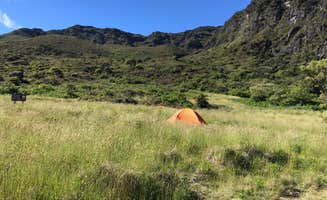
Dramatic landscape contrasts: The transition from barren lava fields to vegetation creates memorable camping experiences. "The beauty of this campground is even more apparent after hiking through the barren landscape of the lava fields to get here. After trekking nearly 10 miles from the visitor center, you'll be welcomed to take your boots off and step on the lush grass that grows all over the campsite," notes a visitor to Paliku Backcountry Campsite.
Moon-like volcanic terrain: The unique geological features stand out as a highlight. "Unreal! It's like your on the moon. O! Watch for a NeNe, this bird is very rare and lives on at the top of this mountain," shares Shae M. about Holua Primitive Wilderness Campsite.
Privacy and solitude: Tent campsites near Haleakala provide rare opportunities for isolation. "Campsites are tucked away and hidden along braided paths and tall grass of the dispersed camping area. Not one of them has a bad view," writes Bryce K. about the tent sites at Paliku.
What you should know
Hiking distances vary significantly: Access to backcountry sites requires proper conditioning. "Depending on where you start, it is a 4-6 mile hike into the site. Dispersed campsites are a 3 minute hike up the trail to the left as you arrive to the Holua cabin and located throughout the flat land next to the horse stables," explains Bryce K.
Water filtration essential: All backcountry water sources require treatment. "There is also a water source and an outhouse near the campsites. The water does need to be filtered though," notes Jordan H. from his experience at Holua.
Permit requirements and timing: Papalaua Wayside Park offers a different permitting system than the national park sites. "Permits must be acquired at one of two government offices. Note that there is a sizable population of transient travelers who seem to live at the beach full time," cautions Carrie S.
Tips for camping with families
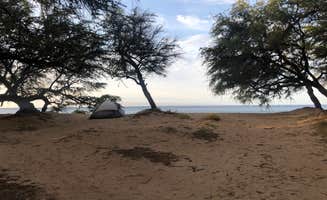
Check for seasonal variations in facilities: Coastal camping options may have changing conditions. At Mahukona Beach Park, "It's super peaceful with very few people, but they don't currently have the facilities open. Make sure you bring snorkel gear as well," advises Jake C.
Prepare for road conditions: Access to high-elevation sites can challenge passengers. "Beware the road going up is all twists and turns. Be careful if you get carsick," warns Shae M. about the drive to Holua Primitive Wilderness Campsite.
Prioritize weather-appropriate gear: Pack for temperature extremes even in summer. "Fortunately, I had brought layers. It was August and I don't know what the temperature was, but I know I could see my breath when I exhaled!" shares Whitney M., emphasizing that winter-rated sleeping bags are necessary regardless of season.
Tips from RVers
Consider beach parking alternatives: Kapa'a Beach Park offers accessible camping with amenities. "Great facilities. Shower, restrooms, etc. You can camp right on the beach. And wake up to the ocean," according to Jake C., making it suitable for those seeking more comfortable accommodations.
Watch for road access challenges: Some coastal sites have difficult entry points. "We opted for van camping so we were close to the road so it was noisier than if we'd been closer to the beach. Due to rain and needing to drive around other vehicles, the site was hard to get in and out of," notes Stephanie about Papalaua Wayside Park.
Know vehicle restrictions: Most backcountry sites in Haleakala require hiking in with gear, making them unsuitable for RV travelers. Instead, consider locations like Papalaua where "Easy beach living, the low maintenance traveler will find themselves right at home here," recommends Carrie S.




 Scout
Scout


