Primitive camping near West Simsbury, Connecticut primarily centers around sections of the Appalachian Trail corridor, with most sites requiring hiking access. The region sits at elevations ranging from 250 to 800 feet above sea level, with camping opportunities found primarily in the western highlands. Summer temperatures typically range between 70-85°F with higher humidity levels, while spring and fall offer milder conditions with occasional rain.
What to do
Hiking trails access: The approach to most camping areas requires hiking, particularly at Jug End Dispersed — Appalachian National Scenic Trail which connects to longer routes. "Great spot, I have section hiked the majority of the east coast AT and this is in my top 10 spots to stay at," notes camper Luke A., highlighting its popularity among long-distance hikers.
Stream exploration: Several camping areas feature water access for cooling off during summer months. At Sage's Revine, campers can utilize sites positioned near a stream. The area features "12 platforms available" with sites "near non-potable stream" according to visitor Luke A., providing both scenery and a water source, though not for drinking.
Wildlife viewing: The forested areas surrounding West Simsbury offer opportunities for wildlife observation. Many campers report seeing deer, various bird species, and occasionally black bears. The protected forest areas provide natural habitat, with one camper noting there are "plenty of trails to explore and wildlife to enjoy."
What campers like
Forest solitude: Taconic Hereford Multiple Use Park offers genuine seclusion despite relative proximity to towns. As Doc B. describes, "If you want a quiet piece of beautiful forest to truly rough it and go camping for a few days, then this is what you have been looking for. Less then 10 min drive from town, but hiking in and finding a suitable place to make camp has the feeling of the wild."
Platform camping: The elevated wooden platforms at some sites provide dry, level surfaces for tent setup. Platforms are typically spaced for privacy, as one camper notes there are "50 feet between platforms" at Sage's Revine, creating a balance between community and solitude.
Convenient accessibility: Some primitive sites remain relatively accessible despite their remote feel. Tim M. describes Taconic Hereford as "easy to find and access, and had decent ATT service," making it suitable for those wanting wilderness camping without complete disconnection.
What you should know
Variable regulations: Camping rules differ significantly between areas, with some permitting fires while others strictly prohibit them. At Sage's Revine, campers should note that "no fires allowed, bathroom is fine, bear boxes available," providing essential safety infrastructure without allowing open flames.
Seasonal considerations: Spring brings mud and occasional flooding to lower elevation sites, while summer offers warmer temperatures but increased humidity and insect activity. Fall camping provides colorful foliage views but requires warmer gear as temperatures can drop below freezing overnight.
Bear safety protocols: Connecticut River Farm Site and other locations in the region require proper food storage due to black bear presence. Several campgrounds provide bear boxes, while others require hanging food or using approved containers. Always check current bear activity reports before camping.
Tips for camping with families
Platform advantages: The elevated camping platforms at some locations provide better protection from ground moisture and crawling insects. The spacing between sites allows families some privacy while still maintaining proximity to others if needed.
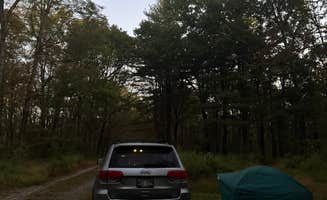
Limited facilities planning: Most primitive sites have minimal to no facilities, requiring careful preparation. Brendan M. suggests caution with vehicle-based family camping, noting, "The area itself is beautiful but I believe it is more for tent camping versus cars, overlanding vehicles and RVs."
Potable water access: None of the primitive sites provide drinking water, requiring families to carry sufficient supplies. Most streams near camping areas are non-potable without treatment. One camper mentions a "non-potable stream" near their site, emphasizing the need to bring drinking water.
Tips from RVers
Size restrictions: Most primitive camping areas near West Simsbury have significant limitations for RVs. Tim M. specifically cautions, "There's only a few spots, and the road is narrow with not much turnaround room, I wouldn't recommend for trailers or RVs."
Parking challenges: Finding suitable parking for larger vehicles presents difficulties at most sites. As one camper notes, "There was a bunch of signs that said no parking so we parked at the entrance to the trailhead," indicating limited options for vehicle-based camping.
Alternative campgrounds: RV campers should consider established campgrounds rather than primitive sites. One visitor to a nearby developed campground mentioned it "was only $25 night. Great looking facilities and friendly staff," providing a more suitable alternative for those with RVs.




 Ranger


