Stanislaus National Forest cabin rentals offer accommodation options at 5,000-7,000 feet elevation throughout the Sierra Nevada mountains. Winter temperatures often drop below freezing while summer days reach 75-85°F with cool evenings. The forest contains over 800 miles of rivers and streams alongside granite formations that create distinctive camping environments across its 898,000 acres.
What to do
Lakeside activities at Pinecrest: Take advantage of the 2-3 hour hike around Pinecrest Lake with trails that offer varied terrain and scenic views. "The hike around the lake was beautiful too, roughly 2-3 hr hike with some great views," notes a Pinecrest Campground visitor. Swimming, fishing and boat rentals provide water-based recreation options.
Hot springs exploration: Visit the natural hot springs near Buckeye Campground for a unique soaking experience. "The hotspring water trickles down from the hillside above into the creek and pools below. There is also a small warm pool on the hill above the creek near the parking area by a small pine tree," explains one camper. The springs feature multiple pools of varying temperatures.
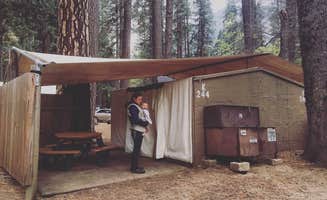
Wildlife viewing: Look for black bears, particularly near food storage areas and around dawn or dusk. A visitor at Calaveras Big Trees State Park reported, "Bear came through our camp one night hit the Bear box and walked off." Bear boxes are provided at most established sites within the forest.
What campers like
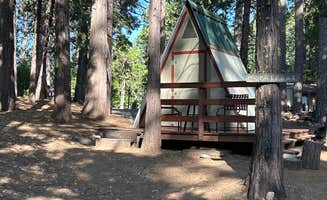
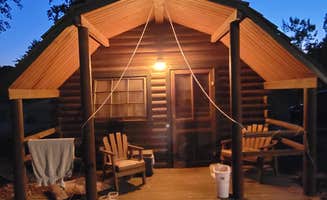
Secluded sites with natural surroundings: Many cabin rentals offer private settings among trees. At Cherry Valley, "Each campsite is pretty secluded and spaced out. Crystal clear lake, with waterfall and a rope swing." The campground provides cabin options with natural separation between sites.
Ranger programs and interpretive activities: Sequoia groves offer organized educational opportunities. "There is a lot of trails to hike here, an extensive ranger station with a Visitor Center, snack bar, and organized talks and activities," according to a visitor at North Grove Campground. Programs typically run from late May through early September.
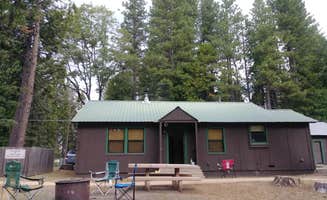
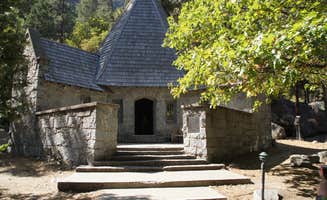
Clean facilities: Maintained restrooms and showers are available at most cabin locations. A Three Links Camp visitor noted, "The campground was beautiful and my kids had a blast walking around all the buildings (hall, chapel, cabins/dorms) and on baseball field, disc golf course, and basketball court!" On-site amenities vary widely between locations.
What you should know
Limited cell service: Communication can be restricted or nonexistent in much of the forest. At Yosemite Pines, a camper reported, "No cell service and the 'pay WIFI' did not work for us...but there is complimentary WiFi at the laundry to check in on things that works just fine." Consider downloading offline maps prior to arrival.
Road conditions affect access: Some cabin locations require navigating unpaved roads. "The road in is dirt, depending on the winter season it can be a little rough. 4wd is NOT required though," explains one Buckeye Campground visitor. Spring snowmelt can create additional road challenges.
Water availability varies: Not all locations provide potable water year-round. A camper at Cherry Valley mentioned, "There was no water at the campground when we were there (it seems like it might be a long term issue) - we were warned about this in advance so it wasn't much trouble." Bring containers to transport water when staying at more remote cabins.
Tips for camping with families
Activity options for multiple age groups: Look for locations with organized children's programming. At Thousand Trails Yosemite Lakes, "It's a resort so they have something going on every weekend. While we were there it was a family movie and Octoberfest (beer and bratwurst for $5). Then smores by the fire with music." Most family-oriented activities run June through August.
Site selection for space and safety: Choose cabins with adequate room for play areas. "Sites have lots of space, table, fire ring and generally level drive pads. Water spigots are not too far," noted a visitor at Fallen Leaf Campground. Sites near bathroom facilities reduce nighttime walking distances for children.
Wildlife preparation: Teach children about proper food storage and wildlife safety. "The sites are great because they are quite big. The terrain varies where you stay and if you are in D or E loop you are closer to the lake," observed a Pinecrest visitor. All food and scented items must be secured in provided bear boxes.
Tips from RVers
Hookup limitations: Many forest cabins lack full RV hookups, requiring self-containment. A visitor to Pinecrest noted, "On their website it did state there was water hookups unfortunately there was not. Me and the girlfriend rented a boat for half the price as the early bird special and caught a bunch of trout." Generator restrictions may apply at certain times.
Access considerations: Size restrictions apply at most cabin locations. "The tent sites were right on top of each other and there was nowhere to park. You had to climb a steep hill to get to them with your car and again to the actual spot," reported one visitor at Yosemite Pines. Confirm cabin access routes before booking larger vehicles.
Seasonal availability: Not all cabin facilities operate year-round. "Park does have a dump station and is included in the space rent. Only issue is being by the road and having road noise," explained a camper at North Grove Campground. Most cabin facilities close between October and April due to snow.











 Legend


