Horseback enthusiasts seeking equestrian camping options near Loleta, California can find several alternatives beyond the main horse camp facilities. Loleta sits at approximately 46 feet above sea level in Humboldt County, experiencing a temperate coastal climate with year-round temperatures rarely exceeding 75°F. Winter camping requires preparation for rain and mud conditions, particularly at trailheads and horse-accessible facilities.
What to do
Trail riding for horse owners: The Humboldt Redwoods State Park system offers extensive riding options, though trail conditions vary seasonally. One visitor noted "a long drive between Garberville and Honey Dew. Great drive but not worth the trip" unless specifically bringing horses.
Beach access for equestrians: Coastal trail riding near Loleta provides oceanfront experiences without the crowds of popular beaches. Mattole Campground offers proximity to coastal riding trails where riders can experience "amazing camping, rough roads... Very scenic area with lots to see and do, also very 'remote' feeling area."
Mountain biking with livestock: Some mixed-use trails accommodate both horses and bicycles, though specific restrictions apply. Trail systems across the King Range provide varying difficulties for riders with less experienced horses.
What campers like
Seasonal climate advantages: Fall equestrian camping typically offers the best trail conditions. Most riders report late September through October provides optimal footing after summer dust settles but before winter mud develops.
Group accommodations: Elk Country RV Resort & Campground provides facilities where "we stayed in the Meadow campground which is all open and no shade but we loved it. We pretty much had the park to ourselves so lots of room." While not specifically for horses, the spacious grounds accommodate groups.
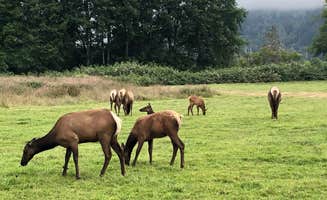
Wildlife viewing: Horse camping areas frequently offer wildlife observation opportunities. At Elk Country, "there's a heard of elk that roam the campground which is pretty cool. There's limited cell service in the camp ground. The spots are pretty close together."
Solitude opportunities: Camp Mattole visitors appreciate "the remoteness of this place, it is California's lost coast. Not for the faint of heart as you have to haul your own water in." This remoteness provides quiet trails even during busy seasons.
What you should know
Road access limitations: Getting to horse camps often involves challenging roads. At Mattole, "getting there was so slow and tedious for me. The road from Ferndale (Mattole road) is paved but very rough in some places. Took me three hours to go 30 miles due to my rig being old and having to be very cautious in it."
Trailer parking challenges: Most equestrian facilities require advance planning for trailer positioning. Many sites lack pull-through options, requiring experienced backing skills.
Water availability issues: Lacks Creek BLM and several other sites require bringing water for horses. One camper notes "remote and clean. Takes about 35 minutes to get to the top but it's worth it." Always verify water availability before arrival.
Early arrival importance: Horse camps fill quickly during summer weekends. Thursday arrival often secures better spots, particularly those with easier trailer access to corrals.
Tips for camping with families
Child-friendly equestrian activities: Several facilities offer beginner-friendly trail options suitable for families with children who ride. Look for loop trails under 3 miles with minimal elevation gain.
Non-riding activities: When camping with mixed groups of riders and non-riders, Humboldt County Fairgrounds provides centrally located facilities where "warm showers and quite with most spaces still available even on a Friday night." The location allows non-riders to explore nearby attractions.
Safety considerations: Keep children away from unfamiliar horses in camp areas. Designated family zones at some facilities separate camping areas from horse corrals for safety.
Educational opportunities: Several equestrian campgrounds offer interpretive displays about local wildlife and ecosystems, creating learning experiences for children between rides.
Tips from RVers
Horse trailer positioning: RV campers with horse trailers should arrive early to secure adequate space. Many campgrounds have limited availability for larger combination rigs exceeding 50 feet.
Hookup limitations: Richardson Grove RV and Campground offers more extensive RV amenities, though not specifically for equestrians. Campers note "been camping at Richardson Grove RV Park for the past 20+ years. It's a large campground and great for large groups our group is usually about 60+ people."
Generator restrictions: Most equestrian camping areas enforce quiet hours for generators, typically between 10pm and 7am. Solar options provide alternative power without disturbing horses or neighbors.
Weather preparation: Winter RV camping requires additional planning. Many access roads become challenging after rain, particularly for larger rigs with horse trailers in tow.





 Guide
Guide


