Sequoia National Forest provides equestrian camping options from elevations of 7,000 to 8,500 feet near Camp Nelson, California. The mountainous terrain offers access to alpine meadows and forest trails with seasonal temperatures that can drop below 40°F at night, even during summer. Most horse campgrounds in this area require traveling on forest service roads that become inaccessible during winter months due to snow.
What to do
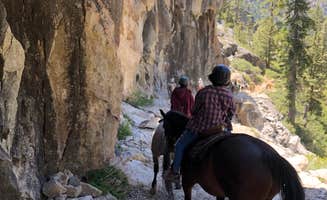
Trail riding along South Rincon: Experienced riders can access the 16-mile Rincon trail from Johnsondale Bridge. "It was hot but the views and the quietness was beautiful! Be prepared with lots of water and food. The trail from the bridge to the campground is approximately 16 miles total but it is mostly exposed and with lots of chaparral and little water," notes Hayley K. about South Rincon Trail.
Day rides from Kennedy Meadows: Trails connect to the Pacific Crest Trail with river access. "Tons of hiking trails, horseback riding for 30$ an hr! Trail head to the PCT," reports Marie C. from Kennedy Meadows Campground. The area offers guided rides for those without their own horses.
Fishing alongside equestrian activities: Lake Kaweah shoreline access provides fishing opportunities when water levels permit. "Sites vary significantly in quality, with some offering flat, shady spots ideal for setting up horse containment, while others feature challenging terrain better suited for experienced backcountry campers," explains a camper at Frog Meadow Campground.
What campers like
High elevation escapes: Frog Meadow campground sits above 7,500 feet, providing relief from valley temperatures. "Not the easiest to get to. But, great for altitude get away. Not winter accessible," notes Tommy B. The campground requires navigating forest service roads that demand careful driving with trailers.
Reliable water sources: Several horse-friendly campgrounds offer seasonal spring water availability. At Whitney Portal, which accommodates equestrians, one camper notes: "Whitney Portal is exactly what a campground should be. There is a creek that runs throughout the campground that provides perfect background noise."
Wildlife viewing opportunities: The foothills camping areas provide opportunities to observe native species. "There were also bats at night that really helped with the bug problem and created a cool ambience while stargazing. My husband loved listening to them hunt!" observed a camper at Horse Creek, highlighting the natural pest control benefits.
What you should know
Road conditions affect access: Many horse campgrounds require navigating unpaved forest roads. "Nice long drive to a beautiful destination," reports Michelle L. about Frog Meadow Campground. Travel time estimates often double when pulling horse trailers.
Seasonal closures and conditions: Campgrounds at higher elevations typically close from late October through May. "The camp ground host was super vigilant and checked regularly to see we had a shovel and a bucket of water on standby. He ran a tight ship," noted Rick O. about Horse Meadow, emphasizing fire safety protocols.
Water availability fluctuations: Drought conditions affect water sources differently each year. "No potable water so bring your own. There was river access if you choose to filter your own water," warns a Kennedy Meadows visitor about conditions that affect both humans and horses.
Tips for camping with families
Prepare for dramatic temperature swings: Mountain elevations cause significant temperature differences between day and night. "Nights were equally gorgeous as we watched all the stars. Will surely plan our next visit here," shared Tadd N. from Horse Creek Campground, noting the importance of bringing proper clothing layers.
Wildlife awareness: Teach children about local wildlife safety protocols. "Beware of the many marmots that will raid your camp," warns Shannon C. at Whitney Portal. Proper food storage prevents unwanted animal encounters.
Choose inner loop sites for shade: When camping with horses and families, prioritize sites with natural coverage. "Most sites on the inside of the loop had good tree coverage, so if that's what you're looking for definitely book one of the inner loop sites like 63," advises Brittney J., highlighting the benefit during hot summer days.
Tips from RVers
Limited hookup options: RVers with horses should prepare for minimal services at most area campgrounds. "No hook up but fresh water and a dump station are available at the campground," notes Rob E. about Horse Creek Campground. Water restrictions may apply during drought periods.
Site levelness varies significantly: Many horse-friendly sites have challenges for larger rigs. "Sites vary in levelness, with those on the inner loop offering better tree coverage for shade during hot summer months when temperatures regularly exceed 100 degrees," reports a camper. Bringing leveling blocks is essential.
Campground layout considerations: Select sites based on trailer positioning needs. "We stayed here last May and was fully mesmerized by the view of the lake and the mountains," reports a Horse Creek visitor, though notes that not all sites accommodate both living quarters and horse containment requirements comfortably.




 Guide
Guide


