Primitive camping near Alpine, Arizona offers solitude in the Apache-Sitgreaves National Forest at elevations between 8,000-9,200 feet. The higher elevation camping areas experience significant temperature fluctuations, particularly in spring and fall months when overnight temperatures can drop below freezing even when daytime temperatures reach the 70s. Access roads throughout the region vary in quality, with many deteriorating after winter snow or summer monsoon rains.
What to do
Wildlife viewing opportunities: The dispersed camping areas around Alpine provide excellent wildlife observation. At State Line, campers frequently encounter diverse wildlife in their natural habitat. As one visitor noted, "It's never crowded unless you count elk, hummingbirds and squirrels. Summer temps in in 70s and 80s."
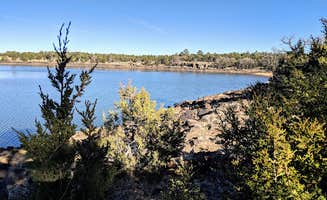
Fishing at nearby lakes: Camp near small mountain lakes for fishing access. The Pratt Lake Dispersed area offers a smaller body of water for quiet fishing. One camper described it as "Nice quiet area. Small lake. Didn't fish, so unsure. No amenities at all, which is fine. Road is a little rough going in, in places."
Hiking on forest service roads: Multiple forest service roads provide hiking access through ponderosa pine forests. Camping along Carnero Spring Road gives easy access to these trails. A recent visitor shared, "Camped in the clearing by the lake. Some traffic came through but not bothersome. No amenities, must be self-contained."
What campers like
Solitude and privacy: Most primitive camping options near Alpine provide significant distance between sites. At National Forest Road 117C, campers appreciate the isolation. One visitor explained, "Only a couple logging trucks on a very nice maintained road. All alone on a mountain top!! Me and my dog are living the life!"
Cooler temperatures: The higher elevation camping areas offer relief from summer desert heat. Beehive Spring Camp sits at 9,200 feet, providing naturally air-conditioned camping. A camper observed, "Nice couple of sites with a variety of trees not just Ponderosa Pine. Logging trucks noisy during the day. At 9200 ft elevation got cold at night in September."
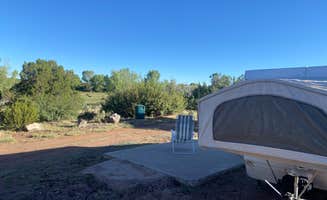
Accessibility without crowds: Most dispersed sites remain accessible for much of the year while maintaining low visitor numbers. At Concho Lake, one camper noted, "Dirt lot with turnouts with shrubs and pines offering decent privacy and quiet. There are cement pads for vans or smaller RVs in some spots, and fire pits. The lake is now more marsh with abundant bird life."
What you should know
Road conditions vary seasonally: Forest service roads accessing campsites can become impassable after weather events. A camper at National Forest Road 117C warned, "Muddy. Don't try to make it to the shared coordinates soon after a snow melt. Grateful for our GoTreads. Road is rocky and rutted in places but there are camp spots 2wd can access if one takes it slow."
Limited cell coverage: Cell service is inconsistent throughout the region. While some areas have decent reception, many primitive sites have no connectivity. At Concho Lake, one reviewer mentioned, "Good Verizon!" while another camper added, "Great Verizon Service. WINDY. Pretty, too."
Pack out all waste: Most primitive camping areas have no waste facilities. A visitor at Carnero Spring Road noted, "No amenities, must be self-contained." Another camper at Concho Lake observed, "Trash cans were overflowing with trash, and a few of the sites were trashed as well."
Tips for camping with families
Choose sites with easier access: For families with children, select camping areas with shorter access roads. One camper at Luna Rodeo Grounds Dispersed Camping recommended, "We suggest you pick a high spot! Although we camp during the rodeo weekend, there is no reason you cant camp other times of the year."
Bring additional water: No reliable water sources exist at most primitive sites. Pack 1-2 gallons per person per day. A camper at Luna Rodeo Grounds noted, "Restrooms are available and running water near the Rodeo arena," but most other sites lack any water access.
Plan for temperature changes: High elevation means significant day-to-night temperature swings. At Beehive Spring Camp, campers reported 30-40 degree temperature drops after sunset. One visitor noted, "At 9200 ft elevation got cold at night in September."
Tips from RVers
Site selection considerations: For RVs, carefully evaluate site access before committing. At Concho Lake, one camper observed, "There are cement pads for vans or smaller RVs in some spots, and fire pits. The lake is now more marsh with abundant bird life."
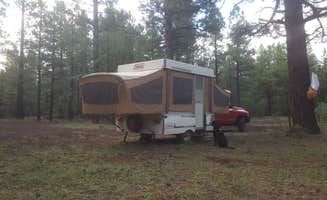
Road clearance requirements: High-clearance vehicles may be necessary for many primitive sites. A National Forest Road 117C camper advised, "Road is rocky and rutted in places but there are camp spots 2wd can access if one takes it slow."
Limited big rig accessibility: Most dispersed camping areas cannot accommodate larger RVs. Concho Lake offers some larger spaces, with one visitor noting, "I would estimate there are about 10 sites. Most appeared to have garbage cans. There were two port o potty's that were not too bad."










 Legend


