The Monongahela National Forest provides the backdrop for equestrian camping near Edmond, West Virginia, with elevations ranging from 1,000 to 4,800 feet across its diverse terrain. The area experiences four distinct seasons with summer temperatures averaging 75-80°F during the day and dropping to 50-60°F at night. Many trails follow former railroad corridors, creating relatively level riding paths suitable for horses even in mountainous terrain.
What to do
River adventures with horses: At River Expeditions, visitors can combine camping with horseback riding opportunities. "This clean and spacious campground lends itself to white water rafting enthusiasts, offering various guided trips down the New and Gauley rivers. The campground has its own hiking/biking trails and zip line canopy tours. It also offers horseback riding and ATV tours," notes Kelly M.
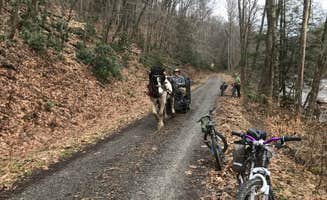
Trail riding year-round: The primitive campsites along the Greenbrier River Trail Mile Post 9.5 provide direct access to one of West Virginia's premier rail trails. According to Dave V., "The Shelter is so new it's not even noted on any but the newest Trail Map. It appears that individuals or families have either constructed or donated for the construction of both shelters and several protected bench areas." The trail remains accessible for horse riding even during winter months when other trails may be closed.
Fishing with equine companions: Combine trail rides with fishing stops along the Cranberry River. "Backpacked and Camped here multiple times for both hiking and fishing. The main trail is graveled and very easily accessed. It runs along the Cranberry River with beautiful views all along the way. The River offers both stocked trout fishing along with wild trout tribs in a few places," explains Mike F.
What campers like
Private river access: Equestrian campers appreciate the direct river access at many sites. At Cranberry River Sites NF Campground, Jamie H. notes, "If your looking for a weekend getaway or a week long rest. Look no farther. The fishing here is the best around with beautiful waterfalls like big ruff and the ducks are so colorful like no other."
Self-sufficient facilities: Horse-friendly primitive sites along the Greenbrier River Trail include practical amenities. Dave V. reports that Mile Post 28.5 offers "Adirondock Style Shelter, Raised Tent pads (2), Picnic Tables, Fire Pits w/grate, Large Pit Latrines, Bearproof Trash receptacle, Hand-pump well water." These facilities support extended stays with horses without requiring full hookups.
Diverse terrain options: The region provides varied riding experiences from forest to riverbank. At New & Gauley River Adventures, campers find "Primitive tent camping with spacious sites, RV and cabins too; friendly staff, small bathhouse and small gift shop; cute and earthy pub and grill with live music; offer rafting adventures and horseback riding," according to Kelly M.
What you should know
Water access planning: When camping with horses, water access points require planning. At the Greenbrier River Trail Mile Post 49.3, Dave V. cautions that the site "does not offer a well water, so fill up before you get there. Although, if you utilize a filter, you can draw water from the river or the tributary down the trail several hundred feet."
Bear safety protocols: The region has active wildlife including bears. "This is bear country so I would recommend utilizing a bear bag or bear canister for your food and toiletries. I used a BearVault BV500 that I strapped to the Salsa EXP Anything Cradle attached to my handlebars...worked great," advises Dave V. Proper food storage protects both campers and horses from unwanted wildlife encounters.
Limited connectivity: Cell service ranges from spotty to nonexistent throughout most equestrian camping areas. "This is West Virginia, so even in populated areas cell service can be spotty...but on the trail, I would not count on it. This is both a blessing and a curse," warns Dave V. Many experienced riders carry satellite communication devices when traveling with horses in the region.
Tips for camping with families
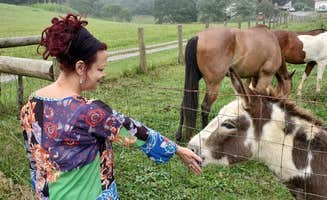
Ranch accommodations: Families with less experienced riders can utilize cabin-based ranches with horse facilities. At CB Ranch, cheryl B. shares, "We loved every moment of our stay from the fire pit to the beautiful tails on the property to seeing the farm animals. The constant songs of the birds is a reminder that we belong in nature. The cabin was decorated very nicely and was clean and the bed was very comfy also."
State park facilities: For families wanting a mix of equestrian and traditional camping amenities, state parks offer well-maintained facilities. Mash Fork Campground receives consistent praise for cleanliness with Julie B. noting, "We were in site number eight, it backed up to the creek and was quite private with the exception of the trail on the other side of the creek. The hiking is difficult in some areas but spectacularly beautiful."
Off-season discounts: Winter and early spring visits provide significant savings. River Expeditions offers a "50% discount from November 1st to March 3rd" according to Jennifer B., making horse camping more affordable for families during cooler months when trails are less crowded.
Tips from RVers
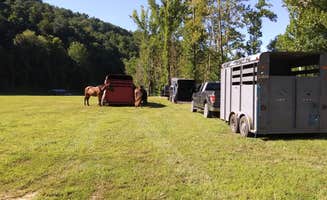
Level site selection: RV campers with horse trailers should research site grading. Jennifer B. observes that at River Expeditions, "The RV camp sites are too close together for my taste and the gravel parking spots are all on a slant, so it would be a challenge for larger trailers to get level there."
Access road limitations: Large horse trailers and RVs face access challenges at some campgrounds. Beth R. warns about Elk River Camp and RV Park: "Narrow gravel road to get to the newly developed portion of campground. We arrived during heavy rains & muddy site conditions... One lane road in & out... 42' 5th wheel drug bumper to/from campground."
Seasonal road conditions: Spring thaws and heavy rains affect access to horse camps. "Trail conditions got soft and muddy after the previous night's deluge through the more heavily wooded areas, once the trail was exposed to constant sun, it dried quickly," reports Dave V., a consideration important for planning horse trailer access and parking.






 Legend


